
nbc logo (2)
Office address
National Engineering Industries Ltd.
Khatipura Road Jaipur – 302006 Rajasthan, India
Phone Number

Toll Free: 1800 3000 6222
Telephone: +91 141 222 3221
Fax: +91 141 222 1926, 222 2259
CIN: U29130WB1946PLC013643

Top 10 Sealed Thrust Bearing Types for Global Buyers

Choosing a sealed thrust bearing is not a catalog exercise. It is an application decision involving axial load, speed, temperature, contamination, lubrication, and available space. A bearing that performs well inside a clean electric motor may struggle in a dusty conveyor or a washdown pump.

Tedric A. Harris, a respected rolling-bearing researcher, emphasized a practical truth: “Bearing life depends on the application.” That principle remains important for global buyers comparing the top 10 sealed thrust bearing types. Each design handles axial force differently. Some favor compact dimensions. Others offer better protection against moisture, particles, or lubricant loss. None is perfect.

This guide examines real selection details, including contact geometry, seal materials, grease compatibility, cage construction, preload, and expected operating cycles. It also considers sourcing reliability, documentation, dimensional consistency, and manufacturer support. These details matter when a bearing must run quietly beside a rotating shaft for thousands of hours.

Small details matter.

A buyer should not select a sealed thrust bearing only by bore size or advertised load rating. Shaft misalignment, thermal expansion, shock loading, and irregular maintenance can change the result. Even published life calculations may feel optimistic when field conditions are poorly measured. That is an uncomfortable limitation, but it deserves attention.

The following ranking is therefore practical rather than absolute. It compares common sealed thrust bearing types for different industries, climates, machines, and purchasing conditions. Use it as a starting point, then verify every choice against drawings, test data, operating records, and the supplier’s technical documentation.
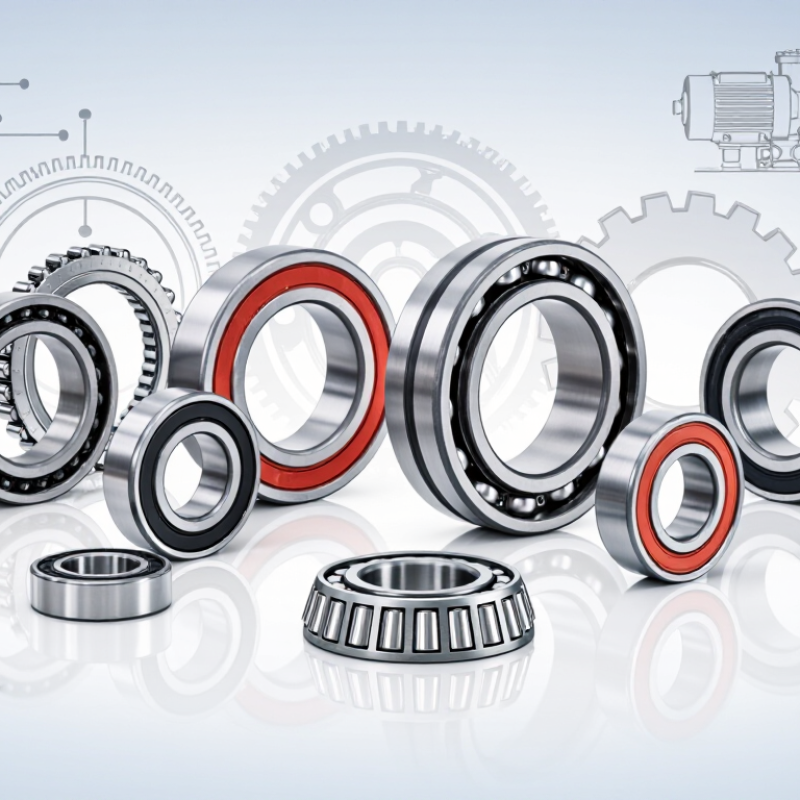
Top 10 Sealed Thrust Bearing Types for Global Buyers

Sealed Thrust Bearings: Definition, Purpose, and Operating Principles

Sealed thrust bearings support loads that act along a shaft’s centerline. They use raceways and rolling elements to manage axial force with controlled friction. Common designs include ball, cylindrical roller, and tapered roller versions. Their seals retain grease and block dust, moisture, and fine metal particles. This matters in conveyors, pumps, gearboxes, and compact drive systems. Less maintenance is needed. That sounds simple.

During operation, the shaft pushes against one bearing race. Rolling elements transfer that force to the housing race while the shaft rotates. Single-direction bearings handle thrust from one side. Double-direction bearings manage alternating axial loads. Internal clearance allows movement, but excessive clearance can create vibration and uneven contact. Too little clearance may increase heat. Seal contact also adds drag, especially at high speed. Grease choice must match temperature, speed, and surrounding contamination.

For global buyers, load direction and space often decide the bearing type. A cylindrical roller design can carry heavy axial loads, while a ball design may suit higher rotational speed. Check shaft hardness, housing fit, lubrication life, and expected misalignment before ordering. In practical inspections, dark grease, cage noise, or a hot housing can signal overload or poor sealing. A common mistake is selecting only by bore size. It is not enough. No sealed thrust bearing performs well when installation is careless. Even a correct specification can fail after impact, tilted mounting, or excessive preload.
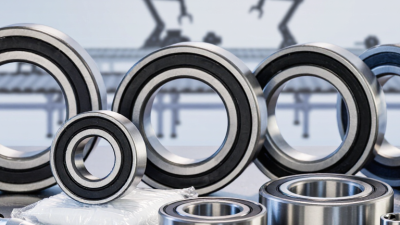
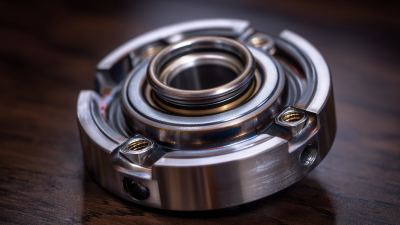
Single-Direction Sealed Thrust Ball Bearings for Axial Loads

Single-direction sealed thrust ball bearings manage axial loads in one direction, making them useful in compact machinery, pumps, indexing devices, and light automation equipment. Their raceways and rolling balls support force along the shaft axis, while the seals help retain grease and limit dust entry.

They are not radial bearings. That distinction matters.

In practical maintenance work, technicians should check the expected axial load, shaft speed, temperature, and surrounding contamination. A bearing facing the wrong direction may fail quickly. Mark the load path before installation.

The washer carrying the rotating load must match the shaft or housing arrangement, depending on the design. A clean press fit is essential. Hammering the washer can bruise the raceway and create early noise.

Sealed construction reduces maintenance, but it does not make the bearing maintenance-free. Excessive preload can increase heat, while loose mounting may cause vibration and uneven wear.

I have seen specifications focus heavily on load capacity and overlook alignment. That choice is not perfect.

Housing stiffness, lubrication compatibility, and thermal expansion also deserve attention. A simple hand rotation can reveal roughness before assembly is complete. Small checks prevent expensive surprises.

When axial force changes direction, a single-direction bearing is unsuitable; paired or double-direction designs may be required.

Double-Direction Sealed Thrust Bearings for Reversible Motion

Top 10 Sealed Thrust Bearing Types for Global Buyers

Double-Direction Sealed Thrust Bearings for Reversible Motion

Double-direction sealed thrust bearings manage axial loads in both directions. They suit indexing tables, screw drives, pumps, and reversible gear mechanisms. Their paired raceways guide rolling elements during clockwise and counterclockwise movement. Integrated seals help retain grease and block dust, moisture, and fine metal particles.

The U.S. Department of Energy reports that motor-driven systems consume about 46% of industrial electricity worldwide. Lower rolling friction can support efficiency, especially in frequently reversing equipment. ISO 281 provides the basic rating-life method for rolling bearings. Buyers should compare dynamic load ratings, limiting speed, seal temperature range, and lubrication compatibility.

Practical testing matters.

A bearing may fit perfectly yet fail early. Excessive preload can increase heat, while loose mounting can create vibration and raceway damage. Shaft washers need firm seating, and housing surfaces should remain flat. These bearings usually resist axial forces, not heavy radial loads. A separate radial bearing may be necessary.

Contamination remains a difficult variable. Seals are helpful, but they are not invincible. In dusty workshops, operators should inspect grease condition, noise, and temperature trends. Industry maintenance reports repeatedly identify poor lubrication and misalignment as major bearing failure contributors. That finding deserves attention during selection, not after breakdown.

Sealed Tapered Roller and Spherical Roller Thrust Bearings

Top 10 Sealed Thrust Bearing Types for Global Buyers

Sealed Tapered Roller and Spherical Roller Thrust Bearings

Sealed tapered roller thrust bearings suit applications needing high axial capacity and controlled rolling contact. Their tapered rollers distribute load across a larger contact area. This design often supports moderate radial loads as well. Sealed spherical roller thrust bearings handle heavy axial loads and tolerate shaft misalignment. Their spherical raceway helps maintain contact when housing alignment is imperfect. In practice, this feature benefits conveyors, gear systems, and industrial drive assemblies.

Tips: Check load direction, speed, temperature, and shaft alignment before purchasing. Confirm bore size, outside diameter, clearance, seal material, and lubrication requirements. A sealed bearing is not maintenance-free. Dust, heat, and incorrect mounting can still shorten its service life.

Selection depends on operating reality, not catalog capacity alone. Tapered designs may create more friction under high-speed conditions. Spherical designs can handle misalignment, but their size and cost may increase. I have seen buyers focus on static load ratings while overlooking starting torque. That mistake can cause early heat buildup. Ask for dimensional drawings and tested performance data. Verify tolerances against the actual housing and shaft. No single bearing type fits every machine.

Top 10 Sealed Thrust Bearing Types for Global Buyers - Sealed Tapered Roller and Spherical Roller Thrust Bearings

No. Sealed Thrust Bearing Type Rolling Element / Raceway Primary Load Capability Misalignment Capability Typical Bore Range Typical Speed Capability Seal Arrangement Typical Applications
1 Sealed Tapered Roller Thrust Bearing Tapered rollers with a tapered raceway Very high axial load; also supports combined axial and radial loads Low; requires accurate shaft and housing alignment Approx. 20–300 mm Low to moderate; speed depends strongly on load and lubrication Integrated contact seals or external sealing system; grease lubricated Gearboxes, screw presses, heavy-duty drives, construction equipment
2 Sealed Spherical Roller Thrust Bearing Asymmetric spherical rollers with spherical raceway geometry Extremely high axial load and moderate radial load High; accommodates shaft deflection and housing misalignment Approx. 25–500 mm Low to moderate; optimized for heavy loads rather than high speed Factory-sealed or custom labyrinth/contact sealing; grease or oil lubrication Mining machinery, marine propulsion, conveyors, industrial presses
3 Sealed Cylindrical Roller Thrust Bearing Cylindrical rollers arranged between axial washers Very high axial load and high axial stiffness Very low; unsuitable for appreciable misalignment Approx. 10–220 mm Low to moderate Shielded or sealed housing arrangement; typically grease lubricated Machine tools, extrusion equipment, heavy-duty gear drives
4 Sealed Needle Roller Thrust Bearing Long, small-diameter needle rollers High axial load for a compact cross-section Very low; flat and parallel mounting surfaces are required Approx. 5–120 mm Moderate to high with suitable lubrication and low friction Integrated seals in cartridge designs or external shaft seals Automotive transmissions, pumps, hydraulic motors, compact gearboxes
5 Sealed Single-Direction Ball Thrust Bearing Ball elements between two washers Moderate axial load in one direction only Very low; radial load capacity is limited Approx. 3–180 mm Moderate to high for light axial loads Rubber contact seals or sealed cartridge construction Turntables, low-load actuators, laboratory equipment, small gear mechanisms
6 Sealed Double-Direction Ball Thrust Bearing Two ball-and-raceway sets for opposing axial loads Moderate axial load in both directions Very low; requires controlled axial and radial alignment Approx. 10–160 mm Moderate to high, depending on preload and lubrication Contact seals or sealed housing with grease filling Precision screw mechanisms, indexing tables, vertical shafts, control systems
7 Sealed Angular Contact Thrust Ball Bearing Balls with an angled contact path High axial load with combined radial-load capability Low; mounting arrangement and preload are important Approx. 10–180 mm High relative to roller thrust designs Non-contact shields or low-friction contact seals; grease or oil lubrication Ball screws, machine-tool spindles, precision actuators, robotics
8 Sealed Crossed-Roller Thrust Bearing Alternating crossed cylindrical rollers High axial, radial, and moment-load stiffness Limited angular compensation; precision mounting is required Approx. 20–500 mm outside diameter Moderate; limited by preload and precision requirements Labyrinth or contact seals, commonly supplied as a sealed ring assembly Robotic joints, rotary tables, inspection equipment, semiconductor machinery
9 Sealed Spherical Plain Thrust Bearing Sliding spherical contact surfaces rather than rolling elements High static axial load and oscillating-load capability Very high; accommodates angular movement and misalignment Approx. 10–250 mm bore Low to moderate; speed is limited by sliding friction and heat Elastomer dust seals or metal shields; maintenance-free versions are available Suspension links, hydraulic cylinders, agricultural machinery, structural joints
10 Sealed Tapered Roller Bearing Pair for Thrust Loads Matched tapered roller bearings arranged face-to-face or back-to-back High axial and radial loads in both directions when paired Low to moderate, depending on arrangement and adjustment Approx. 15–400 mm bore Low to moderate; preload and clearance affect operating speed Sealed matched pair or external multi-lip sealing arrangement Wheel hubs, differential assemblies, winches, heavy-duty transmission shafts

Note: Bore ranges and speed descriptions are typical engineering selection ranges rather than universal limits. Actual capacity, sealing design, allowable speed, preload, lubrication, and operating temperature must be verified against the specific bearing drawing and load conditions.

How Global Buyers Compare Sealed Thrust Bearing Types and Specifications

Global buyers compare sealed thrust bearing types by load direction, speed, contamination, and service temperature. A 2024 Grand View Research report valued the global bearing market above USD 120 billion in 2023. That scale reflects demand for reliable motion systems, but it does not make every bearing interchangeable.

Sealed ball thrust bearings suit light axial loads and higher speeds. Needle roller thrust bearings offer compact height and stronger load capacity. Tapered roller thrust bearings manage combined axial and radial forces, especially in slower, heavily loaded equipment. Spherical roller thrust bearings tolerate shaft misalignment, although they usually require more installation space. Sealed cylindrical roller designs can carry high axial loads, but speed limits need careful checking.

Look beyond the bearing name. Compare dynamic axial load ratings, static ratings, limiting speed, seal material, internal clearance, and grease compatibility. ISO 281 provides the basis for basic rating-life calculations, yet real contamination can shorten life sharply. The U.S. Department of Energy reports that motor-driven systems consume about 25% of U.S. electricity, making friction and maintenance meaningful cost factors. Still, catalog efficiency data can mislead when sealing drag, misalignment, or poor lubrication changes operating conditions.

Field checks should include shaft finish, housing fit, temperature cycles, and washdown exposure. I would not select only by the highest load rating. That approach looks efficient on paper. It can fail in practice. The comparison remains imperfect when suppliers report speed and life under different test conditions.