
nbc logo (2)
Office address
National Engineering Industries Ltd.
Khatipura Road Jaipur – 302006 Rajasthan, India
Phone Number

Toll Free: 1800 3000 6222
Telephone: +91 141 222 3221
Fax: +91 141 222 1926, 222 2259
CIN: U29130WB1946PLC013643

Best Double Row Ball Bearing Manufacturers in China

Double row ball bearings support radial loads and, depending on their design, axial loads in both directions. Their compact structure can suit electric motors, pumps, gearboxes, and agricultural equipment. For buyers comparing manufacturers in China, the challenge is not simply finding a low quotation. Material consistency, machining accuracy, heat treatment, and inspection practices can all affect bearing performance over time.

A reliable supplier should explain product specifications clearly and provide traceable quality records. Ask about steel grades, clearance options, cage materials, lubrication, and operating limits. Check whether sample bearings match the drawings and stated tolerances. Small details matter. A rough raceway finish or inconsistent noise level may signal a problem that a catalogue cannot show. Where possible, review test reports, production capabilities, and customer references before making a large order.

This guide introduces factors to consider when evaluating double row ball bearing manufacturers in China. It focuses on product range, quality control, technical support, and communication, rather than treating any supplier as automatically suitable. Requesting samples and confirming application requirements can help reduce uncertainty. Still, one inspection cannot predict every service condition. That is worth remembering. The best choice depends on your load, speed, environment, required service life, and the manufacturer’s ability to meet documented specifications consistently.
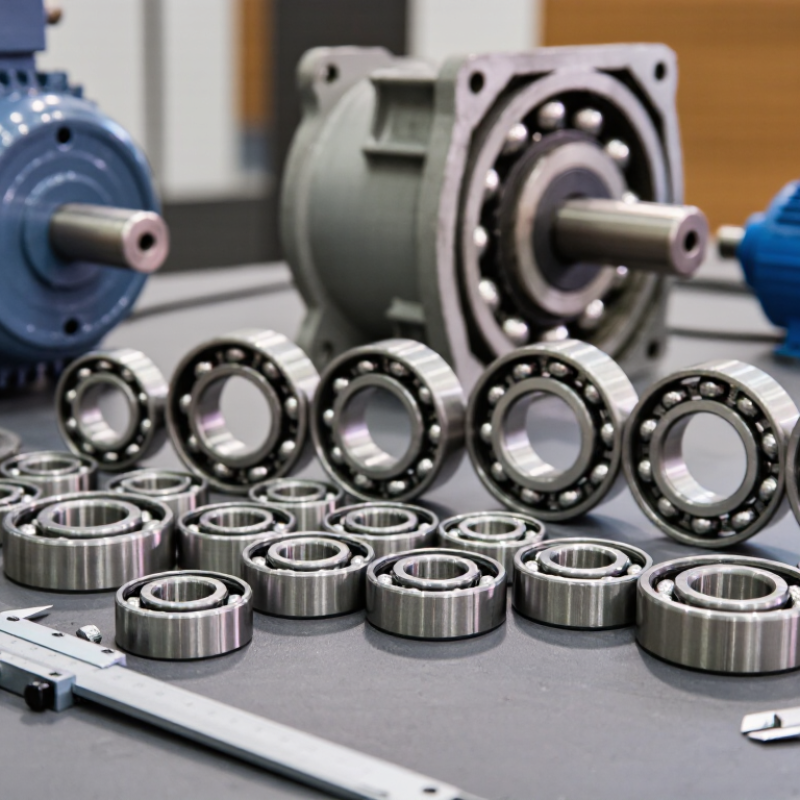
Best Double Row Ball Bearing Manufacturers in China

What Double Row Ball Bearings Are and Where They Are Used

A double-row ball bearing contains two parallel rows of balls between its inner and outer rings. Compared with a single-row bearing of similar dimensions, it can carry higher radial loads and may support axial loads in both directions. Exact capacity depends on its design. Not magic. Angular-contact versions suit combined radial and axial loading, while deep-groove versions are often chosen for steady rotation and moderate axial forces.

These bearings appear in pumps, gearboxes, electric motors, conveyors, and agricultural machinery. A pump shaft, for example, may face radial force from the impeller and axial force from fluid pressure. In practice, the bearing must match the load, speed, lubrication, and housing fit. Fit matters. A common selection mistake is to focus only on load capacity and overlook operating temperature or shaft alignment. Even a catalog match can perform poorly if installation is careless. Check the manufacturer’s load and speed ratings, and confirm that the bearing’s internal clearance suits the application. Real operating conditions are rarely as tidy as a specification sheet.
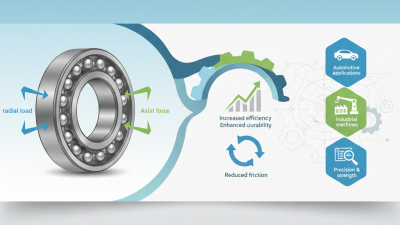
Double Row Ball Bearings: Example Dimensions and Applications

Double row ball bearings use two rows of balls to provide greater load capacity in a compact design than comparable single-row bearings. Depending on their design, they are used in equipment such as electric motors, pumps, gearboxes, and agricultural machinery.

The chart shows representative boundary dimensions in millimeters for four metric bearing series with a 10 mm bore. Actual availability and specifications depend on the bearing design and manufacturer catalog.

How to Evaluate Chinese Double Row Ball Bearing Manufacturers

Best Double Row Ball Bearing Manufacturers in China
How to Evaluate Chinese Double Row Ball Bearing Manufacturers

Choosing a Chinese double row ball bearing manufacturer requires more than comparing quotations. Ask how the factory controls raceway geometry, radial runout, and internal clearance. Request drawings and the tolerance class used for each item. Small differences matter. On a pump or conveyor, uneven rotation noise can signal inconsistent quality, even when a bearing looks clean.

Review material and heat-treatment records, not just a polished inspection sheet. Ask for batch traceability, hardness results, dimensional reports, and final noise or vibration checks. Compare these records with a representative sample and your operating conditions, including speed, load, lubrication, and temperature. A capable supplier should explain limits plainly instead of promising identical service life for every bearing. I have seen evaluation plans overlook packaging. It sounds minor, but moisture marks after transit can spoil otherwise good parts.

Visit the production line when possible, or request a live walkthrough of grinding, assembly, and inspection stations. Check whether gauges are calibrated and rejected parts are separated. Ask how engineering changes are approved and complaints are investigated. One awkward point: smaller factories may have skilled technicians but uneven documentation. Treat that as a risk to verify, not an automatic rejection. Compare response quality, sample performance, and repeat-order consistency before choosing a long-term source.

Best Double Row Ball Bearing Manufacturers in China – How to Evaluate Chinese Double Row Ball Bearing Manufacturers
Evaluation Dimension What to Check Evidence to Request Suggested Weight
Product type and application fit Confirm whether the supplier makes the required double-row design, such as double-row deep-groove, angular-contact, or self-aligning ball bearings. These designs differ in alignment capability, load direction, and application suitability. Product catalogue, dimensional drawings, allowable operating conditions, and a written recommendation for the intended load, speed, and mounting arrangement. 15 points
Dimensions and tolerances Check bore, outside diameter, width, and other specified features against the drawing and applicable product requirements. ISO 15 covers boundary dimensions for many radial bearings; ISO 492 specifies rolling-bearing tolerances. Controlled drawings, inspection reports for samples or production lots, and measurement records from calibrated equipment. 15 points
Materials and traceability Verify bearing-ring and rolling-element material specifications, heat-treatment controls, and traceability from incoming material through finished product. ISO 683-17 addresses heat-treatable steels, alloy steels, and free-cutting steels for bearing applications. Material certificates, heat-treatment records, lot identification, and a documented procedure for handling nonconforming material. 12 points
Internal clearance and fit Check that the specified radial internal clearance and fit suit the operating temperature, shaft and housing arrangement, and application. ISO 5753-1 provides clearance values for radial bearings; the correct value depends on the bearing and application. Purchase specification, clearance inspection results, and technical confirmation of the selected clearance class and fit recommendations. 10 points
Load ratings and service life Compare the declared basic dynamic and static load ratings with the required application loads. ISO 281 provides methods for calculating dynamic load ratings and rating life; calculated life depends on operating and lubrication conditions. Technical datasheet with load ratings, calculation assumptions, and application-specific life calculation where required. 12 points
Noise, vibration, and running quality Ask how noise and vibration are inspected and how acceptance limits are defined for the specific bearing type and application. ISO 15242 provides methods for measuring vibration in rolling bearings. Documented test method, equipment and calibration information, sample results, and agreed acceptance criteria. 10 points
Manufacturing process control Assess control of grinding, superfinishing, assembly, lubrication, sealing, and contamination prevention. Process controls should match the bearing design and the customer's specification. Process flow chart, control plan, inspection records, and evidence of corrective action when defects are found. 10 points
Quality management system Check whether the manufacturer maintains a quality management system relevant to its operations. ISO 9001 certification can support this assessment; automotive supply requirements may call for IATF 16949, where applicable. Current certificates, issuing-body details, scope of certification, and results of recent customer or third-party audits where available. 7 points
Sample approval and change control Confirm that production parts match approved samples and that changes to material, design, process, or manufacturing location are controlled and communicated. Sample inspection report, approval procedure, change-notification policy, and lot-level product identification. 5 points
Packaging, documentation, and delivery Evaluate protection against corrosion and handling damage, clarity of labels and batch codes, completeness of shipping documents, and the supplier's ability to meet the agreed schedule. Packaging specification, sample labels, packing list, certificate of conformity when required, and delivery-performance records. 4 points
Evaluation method: Score each manufacturer against the same requirements and evidence. The suggested weights total 100 points and are a comparison framework, not a product certification or a ranking of specific companies. Confirm the applicable drawing, standards, test methods, and acceptance criteria before purchase.

Leading Double Row Ball Bearing Manufacturers in China

Leading Double Row Ball Bearing Manufacturers in China

China’s leading double row ball bearing manufacturers serve machinery, automotive, and industrial equipment markets. A supplier’s real strength is not its catalog size. It is consistent control of steel quality, heat treatment, grinding accuracy, and assembly. Grand View Research valued the global bearings market at USD 123.4 billion in 2023 and forecast 8.3% annual growth through 2030. This figure covers bearings broadly, not double row products alone, so buyers should treat it as market context rather than proof of demand for a specific design. Details matter.

Double row bearings can handle radial loads and, depending on their design, axial loads in both directions. When comparing Chinese manufacturers, request drawings, load ratings, clearance options, cage details, and batch-level inspection records. Check whether stated fatigue-life calculations follow ISO 281, and confirm operating conditions such as speed, temperature, and lubrication. A polished sample may perform well; production batches still need verification. Ask for dimensional reports and test parts under realistic loads before approving volume orders. Price is easy to compare. Long-term consistency is harder.

Comparing Product Range, Quality, and Export Capabilities

Best Double Row Ball Bearing Manufacturers in China

When comparing double row ball bearing manufacturers in China, look beyond catalog size. A useful product range should cover relevant bore sizes, load ratings, cage designs, and sealing options. Ask whether standard and customized configurations are both available, and how changes affect lead time. Small details matter. A wide catalog is less useful if key specifications are unclear.

Quality depends on repeatable production and verifiable inspection, not polished claims. Request material details, dimensional tolerances, test records, and sample inspection results. For export capability, check packaging methods, shipping schedules, technical documents, and the supplier’s experience with your destination market. A scorecard can miss practical issues, such as slow responses after an order is placed. Compare sample performance and communication before making a larger commitment.

Tips: Share a drawing and operating conditions, including speed, load, and temperature. Ask for a written specification sheet. Keep one point in mind: the lowest quote may not reflect the full cost of delays or inconsistent quality.

How to Choose a Manufacturer for Your Application

A double row ball bearing must match the load, speed, and space available in your equipment. Before contacting manufacturers in China, record shaft and housing dimensions, expected radial and axial loads, operating temperature, and exposure to dust or moisture. A pump running continuously may need different sealing and lubrication than a slow-moving conveyor. Small details matter. Share drawings and real operating conditions, not only a catalog number.

Ask how the manufacturer controls steel quality, heat treatment, grinding, assembly, and final inspection. Request tolerance data, material information, and test records for the bearing type you need. If possible, evaluate a sample under conditions close to your application and check noise, temperature rise, and vibration. A polished sample is useful, but it does not prove every production batch will match it. Ask about batch traceability, production capacity, lead times, packaging, and how technical questions are handled. Clear answers are a good sign. Vague promises are not. I would also compare written specifications carefully; it is easy to assume two similar-looking bearings are interchangeable when their internal design or fit differs. The right supplier should discuss those trade-offs openly.