
Toll Free: 1800 3000 6222
Telephone: +91 141 222 3221
Fax: +91 141 222 1926, 222 2259
CIN: U29130WB1946PLC013643
Founded in 1946, National Engineering Industries Ltd (NEI) is India’s leading bearings manufacturer and exporter, renowned for excellence in quality and delivery.

Large bearings are essential where heavy loads, wide shafts, and demanding operating cycles meet. In wind turbines, for example, main-shaft and yaw bearings must endure changing forces, vibration, and weather while supporting equipment high above the ground. These are not interchangeable parts. Their dimensions, internal clearances, materials, and lubrication systems must match the machine and its duty.
The Global Wind Energy Council’s Global Wind Report 2024 recorded 117 GW of new wind capacity installed worldwide in 2023, bringing cumulative capacity to 1,021 GW. That figure describes wind power, not bearing demand; it does show the scale of equipment relying on robust rotating components. Professor Robert B. Randall, a recognized machinery-diagnostics researcher, has emphasized the value of condition monitoring in detecting faults in rotating machinery. A useful paraphrase of that reliability principle is: “Choose a bearing for the real load, then monitor how it performs.” This is a paraphrase, not a verbatim quotation.
There is no shortcut. A bearing that is too small may face excessive stress; one that is oversized can add cost, weight, and installation demands. Engineers should assess radial and axial loads, speed, misalignment, contamination, and maintenance access before specifying large bearings. A steel housing warmed by continuous operation, or grease darkened by debris, can reveal problems that a catalogue alone cannot predict. Better sizing helps—but it does not eliminate inspection, sound installation, or the need to question assumptions.
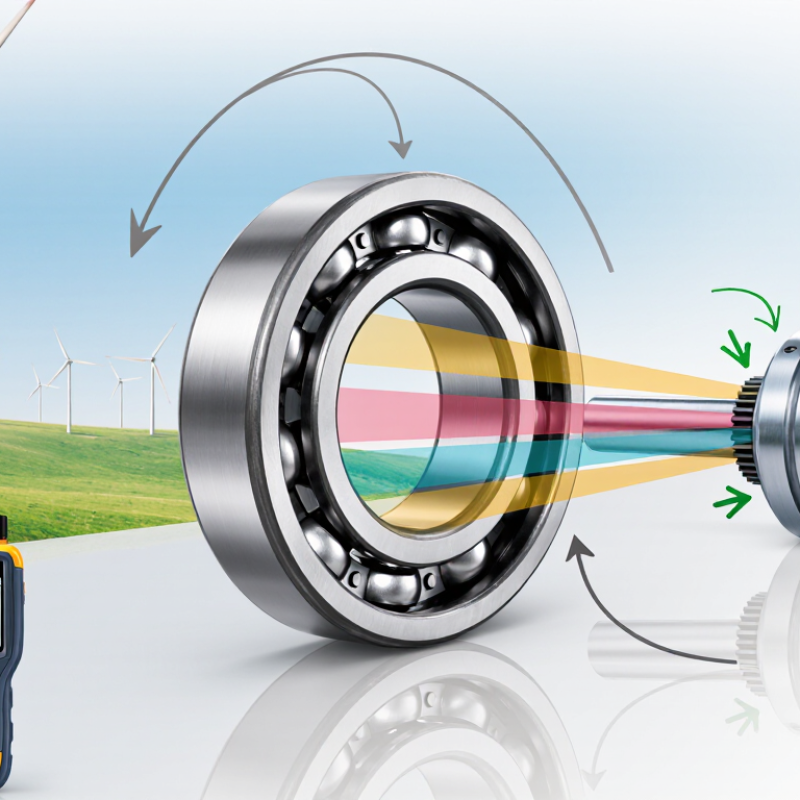
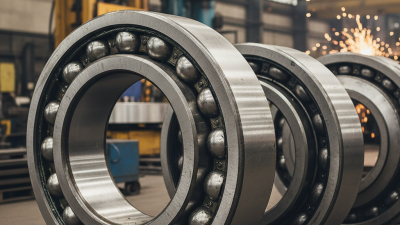
Large bearings are oversized rolling-element or plain bearings that support heavy, rotating shafts. You may find them in steel mills, wind turbines, mining equipment, and ship propulsion systems. Their inner and outer rings create raceways; balls or rollers move between them, carrying radial loads, axial loads, or both. A cage spaces the rolling elements, while lubricant forms a thin film that limits metal-to-metal contact. The result is smoother rotation under substantial load. Not friction-free.
Bearing size alone does not determine capacity. Internal geometry, material, lubrication, operating speed, and mounting all matter. An IEEE survey of industrial motor failures attributed about 41% of recorded failures to bearings. That figure concerns motors, not every large-bearing application, but it shows why inspection and lubrication deserve attention. A bearing can still fail early if the shaft is misaligned or contamination enters the housing.
Tips: Check for rising vibration, unusual heat, and changes in noise; a faint growl near a bearing can be an early warning. Follow the manufacturer’s lubrication intervals and use clean tools. Don’t assume more grease is safer. Record temperature and vibration readings over time, since one measurement may miss a gradual change.
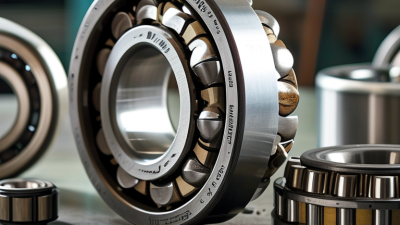
Large bearings support heavy loads by spreading force across larger rolling elements and wider raceways. This can lower contact stress when the bearing is correctly selected. ISO 281:2007 estimates basic rating life using the ratio of dynamic load rating to equivalent load; the life exponent is 3 for ball bearings and 10/3 for roller bearings. In practical terms, a modest increase in load can sharply shorten service life. Bigger is not automatically better.
Lower friction matters, too. Smooth rolling contact, correct internal clearance, and a suitable lubricant help limit heat and energy loss. The U.S. Department of Energy’s 2014 motor-system sourcebook reports that motor-driven systems use about 68% of electricity in U.S. manufacturing. That figure covers entire systems, not bearings alone, but it shows why small efficiency gains can matter. A hot bearing housing or rising vibration deserves attention. Sizing is not magic; alignment and installation can still undermine a sound design.
Tips: Check the load, speed, and operating temperature before choosing a bearing. Apply lubricant in the specified amount; too much can increase churning friction. Record vibration and temperature trends. They can reveal trouble early.
Large bearings support heavy radial and axial loads in equipment such as crushers, paper machines, and wind turbines. Their larger rolling elements can distribute force across broader contact areas, helping reduce localized stress under suitable operating conditions. A properly selected bearing can also handle steady loads and brief changes in operating force. This matters when a machine runs for long shifts and downtime is costly.
Size alone does not guarantee longer service life. A large bearing still depends on correct fits, alignment, and lubrication. For example, shaft deflection or a housing that is out of round can create uneven loading. Heat also matters: tight fits and temperature changes may affect internal clearance. These details are easy to underestimate, especially during replacement work. Still, bigger is not automatically better. The bearing must match the load, speed, space, and maintenance plan.
Tips: Check the manufacturer’s load and speed data before specifying a bearing. Keep lubricant clean, and follow the recommended relubrication interval. During installation, measure shaft and housing fits rather than relying on appearance. Record operating temperature and vibration after startup; small changes can reveal a developing problem.
Large bearings support heavy loads in equipment where compact components would wear too quickly. In steel mills, they help rollers turn under heat, vibration, and changing loads. Mining conveyors use them at pulley shafts, where dust and sudden impacts are common. Wind turbines also rely on large bearings to manage forces as blades turn and wind conditions shift. Loads can spike.
Other applications include paper machines, shipboard equipment, and construction machinery. In a paper mill, a bearing may support a long roller that must stay aligned across a wide web. A small alignment error can create uneven wear or affect product quality. In excavators, large bearings help the upper structure rotate while carrying the boom and bucket. Actual operating conditions vary, so bearing selection should account for load, speed, temperature, lubrication, and maintenance access—not size alone.
Tips: Check shaft and housing alignment before installation, and follow the specified mounting procedure. Keep lubricant clean, then inspect for unusual noise, heat, or vibration. These signs can point to trouble, though they do not identify its cause by themselves. Oversizing may seem safer, but it can add cost without solving the real problem.
Common industrial applications rely on large bearings to support heavy loads and large rotating structures.
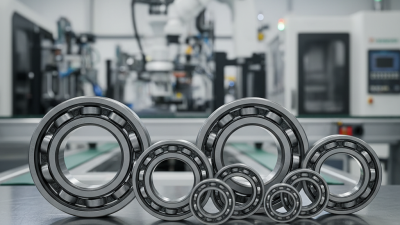
Approximate bearing outside-diameter ranges in millimeters. Actual dimensions vary with equipment design, load, and operating conditions. Large bearings help support heavy loads and maintain reliable rotation in demanding industrial environments.
Selecting a large bearing begins with the load, not the outside diameter. Record radial and axial forces, peak shock loads, shaft speed, and operating hours. A crusher’s dusty, intermittent duty differs from a continuously running fan. Speed matters. Also check shaft and housing stiffness: misalignment can concentrate load on a small part of the raceway.
Life estimates need careful reading. ISO 281 defines basic rating life, L10, as the life reached by 90% of a sufficiently large group of apparently identical bearings under stated conditions. It is not a promise for one bearing in a real machine. Lubricant viscosity, contamination, temperature, and mounting can all change service life. A catalog number is not a field guarantee. I would verify assumptions against actual operating records.
Consider the whole machine, too. The U.S. Department of Energy and Hydraulic Institute’s Improving Pumping System Performance sourcebook estimates that pumping systems use nearly 20% of global electricity demand. That figure describes systems, not bearings, but it shows why friction and maintenance deserve attention. Compare bearing type, internal clearance, lubrication method, sealing, and replacement access. Check whether grease can reach the rolling contacts and whether technicians can inspect the housing safely. In practice, this access detail is often rushed. For a large bearing, installation tools and lifting space belong in the selection review.
| Selection factor | What to assess | Why it matters for large bearings | Practical selection guidance |
|---|---|---|---|
| Load and load direction | Radial, axial, or combined loads; steady, variable, or shock loading. | Large bearings are often used where equipment must carry substantial loads, but the correct bearing type depends on load direction and operating conditions. | Calculate the applied loads and compare them with the bearing’s dynamic and static load ratings. Include peak and shock loads where applicable. |
| Required service life | Operating hours, duty cycle, reliability target, and consequences of downtime. | Bearing life depends on load, speed, lubrication, contamination, and other operating factors—not size alone. | Estimate rating life using the applicable bearing calculation method, then adjust the design for actual service conditions and maintenance practices. |
| Operating speed | Normal and maximum rotational speed, start-stop cycles, and acceleration. | A large bearing’s permissible speed can be limited by heat generation, lubrication method, internal design, and operating conditions. | Check the selected bearing’s speed limits and thermal requirements for the intended lubricant and operating arrangement. Do not assume a larger bearing can run faster. |
| Available space and mass | Shaft and housing dimensions, clearance, total assembly weight, and access for installation. | Large bearings can provide high load capacity, but they also require more space and can increase equipment mass and handling demands. | Confirm envelope dimensions, surrounding clearances, lifting provisions, and the effects of bearing mass on the shaft, housing, and support structure. |
| Misalignment and shaft deflection | Expected shaft bending, housing alignment, mounting accuracy, and thermal distortion. | Misalignment can concentrate load and shorten service life. Some bearing designs accommodate limited misalignment better than others. | Estimate deflection and alignment under operating load. Select a suitable bearing arrangement and verify the allowable misalignment for that design. |
| Lubrication and temperature | Lubricant type, supply method, relubrication interval, ambient temperature, and operating heat. | Correct lubrication reduces friction and wear. Heat can change lubricant performance, internal clearance, and component dimensions. | Choose a lubrication method suited to speed, load, and access. Check lubricant operating limits and account for temperature-related clearance changes. |
| Contamination and environment | Dust, water, chemicals, washdown, and exposure to abrasive or corrosive materials. | Contamination can damage rolling contacts and lubricant, making sealing and maintenance important to bearing life. | Evaluate sealing, lubricant protection, material compatibility, and inspection needs for the actual environment. |
| Fits, clearance, and mounting | Shaft and housing tolerances, operating clearance or preload, temperature gradients, and mounting method. | Incorrect fits or internal clearance can cause excessive looseness, high friction, or unwanted operating preload. | Set fits and clearance based on bearing type, load, speed, temperature, and assembly conditions. Follow the applicable engineering specifications. |
| Installation and maintenance | Handling equipment, installation access, alignment tools, monitoring, and replacement procedure. | Large bearings can require specialized lifting and installation procedures. Poor handling or mounting can damage components before operation begins. | Plan lifting, storage, installation, lubrication, and condition monitoring before selecting the bearing arrangement. |
| Total cost and availability | Purchase cost, energy use, maintenance, replacement lead time, and cost of downtime. | A bearing that meets the load requirement but is difficult to install or maintain may increase overall operating cost. | Compare lifecycle costs and supply requirements. Select a large bearing when its capacity and design suit the application—not simply because it is larger. |
Copyright © 2023 NEI Ltd. All rights reserved.
Registered Office : 9/1, R. N. Mukherjee Road, Kolkata – 700 001. In case of any queries or grievances, please contact Mr.Tarun Kumar Kabra, Company Secretary.
E-mail: sale@kinpart.com Privacy Policy Cookie Policy