

Why Use a Mud Pump Pulsation Dampener?
A Mud Pump Pulsation Dampener helps stabilize pressure from the reciprocating mud pump. Without effective damping, each piston stroke can create sharp pressure peaks, vibration, and flow instability. These effects may appear as shaking discharge lines, noisy valves, or fluctuating standpipe pressure.
API Specification 7K addresses drilling and well-servicing equipment requirements, including pressure-containing systems and safety considerations. The IADC Drilling Manual also emphasizes controlled circulation, equipment inspection, and reliable pressure monitoring. Industry reliability studies from SPE frequently connect pressure fluctuation with fatigue loading, seal damage, and shortened component life. The exact savings vary. Pump size, drilling depth, mud properties, and maintenance quality matter.
Drilling-equipment specialist Bill Rehm wrote, “Reliable drilling begins with controlling pressure, not merely generating it.” That principle explains the dampener’s value. A properly charged unit absorbs part of the pressure pulse before it reaches the discharge manifold. The result can be smoother flow, lower vibration, and clearer gauge readings.
Small details matter. A bladder with incorrect precharge may provide little protection. A blocked passage can hide the problem. Operators should verify precharge, inspect elastomers, and review pressure trends during routine maintenance. These steps are simple.
Still, a pulsation dampener is not a cure-all. It cannot correct worn liners, poor valve timing, or unsuitable operating conditions. Engineers should size and maintain it against manufacturer data, API requirements, and site-specific risk assessments. Reliable performance comes from the complete system, not one component alone.
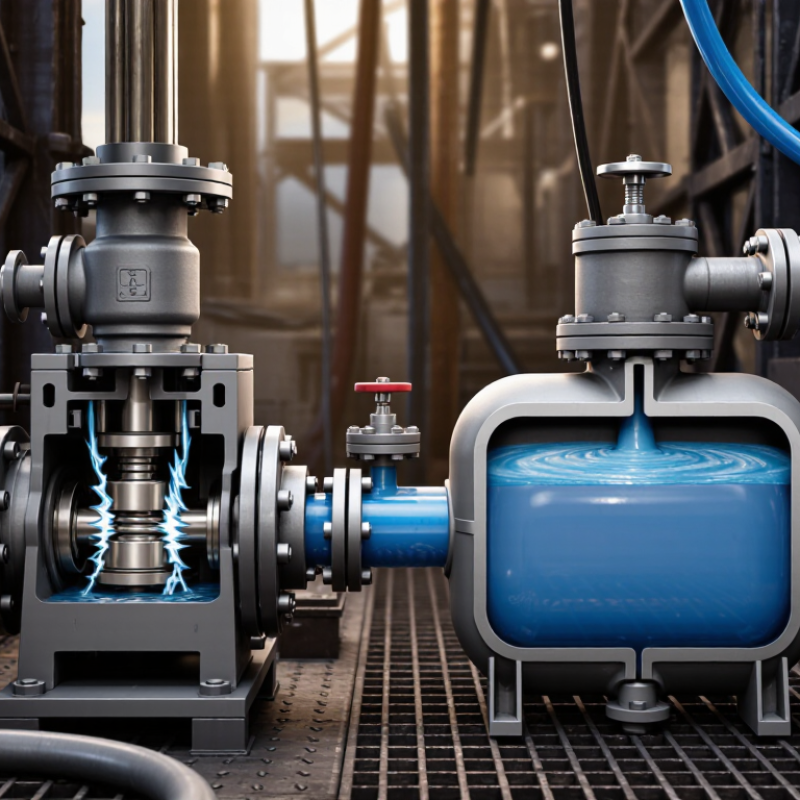
A mud pump pulsation dampener is a pressure-control vessel installed near the pump discharge. It contains compressed gas above a flexible diaphragm or bladder. As the pump pistons create pressure peaks, the gas compresses and absorbs part of the surge. During the suction stroke, stored energy returns to the fluid system. The result is steadier discharge pressure.
This device protects more than the pump. Smoother flow reduces vibration in standpipes, hoses, valves, and surface lines. It also supports more stable equivalent circulating density during drilling. Published laboratory and field studies in SPE technical literature commonly report residual pressure fluctuations near 5–15% after correct dampener sizing and precharge. Poor tuning can produce much weaker results. The IADC Drilling Manual and API Specification 7K both emphasize inspection, pressure control, and correctly rated pressure equipment.
The detail many crews notice first is physical. A correctly adjusted unit feels calmer near the discharge line, with fewer sharp gauge movements and less pipe movement. Gas precharge matters greatly. Too little gas leaves the vessel ineffective; too much reduces its absorption range. It is not a magic cure. I have seen pressure instability blamed on the dampener when worn valves or changing pump speed caused the real problem. Maintenance records, temperature, fluid density, and actual pressure readings should guide adjustments. The equipment helps, but measurement still decides.
| Data Dimension | Verified General Information | Operational Importance |
|---|---|---|
| Definition | A mud pump pulsation dampener is a pressure-vessel device installed in the discharge line of a reciprocating drilling-fluid pump. | It reduces pressure and flow fluctuations produced by the pump’s individual piston or plunger strokes. |
| Primary Function | The dampener stores and releases a small amount of hydraulic energy during each pumping cycle. | This smooths the discharge stream and helps stabilize pressure in the circulating system. |
| Working Principle | A compressible gas, normally nitrogen, is separated from the drilling fluid by a bladder, diaphragm, or piston. Pressure variations compress and expand the gas volume. | The gas cushion absorbs pressure peaks and supports flow during the lower-pressure portion of the stroke cycle. |
| Typical Installation Location | It is generally mounted on or immediately downstream of the mud pump discharge manifold. | Positioning it close to the pump helps reduce the transmission of pulsation into the high-pressure discharge piping. |
| Pressure Pulsation Source | Reciprocating mud pumps generate non-uniform flow because their pistons or plungers move in repeated suction and discharge cycles. | Without damping, these cyclic pressure changes can cause vibration, noise, and mechanical stress. |
| Effect on Discharge Pressure | The device does not create additional pump pressure; it moderates rapid pressure changes around the operating pressure. | More stable pressure improves control of the circulating system and reduces pressure spikes. |
| Effect on Flow Delivery | The dampener makes the instantaneous discharge flow more uniform, although the pump remains a reciprocating positive-displacement machine. | Smoother flow supports more consistent hydraulic performance at the bit and through surface equipment. |
| Protection of Piping | By absorbing rapid pressure changes, the dampener reduces cyclic loading in discharge pipes, fittings, valves, and connections. | Lower vibration and fatigue loading can help reduce leakage, loosening, and premature component damage. |
| Protection of Instruments | Pressure gauges, transmitters, and other monitoring instruments may be exposed to repeated pressure spikes without adequate damping. | Reduced pulsation improves measurement stability and can extend instrument service life. |
| Common Construction | Typical assemblies include a pressure-rated shell, gas chamber, separator element, flange or threaded connection, and safety or charging components. | The design must match the pump pressure rating, connection size, drilling-fluid service, and applicable safety requirements. |
| Gas Used for Precharge | Nitrogen is commonly used because it is dry and comparatively inert. Oxygen or compressed air should not be used where the equipment manufacturer prohibits them. | Correct gas selection reduces contamination, oxidation, and safety risks associated with unsuitable gases. |
| Precharge Requirement | The gas precharge must be set according to the dampener design, operating pressure, fluid service, and manufacturer’s procedure. | Incorrect precharge can reduce damping performance, damage the separator element, or create unsafe operating conditions. |
| Maintenance Checks | Routine checks commonly include gas precharge, external leakage, shell condition, flange tightness, valve condition, and separator integrity. | Regular inspection helps identify loss of precharge, bladder or diaphragm failure, corrosion, and connection problems. |
| Safety Consideration | A pulsation dampener is a pressure vessel and must be isolated, depressurized, and verified safe before service. | Stored hydraulic and gas energy can cause serious injury if the unit is opened or serviced while pressurized. |
| Main Benefits | Pressure stabilization, lower vibration, reduced piping stress, improved instrument reliability, and smoother drilling-fluid circulation. | These benefits support safer operation, better equipment reliability, and more consistent drilling performance. |