

Toll Free: 1800 3000 6222
Telephone: +91 141 222 3221
Fax: +91 141 222 1926, 222 2259
CIN: U29130WB1946PLC013643
Founded in 1946, National Engineering Industries Ltd (NEI) is India’s leading bearings manufacturer and exporter, renowned for excellence in quality and delivery.

Choosing the best Tarpaulin Sheets from China requires more than comparing prices on a supplier page. The right choice depends on fabric strength, coating quality, waterproof performance, and intended use. A sheet for construction covers needs different protection from one used for trucks, farms, camping, or warehouse storage. Experienced buyers usually check the base fabric, denier, GSM, hem design, eyelet spacing, and temperature resistance. These details matter when rainwater collects on a cover or strong wind pulls against its corners.
Chinese manufacturers offer many options, from lightweight PE tarps to heavy-duty PVC-coated fabric. PE tarps are practical for temporary protection and general outdoor use. PVC tarps usually provide better abrasion resistance, longer service life, and stronger waterproofing. However, thicker material is not always better. It can add unnecessary weight, raise shipping costs, and make installation difficult. A perfect sheet does not exist. The best product matches the actual working conditions.
Reliable sourcing also requires evidence. Buyers should request clear specifications, production samples, test reports, and photographs of finished edges and eyelets. Checking factory experience, quality-control procedures, packaging, and communication can prevent expensive surprises. A small sample test is valuable. Stretch it, fold it, spray it with water, and inspect the seams. I once assumed a heavier tarp would perform better, but weak stitching changed that judgment. This is why product decisions should combine supplier records with practical testing, not marketing language alone.
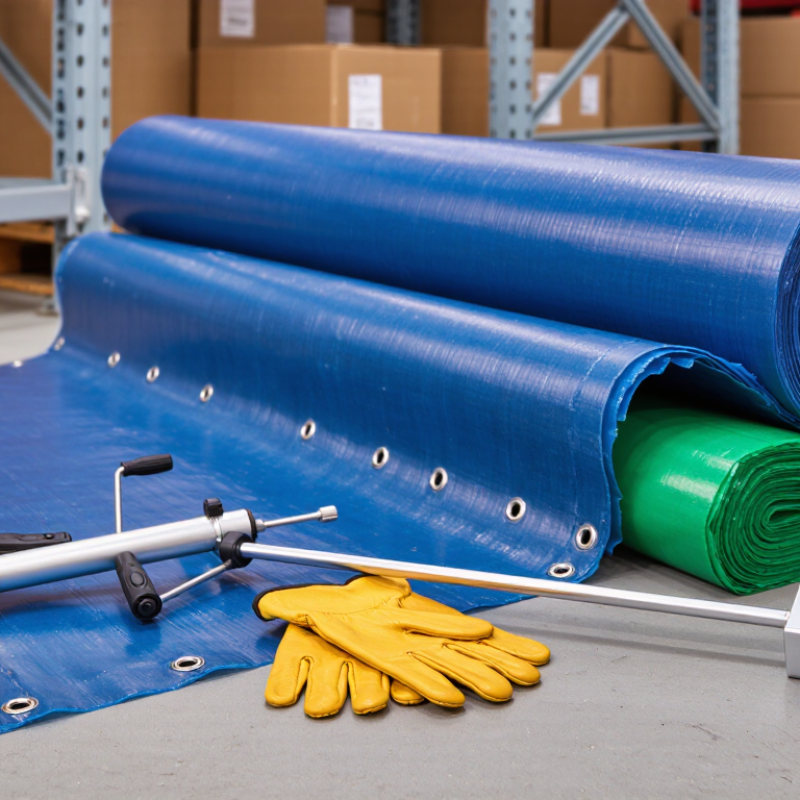
China-made tarpaulin sheets cover several practical categories. PE woven tarps use laminated polyethylene fabric, making them light, waterproof, and economical. They suit truck covers, temporary shelters, garden storage, and construction protection. PVC-coated tarps are heavier and more flexible in cold weather. Their welded seams and stronger coating support industrial covers, warehouses, and repeated handling. Canvas Tarps feel breathable, but they usually need water-resistant treatment. Mesh tarps reduce wind pressure while controlling sunlight, especially around scaffolding and outdoor storage.
Material choice should follow the working environment, not only the quoted price. Grand View Research’s 2024 Tarpaulin Sheets Market Report estimates the global market at roughly USD 8 billion in 2023, with continued growth expected through 2030. That expansion reflects demand for durable covers in transport, agriculture, and construction.
Industry testing should check tear strength, coating weight, UV resistance, seam strength, and hydrostatic pressure. A 650-denier fabric may outperform a thinner sheet, but denier alone proves little. Ask for batch testing.
In practical sourcing, PE tarps often offer the best balance for temporary use. PVC performs better when abrasion and repeated folding matter. Canvas can be useful where ventilation is important. Yet color, stitching, and eyelet spacing can vary between production batches. That is easy to overlook. Request a physical sample, inspect the corners, and compare measured weight with the specification. ASTM or ISO test references improve reliability, although certificates should match the actual material and batch.

The best tarpaulin sheet depends on its working environment, not only its thickness. Polyethylene tarpaulins are lightweight, economical, and useful for temporary covers, truck loads, and outdoor storage. Their woven tapes provide basic tensile strength. A laminated coating improves water resistance. However, thin polyethylene can crack after repeated folding or long exposure to strong sunlight.
PVC tarpaulins are heavier and more flexible. They usually offer better abrasion resistance, waterproofing, and weldable seams. This makes them suitable for industrial curtains, transport covers, and construction protection. Check the fabric weight, coating thickness, and cold-flexibility test results. A glossy surface may look impressive. It does not always indicate longer service life.
Canvas tarpaulins allow better breathability, especially when condensation is a concern. They may need water-repellent treatment and regular drying. TPU-coated fabric can provide a useful balance between flexibility, chemical resistance, and lower weight, but its cost requires careful comparison. In practical inspections, I look closely at eyelet spacing, corner reinforcement, seam consistency, and edge webbing. Small defects often appear there first. Ask for tensile, tear, hydrostatic-pressure, and UV test data from an independent laboratory when possible. GSM alone can mislead buyers. A heavier sheet may still have weak stitching or uneven coating. Supplier claims should be verified against samples, intended use, and actual weather conditions.
Choosing the right Chinese tarpaulin sheet starts with the job, not the lowest quote. Grand View Research estimated the global tarpaulin sheets market at about USD 8.8 billion in 2023. Construction, farming, transport, and temporary storage remain major applications. These uses need different protection levels.
For outdoor storage, choose woven polyethylene with a laminated surface. Check the fabric weight, usually measured in GSM. A 120–180 GSM sheet suits light covering. Heavy equipment often needs 200 GSM or more. Ask for tensile strength and tear strength results. ISO 1421 can support coated-fabric tensile testing. ASTM D751 is also widely used for coated fabrics.
Inspect the weave under strong light. Uneven coating may create pale lines or weak corners. Confirm UV resistance through test reports, not vague claims. ISO 4892-3 exposure data can help compare aging performance. Check eyelet spacing, reinforced hems, seam quality, and actual finished size. A useful sample test includes folding, spraying, and pulling each corner by hand.
I once focused too heavily on thickness. The sheet looked strong, yet poor eyelets caused early failure. That mistake still matters. Request a pre-shipment sample, production photos, and a report matching the supplied material. Also confirm temperature conditions, because brittle fabric performs badly in cold storage. Specifications can be imperfect; real handling often reveals more.
Quality depends on more than thickness or a low quotation. A reliable tarpaulin should have clear specifications for fabric weight, tensile strength, tear resistance, waterproof performance, and UV stability. Polyethylene sheets are lightweight and practical for temporary covers. PVC-coated fabrics are heavier, stronger, and better suited to repeated handling. In real purchasing work, I have found that weak seams often fail before the fabric does. Heat-welded edges, reinforced corners, and evenly spaced eyelets deserve close inspection.
A professional manufacturer should control raw materials, coating thickness, color consistency, and production temperature. Ask for recent test reports, not only a certificate image. Useful checks include tensile testing, tear testing, hydrostatic pressure, and accelerated UV exposure. Quality systems such as ISO 9001 can support consistency, but they do not replace product testing. Request a pre-production sample and compare it with the approved specification. Small differences matter. A slightly thinner coating may reduce service life, even when the sheet looks acceptable.
Tips: Confirm dimensions after hemming, because finished sizes can differ from cutting sizes. Check eyelet spacing with a ruler. Examine several corners for stitching or welding defects. Consider the actual climate, wind, sunlight, and handling frequency before choosing material. I would also keep an inspection record with photographs, batch numbers, and test results. Some buyers overlook this step. That mistake can make later claims difficult. Even a good factory may produce inconsistent batches without clear written controls.
What Are the Best Tarpaulin Sheets from China?
Common Uses and Purchasing Factors
Tarpaulin sheets from China serve many practical purposes. Construction crews cover sand, timber, tools, and unfinished roofs with them. Farmers use tarps for hay, machinery, soil protection, and temporary storage. Transport companies place them over open loads during short journeys. They also support outdoor markets, camping areas, and temporary work shelters. The best sheet depends on exposure, movement, and expected service life.
Material selection requires careful comparison. PVC-coated polyester usually offers stronger waterproofing and abrasion resistance than lightweight polyethylene. Check fabric weight, coating thickness, tear strength, and ultraviolet resistance. A thick tarp is not always better. It may become difficult to fold, carry, or install. Reinforced hems and closely spaced metal eyelets reduce damage around tie-down points. Measure the finished size, not only the advertised cut size. This detail is often overlooked.
Purchasing from China requires more than comparing quotations. Request a physical sample and inspect stitching, eyelet spacing, smell, coating uniformity, and actual dimensions. Ask for test data that matches the supplied material. Confirm color tolerance, packaging, production time, and replacement terms in writing. My own mistake was trusting a sample without checking the finished edge. The bulk order looked similar, but the corners needed extra reinforcement. Small details matter. Consider the climate, too. A tarp used under intense sun needs different protection from one used indoors. Clear communication with the supplier can prevent costly misunderstandings, although it cannot replace inspection.
| Tarpaulin Type | Typical Material and Construction | Common Weight Range | Common Uses | Main Advantages | Important Purchasing Factors |
|---|---|---|---|---|---|
| PE Woven Tarpaulin | Woven polyethylene fabric with laminated polyethylene coating on one or both sides | About 60–240 g/m² | Agricultural covers, temporary shelters, construction materials, outdoor storage, truck and cargo covering | Lightweight, waterproof, economical, easy to fold and available in many sizes and colors | Fabric weight, weave density, coating thickness, seam strength, grommet spacing and UV treatment |
| PVC-Coated Tarpaulin | Polyester scrim coated or laminated with polyvinyl chloride on both sides | About 300–1,000 g/m² | Truck curtains, industrial covers, tents, warehouses, equipment protection and long-term outdoor applications | Higher tear resistance, stronger weldable seams, good abrasion resistance and longer service life than light PE sheets | Base fabric denier, total weight, tensile and tear strength, low-temperature flexibility, welding quality and flame-retardant rating |
| Canvas Tarpaulin | Woven cotton or cotton-blend fabric, usually treated with water-repellent or mildew-resistant finishes | About 280–650 g/m² | Breathable covers, tools and machinery, camping, landscaping and applications where condensation control matters | Breathable, relatively quiet, flexible and suitable for protecting materials that should not be sealed completely | Water-repellent performance, mildew resistance, shrinkage, fabric density, stitching quality and drying requirements |
| HDPE Reinforced Tarpaulin | High-density polyethylene woven fabric with reinforced edges, corners or internal scrim | About 100–300 g/m² | Firewood, hay and grain covers, temporary roofing, construction sites and general outdoor protection | Good strength-to-weight ratio, low water absorption, easy handling and useful reinforcement options | Edge tape width, corner reinforcement, eyelet material, UV stabilizer content, dimensional tolerance and packing method |
| Mesh Tarpaulin | Knitted or woven polyethylene mesh with an open structure that allows airflow | About 80–250 g/m² | Shade structures, windbreaks, privacy screens, fencing, scaffolding and truck-load containment | Reduces wind load, provides shade and privacy, and permits ventilation and partial visibility | Shade percentage, mesh openness, edge reinforcement, UV resistance, tear strength and installation hardware |
| Fire-Retardant Tarpaulin | PVC-coated polyester or other technical fabric treated or manufactured to meet a specified fire-performance requirement | About 400–1,000 g/m² | Event tents, welding screens, industrial partitions, temporary structures and locations with fire-safety requirements | Can reduce flame spread when the correct certified specification is selected | Required test standard, certificate validity, flame-spread rating, smoke performance, coating composition and end-use regulations |
| Purchasing Check | Why It Matters | What to Confirm Before Ordering |
|---|---|---|
| Dimensions and tolerance | Finished dimensions can differ from cutting dimensions because of hems, seams and production tolerance | Finished size, unfolded size, measurement tolerance and whether the quoted size includes hems |
| Waterproofing and hydrostatic performance | Coating quality and seam construction determine whether water enters through the fabric or stitching | Waterproof test method, coating side, seam type and sample test results |
| Tensile and tear strength | Higher strength reduces damage during installation, transport and windy conditions | Test direction, test standard, minimum values, fabric weight and reinforcement details |
| UV and weather resistance | Sunlight, heat, rain and cold can cause fading, embrittlement or coating failure | UV-stabilizer specification, accelerated-weathering results and recommended service conditions |
| Grommets and edge reinforcement | Weak eyelets or unreinforced edges are common failure points during tie-down | Grommet material, inside diameter, spacing, corner patches and edge-tape construction |
| Compliance and inspection | Documentation helps verify safety, material consistency and conformity with the destination market | Applicable standards, material declarations, inspection plan, pre-shipment sample and packaging requirements |
Copyright © 2023 NEI Ltd. All rights reserved.
Registered Office : 9/1, R. N. Mukherjee Road, Kolkata – 700 001. In case of any queries or grievances, please contact Mr.Tarun Kumar Kabra, Company Secretary.
E-mail: sale@kinpart.com Privacy Policy Cookie Policy