What is a Wafer Roll Machine and How Does It Work?
In the confectionery industry, the Wafer Roll Machine plays a crucial role. These machines produce delicious wafer rolls that fill up the demand for snack foods. According to recent industry reports, the global wafer market is projected to reach $23 billion by 2025. The efficiency and precision of the Wafer Roll Machine significantly impact production rates and product quality.
This machine utilizes advanced technology to ensure consistency. It typically operates by heating batter, creating crispy, thin wafers. These wafers are then rolled and filled with various flavors. The demand for innovative snacks drives manufacturers to invest in higher-capacity machines. However, some machines may struggle with maintaining consistent thickness. This inconsistency can lead to wasted materials and decreased customer satisfaction.
Furthermore, the maintenance of Wafer Roll Machines is essential. Regular checks prevent breakdowns and extend equipment life. Manufacturers often overlook this aspect, leading to operational delays. Addressing these challenges can enhance productivity and product quality. The Wafer Roll Machine stands as a testament to technology's influence on modern snacking trends.
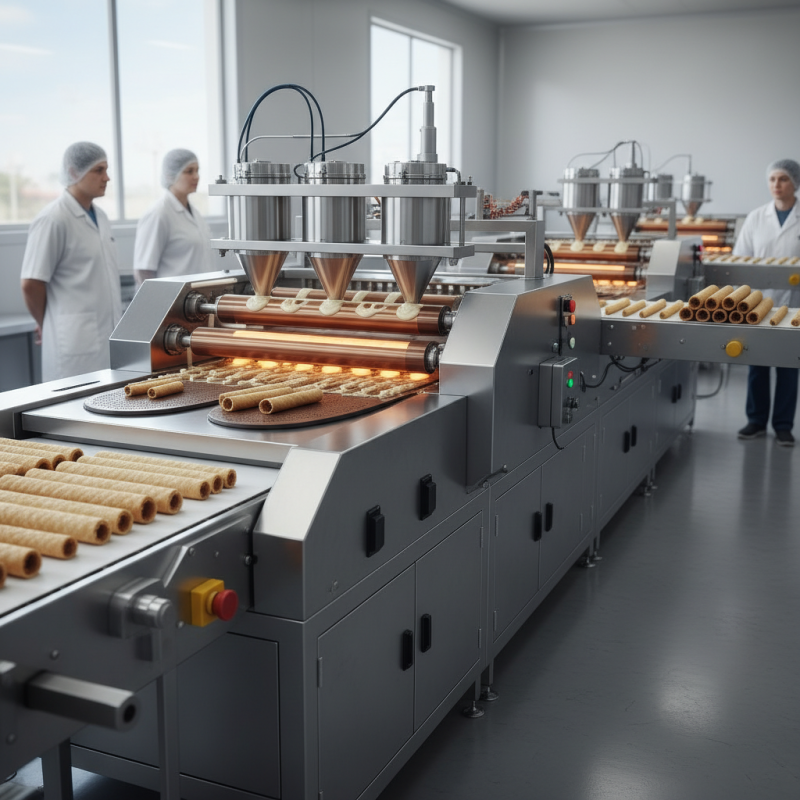
What is a Wafer Roll Machine?
A wafer roll machine is a specialized piece of equipment designed to create wafer rolls. These are thin, crisp tubes often used for desserts and snacks. The machine operates by combining batter ingredients, which are then poured onto a hot plate, cooking until golden brown. This process is quick, but precision is key.
Once the batter cooks, it is rolled into shape using a series of molds. This part of the operation requires careful handling. Sometimes the rolls break or become misshapen. It’s a common challenge in production. Adjusting the temperature or batter consistency can help.
These machines can vary in size and complexity. Some are small and suitable for artisan bakers. Others are large and industrial, designed for mass production. Regardless of size, a wafer roll machine must be monitored closely. Regular maintenance is important to ensure consistent quality. A small oversight can lead to waste or uneven products.
Key Components of a Wafer Roll Machine
A wafer roll machine is designed to craft delicate wafer rolls. The process involves several key components that work in harmony. The primary part of this machine is the baking oven. It heats the batter evenly, forming thin, crispy sheets. The temperature must be precise. Too hot, and the wafers burn; too cool, and they won't crisp properly.
Another essential component is the forming station. Here, the baked sheets are rolled into cylindrical shapes. This station often includes a set of rollers that apply pressure. If the pressure is uneven, it leads to inconsistencies in thickness. Accuracy is crucial; even slight variations can affect the final product's look and taste.
Lastly, the cutting mechanism plays a pivotal role. It slices the rolled wafers into desired lengths. If the cutting is imprecise, you may end up with awkwardly sized pieces. This not only affects presentation but also makes packaging challenging. Each component is interlinked, and reflecting on their synergy is vital for improving efficiency.
How a Wafer Roll Machine Operates Step-by-Step
A wafer roll machine is a specialized device used to create delicious, thin wafer rolls. Understanding its operation can reveal the intricacies of this sweet-making process.
The journey begins with the mixing of ingredients. Flour, sugar, and water come together in a fine mixture. This batter is then spread over a heated plate. The temperature needs to be just right. Too hot, and the wafer burns; too cool, and it remains undercooked. Fine-tuning this temperature can be challenging.
Once cooked, the flat wafer is carefully removed. It’s still flexible at this stage, which is crucial. Each wafer is quickly rolled around a cylindrical mold. Timing is everything; if it cools too quickly, it becomes brittle. After shaping, the rolls are placed on cooling racks. The final texture and flavor come from this cooling phase, revealing the art behind wafer roll production. Adjustments in temperature and timing are essential. Each batch may differ slightly, reminding us of the delicate balance in food crafting.
Applications of Wafer Roll Machines in Food Production
Wafer roll machines are essential in the food production industry. They create thin, crispy wafers used in various snacks. These machines mix batter and generate thin sheets of wafer on heated plates. It’s a fascinating process, but it can be quite challenging. The temperature must be just right to ensure a perfect crispness.
These machines find applications in many products. For instance, they are used to make ice cream cones and dessert rolls. The versatility allows them to produce diverse shapes and sizes. However, operating these machines isn't always straightforward. Adjusting the batter consistency requires practice, and minor mistakes can affect the final texture.
Moreover, the efficiency of wafer roll machines significantly impacts production rates. A well-functioning machine can produce thousands of wafers in an hour. Yet, issues like machinery maintenance often arise. Regular checks are necessary to avoid downtimes, which can disrupt operations. Understanding these nuances is essential for optimal results in food production.
Production Output of Wafer Roll Machines
Maintenance and Troubleshooting for Wafer Roll Machines
Maintenance of wafer roll machines is crucial for optimal performance. Regular inspections help identify wear and tear. According to industry studies, nearly 30% of machine downtime results from inadequate maintenance. Operators should check the rollers for misalignment. Misalignment can lead to uneven wares and increased scrap rates.
Troubleshooting involves understanding common issues. For instance, a machine may experience inconsistent thickness in wafers. This can stem from improper settings or worn-out rollers. Operators should monitor the settings carefully. Reportedly, 20% of operators fail to adjust their machines according to material changes. Addressing these problems promptly can enhance productivity.
Routine cleaning should not be overlooked. Residue can build up on components, affecting the quality of the final product. Clean surfaces allow for better heat transfer and even baking. The lack of proper cleaning may lead to increased energy consumption, approximately 15% higher, as per recent analysis. Ensuring that machines are maintained effectively is not just a task but a necessity for longevity and efficiency.
What is a Wafer Roll Machine and How Does It Work? - Maintenance and Troubleshooting for Wafer Roll Machines
| Feature | Description |
| Machine Type | Wafer Roll Machine |
| Function | Produces rolled wafers from batter |
| Key Components | Batter mixer, roller plates, heating elements, cutting mechanisms |
| Operating Temperature | Typically 200-250°C (392-482°F) |
| Maintenance Frequency | Daily checks and weekly deep maintenance |
| Common Issues | Inconsistent thickness, burning, jamming |
| Troubleshooting Tips | Check temperature settings, clean rollers, verify batter consistency |
| Warranty Period | Typically 1 year with maintenance agreement |
| Production Capacity | Approximately 300-400 wafers per hour |