How to Use a Sternum Saw Safely and Effectively?
Using a Sternum Saw safely and effectively is crucial in the medical field. Dr. Emily Chen, a renowned cardiothoracic surgeon, emphasizes, "Precision in using the Sternum Saw is essential for patient safety." This powerful tool plays a vital role in surgical procedures. However, improper use can lead to significant risks.
Surgeons often face pressure in high-stakes environments. The Sternum Saw, though efficient, requires focused attention. Each cut must be deliberate and controlled. Surgeons should frequently reassess their technique. The challenge lies in balancing speed with accuracy. Many forget that a momentary distraction can result in severe consequences.
Training and experience are essential when handling a Sternum Saw. New practitioners must not underestimate the learning curve. Supervision from seasoned professionals is invaluable. Even experienced surgeons can overlook minor details, leading to complications. The path to mastery demands constant reflection and practice. Awareness and caution are the cornerstones of using the Sternum Saw effectively.
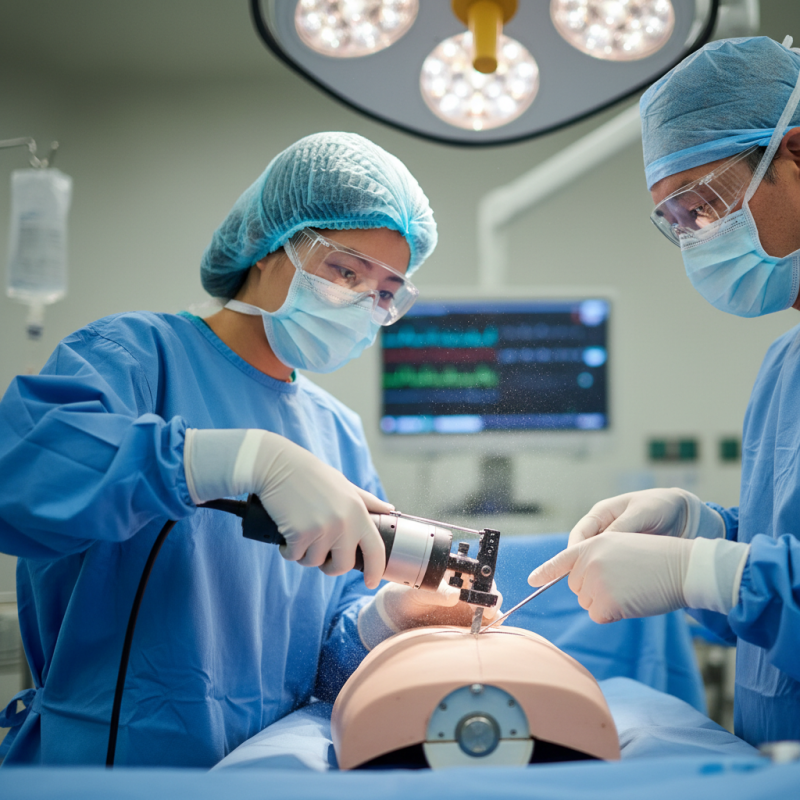
Understanding the Sternum Saw and Its Purpose in Surgery
The sternum saw is a crucial tool in surgical procedures, particularly in open-heart surgery. It is designed specifically to cut through the sternum, allowing access to the chest cavity. Surgeons rely on its precision, but using it safely requires training and practice. The saw operates with a high-speed oscillating motion, making it effective yet dangerous if misused.
Surgeons must pay attention to their technique. A steady hand is critical. The angle of the saw matters. Even a slight mistake can lead to complications. Understanding the anatomy of the chest is vital. Surgeons must recognize where to cut and where to avoid. The sternum is not the only thing in the way. Vital arteries and veins are close by, requiring focus.
Also, be aware of the saw’s maintenance. A dull blade can increase the risk of mistakes. Regular checks are necessary to ensure it operates smoothly. Each procedure can be different, and reflection afterward is important. Every surgery is a learning experience. Even experts can refine their skills, improving outcomes for future patients.
How to Use a Sternum Saw Safely and Effectively?
| Aspect | Details |
| Purpose | To cut through the sternum during thoracic surgeries, facilitating access to the thoracic cavity. |
| Types | Electric Sternum Saw, Manual Sternum Saw. |
| Safety Precautions | Use protective eyewear, gloves, and ensure proper training before use. |
| Technique | Ensure proper positioning and maintain steady pressure while cutting to prevent oscillation. |
| Post-Use Care | Clean and sterilize the saw after each use to prevent infections. |
| Training Requirements | Only qualified surgical staff should operate the sternum saw, with appropriate training in surgical procedures. |
Essential Safety Precautions When Using a Sternum Saw
Using a sternum saw requires careful attention to safety. The noise it produces can be startling. Wearing proper personal protective equipment is crucial. Always use eye protection to guard against debris. Hearing protection is also important. The sound of the saw can be overwhelming in a surgical setting.
Before operating the saw, inspect it thoroughly. Ensure all parts are functioning correctly. A malfunction can lead to serious injuries. Check the blade for sharpness, and make sure it’s secured in place. Stand in a stable position while using the saw. A slip or miscalculation can result in accidents. Remember, confidence comes with practice, but overconfidence can be dangerous.
Keep your workspace organized. Clutter can cause distractions, which may lead to mistakes. After completing the task, clean the area carefully. Disinfect the saw to prevent any potential infection. It’s essential to reflect on each procedure. Consider what could have gone better. Continuous learning is part of the process. Even small oversights can have significant consequences.
Step-by-Step Guide to Proper Sternum Saw Operation
Using a sternum saw requires precision and care. Start by setting up a clean workspace. Ensure all tools are within reach. Proper personal protective equipment is crucial. This includes gloves, goggles, and masks. Preparing the saw is important. Check the blade for sharpness and stability. A dull blade can lead to complications.
When it’s time to operate the saw, maintain a steady grip. Hold the saw with both hands. Position it accurately on the sternum. A misalignment can cause unnecessary damage. Make slow, controlled movements. Rushing can lead to mistakes. It is vital to listen to the machine. Changes in sound may indicate an issue. Stop if needed and reassess.
After completing the procedure, clean the tools thoroughly. This ensures longevity and safety for future use. Reflect on your technique and identify areas for improvement. Consider documenting your performance. This can help track progress over time. Safe operation is key to successful outcomes.
Post-Operation Care and Maintenance for the Sternum Saw
Post-operative care for a sternum saw is crucial. Proper maintenance can extend its life and ensure safety during use. According to the American College of Surgeons, equipment breakdown accounts for 20% of surgical delays. Regularly inspect the saw for wear and tear. Check the blades for sharpness and replace them when dull. A dull blade not only reduces efficiency but also increases the risk of accidental injuries.
Clean the saw after each use. Use a sterile solution to remove any biological debris. The Centers for Disease Control and Prevention (CDC) recommends following stringent cleaning protocols to minimize infection risks in surgical instruments. Ensure all components are thoroughly dried to prevent rust or corrosion. Moisture can degrade the mechanical parts. Store the saw in a designated, clean area when not in use.
Document any maintenance activities. Keeping a log helps track the saw’s performance and issues over time. This practice is often overlooked but is essential in surgical environments. A Harvard Medical School study highlighted that 30% of surgical errors are linked to equipment-related problems. Investing in regular care can lead to improved surgical outcomes and patient safety.
Common Mistakes to Avoid When Using a Sternum Saw
Using a sternum saw requires careful attention. Many mistakes can lead to serious accidents or injuries. One common error is poor positioning. Surgeons often underestimate the importance of their stance. A stable posture can greatly improve control over the saw. According to a report from the American College of Surgeons, nearly 30% of surgical errors are attributed to improper positioning.
Another significant mistake is rushing through the procedure. Time pressures can lead to careless handling. A survey highlighted that 40% of surgical professionals admit to completing procedures too quickly. This haste can result in unintentional cuts or damage to surrounding tissues. Ensuring a steady pace is vital. Take time to double-check the settings and ensure everything is aligned.
Lastly, failing to maintain equipment can lead to complications. Regular inspections are essential for safety. A study found that up to 25% of sternum saw malfunctions occur due to neglect. Keep blades sharp and free from debris to avoid resistance. Even minor issues can escalate when you’re focused on speed. Attention to detail ultimately ensures better outcomes.