
nbc logo (2)
Office address
National Engineering Industries Ltd.
Khatipura Road Jaipur – 302006 Rajasthan, India
Phone Number

Toll Free: 1800 3000 6222
Telephone: +91 141 222 3221
Fax: +91 141 222 1926, 222 2259
CIN: U29130WB1946PLC013643

What Are the Top Double Roller Bearing Types?

Choosing among double roller bearing designs starts with a practical question: what loads, speeds, and misalignment will the machine actually face? Cylindrical, spherical, and tapered roller arrangements serve different needs. Their performance depends on details such as shaft deflection, lubrication, mounting accuracy, and available space.

The U.S. Department of Energy’s 2014 United States Industrial and Commercial Motor System Market Assessment Report estimated that motor-driven systems use about 68% of U.S. manufacturing electricity. Bearings are only one part of those systems, but a poor selection can contribute to friction, heat, and downtime. SKF’s Rolling Bearings catalogue and ISO 281 provide useful engineering references for bearing design and rating life. Neither replaces checking the real operating conditions.

That sounds tidy. Real machines are not.

Bearing analyst Tedric A. Harris is widely known for his technical work, including Rolling Bearing Analysis. I cannot verify a verbatim statement from Harris specifically about double roller bearing types, so I will not invent a quotation. His work nevertheless points readers toward the engineering fundamentals: load, geometry, and operating conditions matter together. This guide compares common types and their trade-offs, while noting that product data and application checks should guide the final choice. A catalogue match is a starting point, not proof of suitability.
What Are the Top Double Roller Bearing Types?

Understanding Double-Row Roller Bearing Construction

What Are the Top Double Roller Bearing Types?

Understanding Double-Row Roller Bearing Construction

A double-row roller bearing contains two parallel rows of rolling elements between inner and outer rings. Each row runs along its own raceway, helping distribute loads across a wider contact area than a single row. A cage spaces the rollers and limits contact between them. Small clearances matter.

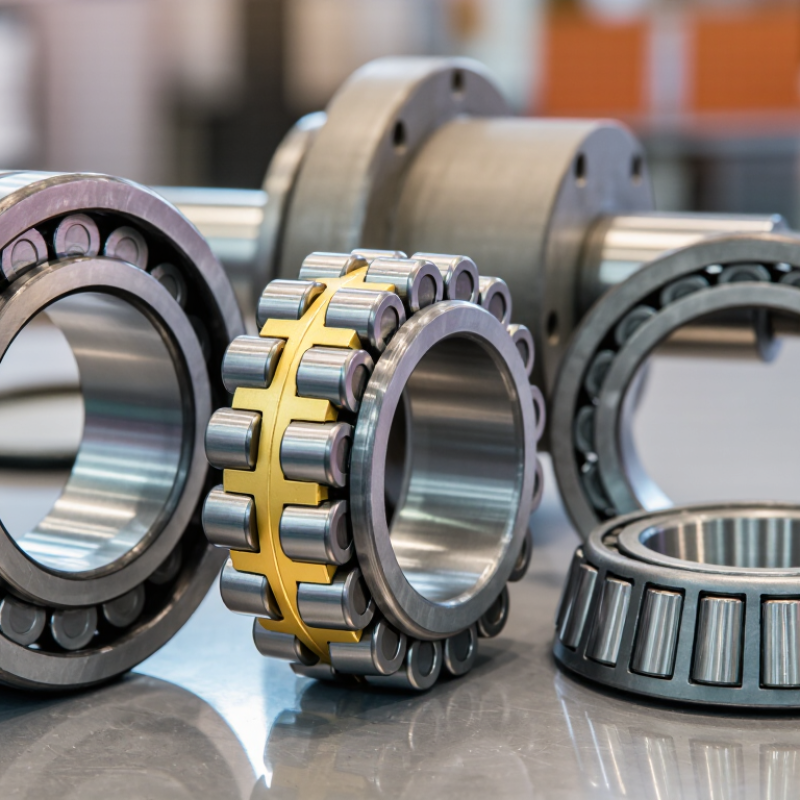
The construction depends on the roller shape. Cylindrical designs generally handle substantial radial loads, while tapered designs can support radial and axial loads together. Spherical rollers sit in curved raceways, allowing some angular misalignment. These differences affect how a bearing responds to shaft deflection and changing loads. They are not interchangeable by default.

In service, the ring fit, lubrication, and alignment all influence performance. Too little lubricant can raise friction and temperature; contamination may mark the raceways. During installation, force should be applied to the ring being fitted, not transmitted through the rollers. A drawing can make the assembly look simpler than it is. Actual operating conditions still need checking.

Double-Row Spherical Roller Bearings

Double-row spherical roller bearings use two rows of barrel-shaped rollers between an inner ring and a spherical outer raceway. This geometry helps the bearing accommodate shaft deflection and limited misalignment while carrying substantial radial loads. It can also support axial loads in both directions, within the limits of its design. That flexibility is useful.

In a conveyor drive, for example, a long shaft may bend slightly under changing loads. The bearing’s spherical raceway lets the rollers adjust their position instead of forcing perfect alignment at every moment. However, self-alignment is not a cure-all. Excessive angular error, shock loading, or a poorly supported housing can still shorten service life.

Selection depends on load, speed, operating temperature, and lubrication conditions. A tapered bore may simplify mounting on an adapter sleeve, while a cylindrical bore suits other shaft arrangements. Check the required internal clearance and follow the bearing maker’s fitting guidance; too much mounting force can damage rolling surfaces. In practice, grease condition and seal design matter as much as bearing capacity. I would not choose one from load ratings alone. A quick shaft-alignment check during maintenance can reveal problems before vibration becomes obvious.

Double-Row Cylindrical Roller Bearings

Double-row cylindrical roller bearings use two parallel roller rows to carry heavy radial loads in a compact arrangement. Their stiff support suits gearboxes, rolling mills, and machine-tool spindles, where shafts must stay steady under load. Some designs also accommodate limited axial force, but that capability depends on their flange arrangement. Check the bearing drawing, not just its label. Fit, lubrication, and operating temperature matter, too; a small alignment error can raise friction and shorten service life. Not magic.

ISO 281:2007 basic rating-life method

L10 = (C/P)(10/3) million revolutions

For a quantitative check, ISO 281:2007 gives the basic rating-life method: L10 = (C/P)(10/3) million revolutions for roller bearings, where C is the basic dynamic load rating and P is the equivalent dynamic load. L10 represents a life that 90% of a sufficiently large group of identical bearings is expected to reach or exceed under stated conditions. It is a calculation, not a promise for a particular machine. Real contamination, shock loads, or poor lubrication can change the outcome. That neat equation can feel reassuring, but field conditions are rarely neat. Specify the load spectrum, shaft fit, and lubrication interval before selecting a double-row design.

Double-Row Tapered Roller Bearings

What Are the Top Double Roller Bearing Types?

Double-Row Tapered Roller Bearings

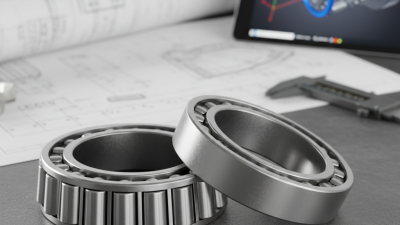
A double-row tapered roller bearing has two rows of rollers running on matching tapered raceways. Their opposing contact angles help support radial loads and axial loads in both directions. This layout can handle combined loads in compact assemblies, including gearboxes, wheel hubs, and conveyor supports. Actual capacity depends on bearing size, internal geometry, and operating conditions.

The two rows can also resist tilting forces, but alignment still matters. A skewed shaft or distorted housing may concentrate load along one edge of the rollers. That can increase heat and accelerate wear. Check shaft and housing fits, mounting faces, and the specified clearance or preload. Small details matter. Lubricant must reach the rolling contacts without causing excessive heat.

Some bearings come with a preset internal arrangement, which can simplify assembly. Still, don’t assume every unit suits every duty. Speed, shock loads, contamination, and lubrication intervals all affect selection. During inspection, look for uneven wear, discoloration, rough rotation, or looseness. Catalog conditions are tidy; real operating conditions often aren’t.

Choosing a Bearing by Load, Speed, and Alignment Needs

What Are the Top Double Roller Bearing Types?
Choosing a Bearing by Load, Speed, and Alignment Needs

Choosing a double-row bearing starts with the forces it must carry. Double-row angular contact ball bearings can support radial loads and axial loads in both directions. They suit applications where space is limited and rotational accuracy matters. Spherical roller bearings handle heavy radial loads and can accommodate some shaft misalignment. That can help when a housing flexes slightly under load.

Speed changes the decision. A bearing that carries a large load may not be the best fit for a fast-running shaft. Check its speed rating, lubrication method, operating temperature, and required service life together. Small details matter. A thin film of lubricant and a warm housing can reveal trouble before noise becomes obvious. Double-row cylindrical roller bearings are another option for high radial loads, though their axial-load capacity depends on the design.

Measure the expected load and consider how accurately the shaft and housing align. Then compare bearing ratings with real operating conditions, not just ideal catalog figures. It is easy to focus on capacity alone. In practice, fit, lubrication, vibration, and maintenance access can change the outcome. A practical choice is rarely perfect on paper; confirm the final selection against the equipment maker’s data and installation requirements.

What Are the Top Double Roller Bearing Types?

A qualitative comparison by load and alignment needs

Scale: 0 = limited, 1 = moderate, 2 = strong typical suitability. Spherical roller bearings accommodate misalignment; double-row cylindrical roller bearings are primarily suited to radial loads; double-row tapered roller bearings handle combined radial and axial loads. Actual capacity depends on bearing design, arrangement, lubrication, and operating conditions—consult manufacturer specifications for selection.