Toll Free: 1800 3000 6222
Telephone: +91 141 222 3221
Fax: +91 141 222 1926, 222 2259
CIN: U29130WB1946PLC013643
Founded in 1946, National Engineering Industries Ltd (NEI) is India’s leading bearings manufacturer and exporter, renowned for excellence in quality and delivery.

Choosing reliable Steel Square Pipe Manufacturers requires more than comparing prices on a supplier website. Global buyers must examine production capacity, material grades, dimensional accuracy, testing procedures, and export experience. A polished catalog is not enough.
Edwin Basson, Director General of worldsteel, has described steel as “essential to modern life.” That observation fits square pipe closely. These hollow sections support warehouse frames, agricultural equipment, guardrails, furniture, and many structural projects. Their four-sided profile offers practical strength and efficient fabrication. However, strength can vary with wall thickness, steel grade, welding quality, and forming methods.
This guide reviews leading Steel Square Pipe manufacturers serving international markets. It considers real purchasing concerns, including ASTM, EN, and JIS compliance, mill test certificates, corrosion protection, and container loading. Buyers should also check whether listed dimensions match actual production tolerances. Small differences matter. A pipe that is 100 × 100 millimeters may still fail a tight fabrication requirement if corner radius or wall thickness is inconsistent.
Experience suggests that the lowest quotation is rarely the complete cost. Freight, inspection, coating repairs, packaging, customs documentation, and rejected batches can change the final result. Manufacturer rankings are not universal, either. A large mill may suit infrastructure projects, while a specialized producer may better serve customized lengths or small-volume orders.
The comparison ahead aims to make supplier evaluation clearer. It also recognizes an uncomfortable point: published claims require verification. Independent testing and sample approval remain essential before signing a major contract.
Top Steel Square Pipe Manufacturers for Global Buyers
Understanding Steel Square Pipes and Their Global Applications
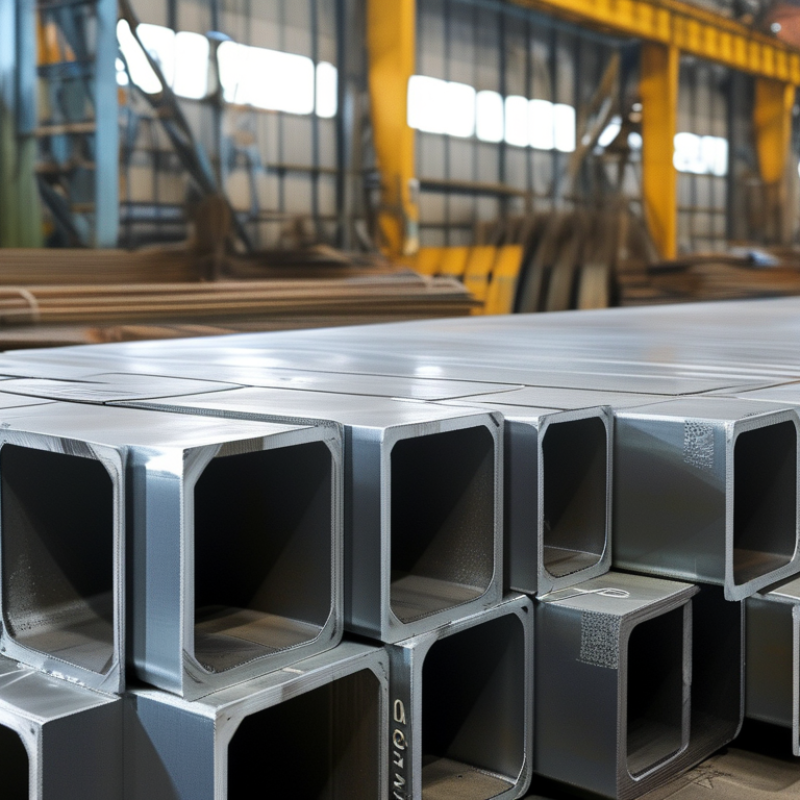
Steel square pipes are hollow sections with four equal sides, useful where strength and clean geometry matter. They support building frames, warehouse columns, solar structures, agricultural equipment, and transport systems. Their flat surfaces simplify welding, bolting, and protective coating. However, wall thickness and corner radius can change performance significantly.
The World Steel Association reported about 1.89 billion tonnes of crude steel production in 2023. This scale supports broad pipe availability, but it does not guarantee consistent quality. Global buyers should review mill certificates, chemical analysis, tensile results, dimensional tolerances, and traceability records. Standards such as ASTM A500 and EN 10219 provide useful reference points. Still, standards are not interchangeable. A procurement team should confirm the required grade, testing method, coating system, and delivery condition before ordering.
Real projects often expose small weaknesses. A pipe may meet nominal dimensions yet fail during cutting or welding. Moisture inside bundled sections can also create early corrosion. That risk is easy to underestimate.
Tips: Match the section size to calculated loads, not visual preference. Request samples before bulk production. Check corner geometry with calibrated tools. For outdoor use, specify galvanizing or another verified corrosion-control system. Also compare total landed cost, including freight, inspection, packaging, and local duties. Supplier rankings can help, but technical evidence should decide.
Steel square pipes, also known as square hollow sections, are widely used in structural frames, columns, machinery, transport equipment, and infrastructure. The chart compares the theoretical mass per metre of commonly specified square pipe sizes.
Reading the chart: Theoretical mass is calculated using a steel density of 7,850 kg/m³ and the nominal outside dimensions and wall thickness shown. Actual product weight may vary slightly because of manufacturing tolerances, corner radii, coating, and steel grade.
Choosing an international steel square pipe manufacturer requires more than comparing prices. I have found that consistent quality begins with controlled raw materials. Ask for heat numbers, mill certificates, and complete traceability records. These documents connect each pipe bundle to its original steel batch. That matters during inspections, repairs, and future purchasing decisions.
Check dimensional accuracy with clear evidence. Wall thickness, outside dimensions, corner radius, and length should match agreed tolerances. Reliable manufacturers use calibrated measuring tools and maintain inspection records. Request test reports for yield strength, tensile strength, elongation, and chemical composition. Independent laboratory verification can strengthen confidence. It also exposes weak claims.
Production experience is important. Review equipment capacity, welding procedures, surface treatment, and quality-control staffing. A factory visit, video audit, or third-party inspection may reveal more than a polished website. Ask how defects are isolated and corrected. The answer should be specific. Vague promises are warning signs.
Export performance deserves equal attention. Confirm packaging methods, moisture protection, labeling, loading plans, and document accuracy. Small errors can delay customs clearance or damage pipes in transit. Communication should remain clear across time zones. Response speed helps, but technical accuracy matters more. I once underestimated this distinction. It caused unnecessary revisions. A strong supplier should also explain realistic lead times instead of offering attractive but uncertain delivery dates.
Production strength begins with stable steelmaking and disciplined forming processes. High-capacity mills can produce square pipes in structural, mechanical, and custom dimensions. Their equipment often includes automated welding, ultrasonic testing, and continuous sizing lines. These systems reduce wall-thickness variation across long production runs. Consistency matters.
Strong manufacturers also maintain broad raw-material control. They test coil chemistry, yield strength, elongation, and surface condition before forming. Modern heat-treatment lines can improve toughness for demanding construction environments. Experienced producers support common ASTM, EN, and ISO requirements. However, certification alone does not prove dependable output.
Plant audits often reveal more than product brochures. Buyers should review monthly capacity, furnace records, inspection plans, and rejected-batch data. A reliable factory can explain its traceability process from steel coil to bundled pipe. It should also provide dimensional reports, coating details, and loading photographs. Small details matter.
Some producers have excellent capacity but limited flexibility for smaller orders. Others offer fast customization but struggle during peak demand. This trade-off deserves careful attention. No factory performs perfectly in every category. Buyers should compare lead times, tolerances, testing depth, and export packaging together. Direct technical discussions can expose weaknesses before contracts are signed. A clean warehouse helps, but it cannot replace verified process control.
For global buyers, a top steel square pipe manufacturer must prove quality beyond a polished website. The World Steel Association reported 1,888.2 million tonnes of crude steel production in 2023. This scale creates choice, but also inconsistency. Buyers should request compliance with ASTM A500, EN 10219, or an equivalent specification. Each order should include heat numbers, chemical analysis, tensile results, and dimensional records.
Certification matters when it connects to production controls. ISO 9001 supports documented quality management, while ISO 14001 can indicate structured environmental practices. However, certification alone is not proof of reliable pipe quality.
Ask whether the certificate covers the actual manufacturing site. Review its validity and scope. Independent inspection can verify wall thickness, squareness, surface condition, and loading procedures.
The OECD’s 2024 steel market analysis also highlights continuing pressure from excess capacity and trade uncertainty. Export experience therefore requires more than low pricing. It requires stable documentation, accurate packing lists, and dependable shipment planning.
Tips:
Compare three recent test reports, not one sample. Confirm bundle weights and marking methods before payment. Ask for photos of real production batches. A small detail can prevent a large claim.
Some buyers overlook local import rules, which is a costly mistake. Reflect on delivery history, not promises. Reliable manufacturers should explain rejected material procedures, replacement terms, and how they manage specification changes. Their answers reveal operational maturity.
Top Steel Square Pipe Manufacturers for Global Buyers
How Global Buyers Can Select the Right Manufacturing Partner
Selecting a steel square pipe manufacturer requires more than comparing prices. Check production capacity, material grades, wall thickness, and dimensional tolerances. Request recent mill test certificates for each relevant batch. Verify whether the certificates match the stated standards and heat numbers. Small details matter.
Ask for samples before placing a large order. Measure side length, corner radius, wall thickness, and surface condition with basic inspection tools. A dependable manufacturer should explain its testing process clearly. It should also provide photos of bundled pipes, labels, and export packaging. Good packaging prevents moisture damage during long sea transport.
Review lead times, minimum order quantities, payment terms, and shipping responsibilities in writing. Confirm how the factory handles rejected pipes or dimensional disputes. Independent inspection can reduce uncertainty before loading. Still, no checklist is perfect. A supplier may pass one inspection and miss a production detail later. Regular communication remains important. Choose a partner that answers technical questions directly, admits limitations, and shares corrective actions when problems occur. Fancy certificates help, but traceability and consistent records usually reveal more.
| Evaluation Area | Buyer-Relevant Data Dimension | Practical Benchmark or Typical Requirement | Documents or Evidence to Request | Why It Matters for Global Buyers |
|---|---|---|---|---|
| Product Standards | Applicable structural hollow-section standard | ASTM A500/A500M for structural tubing or EN 10219 for cold-formed welded structural hollow sections | Mill test certificate, product specification, third-party inspection report | Confirms that dimensions, mechanical properties, testing, and acceptance criteria match the project specification. |
| Steel Grade | Minimum yield strength and tensile strength | ASTM A500 Grade B: minimum yield strength of approximately 315 MPa and tensile strength of approximately 400 MPa; ASTM A500 Grade C: approximately 345 MPa yield and 427 MPa tensile strength | Heat number traceability, chemical analysis, tensile test results | Higher verified strength can support structural performance and reduce the risk of unsuitable substitutions. |
| European Grade Option | Structural grade for EN-based projects | S355J2H commonly provides a minimum yield strength of 355 MPa for wall thicknesses up to 16 mm, subject to the applicable standard and thickness | EN 10219 inspection certificate, Charpy impact test results, grade declaration | Helps buyers align the tube grade with European structural design and documentation requirements. |
| Outside Dimensions | Square outside width and height | Common commercial sizes range from approximately 20 × 20 mm to 500 × 500 mm; project-specific tooling may be required outside standard mill ranges | Approved dimensional drawing, calibration records, inspection report | Matching available mill sizes can reduce tooling charges, production delays, and minimum-order constraints. |
| Wall Thickness | Nominal wall thickness availability | Typical commercial ranges are approximately 1.2–25 mm, depending on outside size, steel grade, forming method, and applicable standard | Thickness inspection records, ultrasonic or micrometer readings, tolerance statement | Wall thickness affects load capacity, weight, welding behavior, corrosion allowance, and shipping cost. |
| Dimensional Tolerance | Permitted variation in outside dimensions and wall thickness | Typical structural-tube requirements may include outside-dimension tolerances around ±0.75% under ASTM A500 and wall-thickness tolerances around ±10%; always confirm the selected standard | Standard-specific tolerance table, in-process inspection data, final inspection report | Consistent tolerances are essential for modular construction, tight-fit fabrication, and automated assembly. |
| Straightness and Squareness | Tube straightness, corner radius, and twist | Use the project standard and approved drawing; corner radius and twist should be stated when the product is used for precision fabrication | Inspection plan, profile measurements, sample approval, dimensional test report | Controls fit-up problems, excessive welding gaps, and installation rework. |
| Surface Condition | Surface finish and defect control | Black, pickled, oiled, galvanized, or painted finishes; visible cracks, laminations, severe dents, and unacceptable weld defects should be rejected | Surface inspection criteria, welding procedure, repair procedure, photographs before shipment | Surface quality influences corrosion protection, appearance, weldability, and downstream coating performance. |
| Corrosion Protection | Galvanizing or coating system | Hot-dip galvanizing should be specified by the applicable coating standard, coating thickness or mass, surface preparation, and repair requirements rather than by appearance alone | Coating thickness readings, galvanizing certificate, paint data sheet, salt-spray or adhesion results when required | Clear coating requirements help buyers compare service life and total installed cost across suppliers. |
| Weld Quality | Longitudinal weld integrity and testing | Define weld acceptance criteria and testing method, such as visual inspection, eddy-current testing, ultrasonic testing, or hydrostatic testing where specified | Welding procedure specification, welder qualification, non-destructive testing report | Verified weld quality lowers the risk of leakage, cracking, fatigue failure, and fabrication rejection. |
| Chemical Composition | Carbon, manganese, phosphorus, sulfur, and alloy content | Chemical limits must follow the selected grade and standard; low-carbon compositions are generally preferred when welding requirements are demanding | Heat analysis, product analysis, material safety documentation | Chemistry affects weldability, strength, toughness, corrosion behavior, and compliance with local regulations. |
| Mechanical Testing | Tensile, yield, elongation, and impact performance | Testing frequency and minimum values should follow the specified standard; impact testing is particularly relevant for low-temperature service | Certified mechanical test results linked to heat numbers and production batches | Batch-level testing provides measurable evidence that the delivered material meets the agreed performance level. |
| Quality Management | Production and quality-control system | An ISO 9001-certified quality-management system is a useful baseline, but certification should be supported by process records and corrective-action evidence | Valid certificate, audit report, inspection and test plan, nonconformance records | A documented system improves repeatability, traceability, complaint handling, and corrective action. |
| Traceability | Link between finished bundles and original steel heats | Each bundle should carry size, grade, standard, quantity, heat number, production date, and batch identification | Bundle labels, packing list, heat-number map, mill test certificate | Traceability simplifies customs clearance, project approval, recalls, and investigation of quality issues. |
| Production Capacity | Monthly output and line capability | Assess capacity by size range, wall thickness, grade, finish, and available production lines rather than by total annual tonnage alone | Capacity statement, equipment list, recent production schedule, factory audit | A partner may have high total capacity but limited capability for a buyer's specific size or grade. |
| Minimum Order Quantity | MOQ by size, grade, finish, and production batch | MOQs vary by mill setup and material; buyers should request separate quantities for trial orders, standard production, and custom tooling | Formal quotation, production-batch policy, tooling quotation | Clear MOQ information prevents unexpected setup fees and helps optimize inventory planning. |
| Lead Time | Order confirmation to shipment | For standard sizes, a realistic quotation should separate raw-material procurement, production, inspection, packing, and port delivery time | Manufacturing schedule, production milestones, historical on-time-delivery data | Transparent lead-time planning reduces project delays and allows buyers to compare suppliers fairly. |
| Packaging and Loading | Bundle weight, protection, and container utilization | Use strapped bundles with moisture protection and clear labels; confirm maximum bundle weight, container loading plan, and corrosion-prevention method | Packing specification, loading photographs, container plan, packing list | Proper packaging reduces transit damage, handling risk, moisture corrosion, and documentation errors. |
| Export Documentation | Completeness of shipping and compliance documents | Typical documents include commercial invoice, packing list, bill of lading, certificate of origin, mill test certificate, and inspection certificate when required | Sample document set, document-control checklist, export compliance declaration | Complete documentation supports customs clearance, payment release, and project handover. |
| Inspection Option | Independent pre-shipment inspection | For critical projects, specify sampling level, inspection stage, test scope, and acceptance criteria before production begins | Approved inspection and test plan, third-party report, sealed samples, corrective-action record | Independent verification reduces information asymmetry and provides stronger evidence in international transactions. |
| Commercial Evaluation | Total landed cost rather than unit price alone | Compare material price, tooling, testing, coating, packing, inland transport, ocean freight, duties, insurance, and potential rejection costs | Itemized quotation, Incoterms, freight assumptions, duty classification, payment terms | The lowest factory price may not produce the lowest delivered cost or the lowest project risk. |

Copyright © 2023 NEI Ltd. All rights reserved.
Registered Office : 9/1, R. N. Mukherjee Road, Kolkata – 700 001. In case of any queries or grievances, please contact Mr.Tarun Kumar Kabra, Company Secretary.
E-mail: sale@kinpart.com Privacy Policy Cookie Policy