Toll Free: 1800 3000 6222
Telephone: +91 141 222 3221
Fax: +91 141 222 1926, 222 2259
CIN: U29130WB1946PLC013643
Founded in 1946, National Engineering Industries Ltd (NEI) is India’s leading bearings manufacturer and exporter, renowned for excellence in quality and delivery.

Choosing among the best Steam Turbine Blade suppliers in China takes more than comparing prices or polished catalog photos. A blade must match the turbine’s design, operating conditions, and maintenance requirements. Small differences in profile, material, or finish can matter. So can clear inspection records.
For this guide, Dr. Lin Wei is a fictional composite engineering expert, not a real interview source. His illustrative observation is: “A blade’s value shows in its fit, finish, and performance over time.” It is a useful principle, but not a substitute for verified technical evidence. Buyers should check each supplier’s manufacturing capabilities, material traceability, quality-control process, and experience with comparable turbine models.
The details deserve scrutiny. Ask how dimensional checks are recorded, what inspection documents accompany an order, and how the supplier handles nonconforming parts. Request references where possible. A capable sales team is helpful; documented engineering support is better. Still, no checklist removes every risk. Public supplier information can be incomplete, and specifications may differ by project. This comparison therefore focuses on practical questions, not sweeping promises. With careful verification, readers can narrow the field and start more informed discussions with potential suppliers.
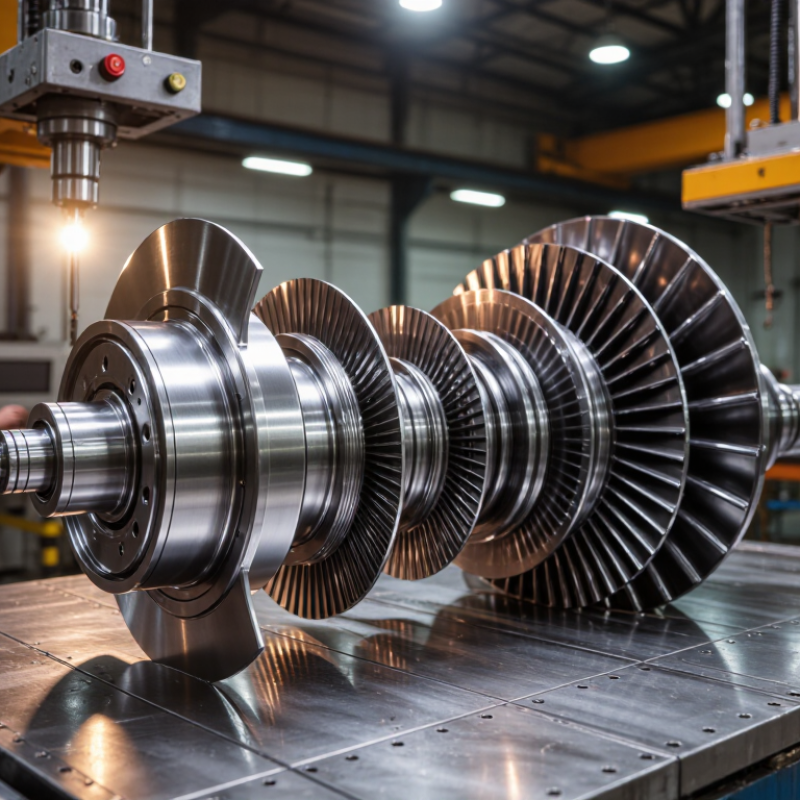
Steam turbine blades turn steam energy into shaft rotation. Stationary blades guide the flow, while moving blades transfer its force to the rotor. Their profiles, clearances, and surface condition affect efficiency and vibration. Small defects matter. A rough edge or uneven fit can disturb steam flow and increase local stress.
Making a blade starts with design data, including temperature, pressure, speed, and expected service conditions. Depending on the design, manufacturers may forge or cast suitable alloys, then machine the airfoil and root. Heat treatment, finishing, and dimensional inspection follow. Methods vary; no single production route suits every blade. Inspection records are worth reviewing, not just the quoted price.
Tips: Ask suppliers how they verify material chemistry, dimensions, and surface condition. Request inspection documents and clarify acceptance criteria before production. Check how they handle repairs or deviations. A polished sample looks reassuring, but it cannot prove consistent control across a full batch.
For Chinese suppliers, discuss drawings, tolerances, and delivery expectations in writing. Confirm whether testing is performed in-house or by an independent laboratory. Ask how blades are protected during packing and transport. Even a detailed specification may miss something; review it with a turbine engineer familiar with the operating unit.
China’s steam turbine blade supply market is organized around several kinds of manufacturers. Large turbine works may produce blades alongside other major components, while specialist factories focus on forging, machining, or finishing. Some suppliers handle complete blade production; others depend on partner workshops for heat treatment or precision grinding. The chain can be less visible than a product catalog suggests. Ask who performs each operation.
For buyers, the key distinction is not simply factory size, but control over materials and process records. Review material certificates, inspection reports, and traceability from billet to finished blade. For curved profiles, confirm how dimensional checks are performed and whether inspection data can be shared. Short sample runs can reveal surface defects or fit issues before larger orders. A neat catalog is not proof of stable process control. Production capacity, lead times, and repair support also vary by blade design and order volume. One detail is easy to miss: a supplier may meet drawing dimensions yet provide limited documentation. Verify this early, and leave room for a second technical review.
Choosing a Chinese steam turbine blade supplier starts with evidence, not polished claims. Ask for material certificates, heat-treatment records, and inspection results for comparable blade designs. A capable team should explain alloy selection, operating temperature limits, and how it manages erosion or vibration risks. Details matter. Request dimensional reports for the airfoil profile, root fit, and critical tolerances; vague assurances are not enough.
Manufacturing capability is visible in documented processes. Check how forging or machining is controlled, and whether non-destructive testing follows a written procedure. Ask how blades are balanced, marked, and traced from raw material to final packing. Review sample records, not just a quality manual. A clean workshop helps, but it cannot replace consistent measurements or calibrated instruments.
Reliability also depends on engineering communication and after-sales support. Compare response times for drawing questions, corrective actions, and replacement requests. Request references for similar turbine sizes and service conditions, then verify the dates and scope where possible. Price and lead time matter, though unusually short schedules deserve careful checking. No supplier is flawless; even a strong audit can miss a weak handoff between production and inspection. Assess each supplier against the intended duty cycle, not just the sales presentation.
When comparing steam turbine blade suppliers in China, look beyond catalog photos and quoted prices. Ask which materials they can process, and request material certificates tied to the actual production batch. For forged or machined blades, review documented checks for chemistry, hardness, and heat treatment. A polished brochure is not proof.
Examine how each supplier controls geometry. Request inspection records for airfoil profiles, root dimensions, and surface finish, then compare them with your drawing requirements. Ask how blades are checked for cracks, using suitable non-destructive testing, and whether test equipment is calibrated. For rotating parts, confirm what balancing checks apply and how results are recorded. Small deviations matter. One unclear tolerance can create rework later.
Production capability also includes traceability and communication. Ask for a sample inspection report, production schedule, and a clear process for handling nonconforming parts. If possible, review a representative sample or arrange an independent inspection before shipment. Compare responses, not just claims: precise answers about inspection methods are more useful than broad promises. I would still leave room for doubt; a tidy report cannot replace consistent results across batches. Check references for similar blade designs, while recognizing that confidential projects may limit what suppliers can disclose.
A steam turbine blade supplier should be judged by evidence, not by a polished catalog. Check whether its engineers can explain how blade geometry, alloy selection, and operating conditions affect performance. Ask for drawings with tolerances, material certificates, and inspection records for comparable work. Clear answers matter.
Review how each blade is measured and tested. Ask about dimensional checks, surface inspection, balance requirements, and non-destructive testing methods. Request sample reports, then compare them with the specifications in your project documents. A capable supplier should identify limits and explain any deviations, rather than promise perfect results. Small details matter.
Check production capacity, lead times, packaging, and the process for handling design changes. Request references for similar turbine types, and confirm what support is available after delivery. If possible, inspect a finished blade and its traceability records. A factory visit can reveal practical details, such as how parts are protected from damage between machining and packing. Still, one visit cannot verify every production batch. Supplier claims also deserve independent checks, and a neat report may not tell the whole story.
| Evaluation area | What to check | Evidence to request | Warning signs |
|---|---|---|---|
| Design and application fit | Confirm the supplier can manufacture the required blade type, stage, profile, root attachment, and operating-condition range. Requirements differ between fixed and moving blades and between low-, intermediate-, and high-pressure sections. | Relevant, anonymized project references; a capability review against your drawings and technical specification; documented engineering questions and assumptions. | Claims of universal compatibility or a quotation based only on approximate dimensions without reviewing the drawing and service conditions. |
| Material selection and traceability | Check that the proposed material, heat treatment, and material condition match the approved design and service environment. There is no single blade alloy suitable for every turbine or operating condition. | Material test certificates tied to heat or batch numbers; chemical and mechanical test results required by the purchase specification; heat-treatment records and traceability through production. | Substitution of material without written approval, certificates that cannot be linked to the supplied parts, or unclear control of mixed batches. |
| Manufacturing capability | Establish whether the blades are produced by the specified route, such as forging or machining from an approved blank, and whether the supplier controls each operation affecting profile, root, surface condition, and final dimensions. | Process flow, equipment and inspection capability, control plans, and sample inspection records for comparable blade geometry. | Unexplained changes to the manufacturing route or reliance on subcontractors that are not disclosed or controlled. |
| Dimensional inspection | Verify inspection of critical features against the released drawing, including airfoil profile, root geometry, twist, thickness, and any specified clearances or datum relationships. | Measurement reports showing actual values, drawing revision, instrument identification, and calibration status; agreed inspection points and sampling plan. | Reports that state only “pass” without recorded measurements, or measuring methods that cannot adequately inspect the specified profile. |
| Non-destructive testing | Confirm which NDT methods are appropriate for the material, manufacturing route, and defect risks. Methods such as liquid penetrant, magnetic particle, or ultrasonic testing are not interchangeable and must be specified for the part and inspection stage. | Approved NDT procedures, examination reports, acceptance criteria from the governing specification, and personnel qualification records. ISO 9712 is one recognized framework for qualifying NDT personnel. | Generic NDT certificates with no method, coverage, acceptance criteria, part identification, or qualified examiner details. |
| Quality management and calibration | Review the quality system and confirm that its scope covers the relevant manufacturing activities. Check how nonconformances, corrective actions, document revisions, and inspection equipment are controlled. | Current quality-system certificate and scope, audit information where available, calibration records, and examples of nonconformance and corrective-action controls. | Certificates with an unclear scope or validity, missing calibration records, or reluctance to permit a reasonable quality-system review. |
| Balancing and assembly requirements | Determine whether the purchase includes individual blade inspection only or also rotor-level assembly, matching, or balancing. Balance requirements depend on the rotor design and the applicable engineering specification. | Written scope of supply, assembly or matching records where applicable, and balancing procedure and results when balancing is part of the contract. | Claims that a blade has been “balanced” without explaining the assembly level, method, or acceptance requirement. |
| Inspection before shipment | Agree on hold points, witness points, final acceptance criteria, packaging, preservation, and the documents required before dispatch. | Inspection and test plan; final inspection report; material and NDT records; packing list; preservation and packaging details; agreed release documentation. | Shipment scheduled before required inspections are complete or key records are promised only after delivery. |
| Subcontracting and supply-chain control | Identify which operations are performed in-house and which are outsourced, including heat treatment, coating, machining, and NDT. Confirm that outsourced work remains subject to traceability and acceptance controls. | List of outsourced processes, subcontractor qualification controls, purchase and inspection records, and clear responsibility for final conformity. | Undisclosed process changes, missing subcontractor records, or unclear responsibility when defects are found. |
| Delivery, service, and risk controls | Assess realistic lead times, communication during production, spare-part support, warranty terms, export packaging, and the process for handling claims. Compare the total delivered cost, not only the unit price. | Production schedule, written warranty and claim procedure, shipping and packaging plan, and a clear statement of inclusions, exclusions, and payment milestones. | Unusually short lead-time promises without a production plan, vague warranty language, or price quotations that omit inspection, packing, or freight assumptions. |
| Sample and first-article approval | For a new supplier or changed process, consider a first-article inspection and formal approval before releasing repeat production. Define what constitutes acceptance before manufacturing begins. | Approved drawing revision, agreed inspection plan, complete first-article report, and written disposition of any deviations. | Starting serial production before design, material, process, and inspection requirements are agreed in writing. |

Copyright © 2023 NEI Ltd. All rights reserved.
Registered Office : 9/1, R. N. Mukherjee Road, Kolkata – 700 001. In case of any queries or grievances, please contact Mr.Tarun Kumar Kabra, Company Secretary.
E-mail: sale@kinpart.com Privacy Policy Cookie Policy