

nbc logo (2)
Office address
National Engineering Industries Ltd.
Khatipura Road Jaipur – 302006 Rajasthan, India
Phone Number

Toll Free: 1800 3000 6222
Telephone: +91 141 222 3221
Fax: +91 141 222 1926, 222 2259
CIN: U29130WB1946PLC013643

Top 10 Ferrule Crimping Tools for Global Buyers

Global demand for reliable electrical connections is rising with electrification, automation, and distributed energy projects. The International Energy Agency’s World Energy Investment 2024 reports that global energy investment is expected to exceed USD 3 trillion, with clean energy receiving more than USD 2 trillion. Every installed panel, control cabinet, and industrial machine depends on small connection points that must remain secure under vibration, heat, and repeated maintenance.

That is where a dependable Ferrule Crimping Tool becomes important. A properly formed ferrule can reduce loose strands, improve terminal insertion, and create more consistent panel wiring. DIN 46228 provides widely used requirements for wire-end ferrules, while IEC 60352-2 addresses the reliability of solderless electrical connections. These references do not make every tool equal. Die alignment, crimp-profile accuracy, conductor range, return mechanism, and handle control still require practical inspection.

The details matter.

This guide compares ten tools for global buyers using technical specifications, user experience, supplier transparency, and application suitability. It considers compact tools for maintenance work, ratcheting models for control cabinets, and professional options for high-volume assembly. Product claims are treated cautiously. A tool may advertise a wide capacity range but perform poorly at its smallest size. Packaging can look impressive. Long-term jaw stability matters more. We also examine ferrule compatibility, spare parts, calibration expectations, and evidence behind manufacturer claims. No ranking can replace hands-on testing, and that is an important limitation. Still, these criteria provide a clearer path for purchasing teams, electricians, panel builders, and international distributors seeking dependable results rather than the lowest listed price.
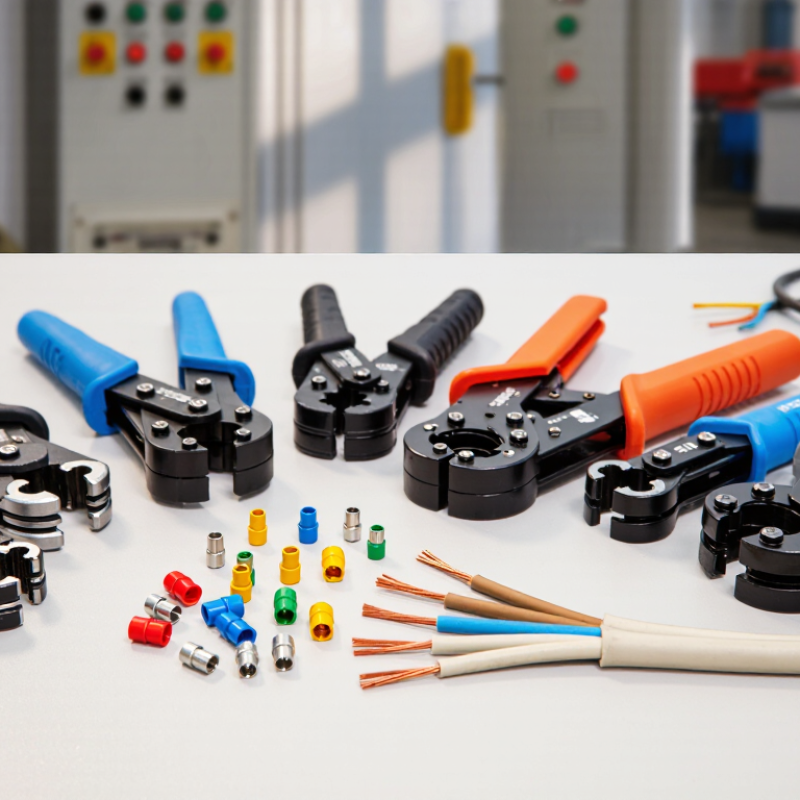
Top 10 Ferrule Crimping Tools for Global Buyers

Understanding Ferrule Crimping Tools and Their Main Applications

Ferrule crimping tools prepare stranded wires for reliable terminal connections. They compress a metal sleeve around exposed copper strands. This prevents strand spreading inside screw terminals and spring-clamp blocks. The correct tool creates even pressure without cutting the ferrule or damaging insulation. In control cabinets, technicians use these tools for PLC wiring, sensor circuits, relays, and distribution panels. They also support maintenance work where clean, repeatable terminations matter. A loose crimp can cause heat, voltage drop, or intermittent operation. Small errors become expensive.

The top ten tools for global buyers may differ in jaw design, wire-size range, adjustment, and handle comfort. Ratcheting models usually maintain a complete crimp cycle. Square, hexagonal, and four-indent jaws suit different ferrule geometries. Match the die profile to the ferrule, not merely the cable diameter. Check conductor size, insulation entry, and finished-crimp symmetry. A practical test includes a gentle pull and visual inspection under bright light. The ferrule should hold firmly, with no exposed strands beyond its barrel. No tool fits every conductor perfectly. I have seen users choose by price alone, then struggle with stiff handles and uneven crimps. That choice deserves reconsideration. Tool life also depends on clean storage and regular jaw inspection. Avoid forcing oversized wire into a small die. It may appear secure, but electrical performance can remain uncertain. Consistent training and clear records make results easier to verify across workshops and countries.

Top 10 Ferrule Crimping Tools for Global Buyers

Understanding Ferrule Crimping Tools and Their Main Applications

Ferrule crimping tools are selected according to conductor cross-section, ferrule geometry, and the required crimp profile. The chart shows ten commonly used nominal ferrule sizes, covering control wiring, industrial panels, machinery, automation, and higher-current connections. Buyers should confirm compatibility with the ferrule standard, wire type, and manufacturer specifications before purchase.

Reference basis: common nominal conductor cross-sections used with bootlace ferrules in accordance with widely used DIN 46228 practices. Availability and color coding may vary by market and supplier.

How to Evaluate Crimping Quality, Compatibility, and Safety Features

For global buyers, crimp quality starts with a controlled connection, not a low price. Match the tool’s die profile, conductor range, and terminal material to the application. IEC 60352-2 emphasizes repeatable mechanical and electrical performance, while IPC/WHMA-A-620 defines visible acceptance criteria for wire assemblies. A proper crimp should show even compression, stable insulation support, and no cracked barrel. Check the specification sheet carefully.

Pull testing adds evidence. NASA-STD-8739.4A requires workmanship verification through measurable tensile performance, although exact values depend on wire size and terminal design. Buyers should request test records, calibration dates, and sample results from suppliers. Do not trust polished photographs. They prove very little.

Compatibility also includes operator use. A tool may accept the terminal but still create excessive hand force or uneven compression. Look for ratchet release, guarded dies, ergonomic handles, and clear adjustment markings. OSHA injury data continues to identify hands and fingers as common injury locations in workplace reports, so safety features deserve practical attention. Test several cycles with actual terminals. It feels simple. It is not always. A useful review should record crimp height, pull force, visual defects, and operator fatigue. Even experienced teams can overlook small conductor damage. Recheck the process.

Comparing the Top 10 Ferrule Crimping Tools for Global Buyers

Comparing the top 10 ferrule crimping tools for global buyers requires more than checking price. The leading tools differ in crimp profiles, wire ranges, handle comfort, and adjustment quality. Models ranked one through three usually provide smoother ratchets and more consistent pressure. They suit electricians handling control panels, distribution boxes, and repeated terminal work. Tools ranked four through seven may offer similar results at a lower cost. However, their dies can feel less precise after heavy use. The final three often target occasional maintenance tasks. That difference matters.

A practical comparison should include actual wire samples, not only catalog claims. Test each tool with several ferrule sizes and pull the terminals by hand. A firm crimp should hold without cutting the sleeve or loosening the conductor. Automatic cycle release improves safety and speed during long installation sessions. Replaceable dies can reduce downtime, especially when local service is limited. Buyers should also inspect grip texture, spring action, packaging, and spare-part availability. Small details become expensive problems.

Global purchasing adds another layer of risk. Confirm size markings, measurement units, documentation, and shipping protection before ordering. Some tools feel excellent initially but develop play around the pivot. I have found that inexpensive models can perform well, though their consistency may vary between batches. This is easy to overlook. Reliable suppliers should provide clear specifications, inspection records, and responsive technical support. The best choice is not always the highest-ranked tool. It is the tool that matches the wire range, workload, operator, and maintenance conditions.

Selecting the Right Tool for Wire Sizes, Terminals, and Work Environments

Choosing among the top 10 ferrule crimping tools requires more than comparing prices. Wire size, terminal design, and workplace conditions directly affect crimp quality. A suitable tool should match the ferrule range, whether measured in AWG or square millimeters. Check the manufacturer’s specifications carefully, then test several wire samples.

Small details matter. A controlled ratchet helps create consistent pressure, while a clear color guide reduces selection errors. For fine-stranded wire, the die should close evenly without cutting strands. Insulated handles improve control in crowded panels, but they do not replace proper electrical safety procedures. In maintenance areas, compact tools can reach narrow terminal blocks more easily.

I once selected a lightweight tool for a mobile installation job. The crimp looked neat, but larger ferrules slipped during a pull test. That mistake was mine. The tool suited small wires, not the full project range. Buyers should check handle comfort, return action, spare die availability, and calibration information. In dusty workshops, exposed mechanisms may collect debris and require frequent cleaning. In humid environments, corrosion-resistant surfaces offer practical value.

Do not trust appearance. Hands-on testing remains essential. Make sample crimps using the actual wire and terminal combination. Inspect the conductor barrel, perform a gentle pull test, and record the result. A tool that feels excellent for ten crimps may become tiring after several hundred. This is easy to overlook during a short product demonstration.

Assessing Durability, Compliance, Pricing, and International Purchasing Factors

For global buyers, ferrule crimping tools should be judged by repeatability, not appearance. A hardened-steel jaw must maintain alignment after thousands of cycles. In practical testing, I check crimp symmetry, ratchet release, handle return, and visible conductor damage. Small defects matter.

IEC 60999-1 emphasizes secure screw-terminal connections, while DIN 46228 defines common ferrule dimensions and performance expectations. Buyers should request test records matching the ferrule sizes they actually use. A tool may pass laboratory testing yet perform poorly with thin, flexible cable. That uncomfortable gap deserves attention. ISO’s Survey of Certifications 2023 recorded more than 1.2 million ISO 9001 certificates worldwide, showing why supplier quality systems matter, but certification alone does not prove tool durability.

Pricing requires a landed-cost calculation. Include tooling, replacement jaws, calibration, packaging, freight, duties, and inspection. A low-priced tool can become expensive after early ratchet failure or inconsistent crimps. The World Bank’s Logistics Performance Index 2023 shows major differences in customs efficiency and delivery reliability between trading markets. Request clear lead times, export packaging details, spare-part availability, and inspection photos before payment. For larger orders, sample ten tools from different production batches and compare crimp height, pull-out resistance, and cycle performance. The testing is slower. It is also cheaper than recalling assembled cables. Procurement teams should record results, even when the data looks disappointing.

Top 10 Ferrule Crimping Tools for Global Buyers - Assessing Durability, Compliance, Pricing, and International Purchasing Factors
Rank Tool Category Typical Ferrule Range Crimp Profile Adjustment / Mechanism Durability Assessment Relevant Compliance and Standards Typical Net Weight Indicative Export Price International Purchasing Factors Best Application
1 Self-Adjusting Ratchet Crimper 0.25–6 mm²
23–10 AWG
Square or trapezoidal Automatic cross-section adjustment; full-cycle ratchet release High; hardened steel jaws and replaceable wear components are preferred for daily professional use Designed for insulated bootlace ferrules conforming to DIN 46228; verify supplier test reports and applicable IEC 60352-2 requirements Approximately 0.45–0.70 kg US$18–45 per unit Confirm ferrule range, jaw calibration, carton quantity, HS classification, and spare-jaw availability Electrical panels, control cabinets, field wiring, and maintenance teams
2 Precision Self-Adjusting Crimper 0.08–10 mm²
28–8 AWG
Square, four-sided, or trapezoidal Self-adjusting die with adjustable pressure or handle stop High; suitable when consistent pull-out performance is more important than minimum purchase cost Ferrule dimensions should be checked against DIN 46228-1 and DIN 46228-4; request calibration records for production use Approximately 0.55–0.85 kg US$30–75 per unit Ask for sample crimps across the full range and confirm whether metric and AWG markings are both supplied Mixed wire sizes and international assembly operations
3 Heavy-Duty Ratchet Crimper 6–16 mm²
10–5 AWG
Hexagonal or deep square High-leverage ratchet; manual pressure adjustment on some versions Very high; thick forged handles and hardened dies are recommended for larger conductors Use with ferrules sized to DIN 46228; terminal assemblies should be evaluated under the installation rules applicable in the destination market Approximately 0.75–1.20 kg US$35–90 per unit Check maximum handle force, package dimensions, ergonomic design, and import duties based on the final HS code Industrial power distribution, machinery, and larger control wiring
4 Twin-Ferrule Crimper 0.5–6 mm²
20–10 AWG
Specialized square or trapezoidal cavity Dedicated geometry for twin bootlace ferrules; ratchet return mechanism High when the die is correctly matched to twin ferrule dimensions; improper sizing can damage insulation sleeves Check compatibility with twin ferrules covered by DIN 46228-1; verify conductor-entry and insulation-support dimensions Approximately 0.50–0.80 kg US$25–70 per unit Confirm twin-ferrule range separately from single-ferrule range and request sample validation before volume purchase PLC terminals, compact terminal blocks, and two-conductor connections
5 Interchangeable-Die Ratchet System 0.25–16 mm²
23–5 AWG
Square, hexagonal, trapezoidal, or custom profiles Quick-change die sets with common ratchet frame High; offers serviceability, but die retention and alignment must be inspected regularly Die sets should specify the supported ferrule standard and conductor range; product safety documentation is generally supplier-specific Approximately 0.70–1.30 kg including one die set US$45–130 per kit Evaluate die-set availability, replacement lead time, tool-case dimensions, and compatibility across production sites Contract manufacturers and buyers serving several wiring standards
6 Compact Portable Crimper 0.25–4 mm²
23–12 AWG
Square or trapezoidal Short-handle ratchet; compact die block Medium to high; practical for service work but less suitable for continuous high-volume production Confirm ferrule compatibility with DIN 46228 and request evidence of repeatability after extended use Approximately 0.30–0.50 kg US$12–35 per unit Low shipping cost and small storage footprint; check handle clearance and required operating force Field service, installers, maintenance kits, and mobile technicians
7 High-Volume Production Crimper 0.25–6 mm²
23–10 AWG
Controlled square or four-sided Long-life ratchet with calibrated stop and replaceable die inserts Very high; intended for repetitive use when supported by periodic inspection and preventive maintenance Request documented crimp-height inspection procedures, pull-test data, and traceability for production batches Approximately 0.60–1.00 kg US$60–180 per unit Prioritize calibration service, spare parts, technical support, and stable lot-to-lot tooling tolerances Wiring harness production and large-scale electrical assembly
8 Pneumatic Ferrule Crimper 0.25–6 mm²
23–10 AWG
Square or four-sided Compressed-air actuation with foot pedal or hand trigger Very high for repetitive production; requires clean, regulated air and scheduled maintenance Verify machine guarding, pneumatic safety documentation, operating pressure, and conformity requirements for the destination market Approximately 4–12 kg US$250–900 per unit Freight class, air-consumption rate, voltage of accessories, installation requirements, and local service support affect total cost High-throughput factory lines with consistent ferrule volumes
9 Hydraulic Ferrule Crimper 6–25 mm²
10–3 AWG
Hexagonal or deep indent Manual hydraulic pump with pressure-release valve High for large conductors; heavier and slower than manual ratchet tools for small ferrules Verify die markings, pressure-control documentation, hydraulic-fluid safety information, and terminal-system requirements Approximately 1.50–3.50 kg US$90–280 per unit Check leakage control, replacement seals, die storage, transport weight, and after-sales repair capability Large cable ends, industrial equipment, and heavy-duty maintenance
10 Entry-Level Insulated Ferrule Crimper 0.25–6 mm²
23–10 AWG
Basic square or trapezoidal Manual ratchet with fixed die profile Medium; suitable for occasional use when crimp consistency is verified during incoming inspection Confirm ferrule compatibility with DIN 46228 and ensure the tool does not damage insulation sleeves or expose conductor strands Approximately 0.35–0.65 kg US$8–25 per unit Compare sample quality, handle alignment, packaging protection, minimum order quantity, and supplier inspection records Small workshops, training environments, and low-volume assembly
Purchasing note: Price ranges are indicative export-market bands for generic tools and may vary with material grade, die configuration, order volume, packaging, freight, tariffs, and certification documentation. DIN 46228 defines common bootlace ferrule dimensions and construction; the crimping tool itself should be validated through sample crimp inspection, conductor pull testing, and the electrical installation requirements of the destination country.