

nbc logo (2)
Office address
National Engineering Industries Ltd.
Khatipura Road Jaipur – 302006 Rajasthan, India
Phone Number

Toll Free: 1800 3000 6222
Telephone: +91 141 222 3221
Fax: +91 141 222 1926, 222 2259
CIN: U29130WB1946PLC013643

China Top 10 Vacuum Packing Machine Manufacturers?

Choosing among China’s top 10 Vacuum Packing Machine manufacturers takes more than comparing prices. The right supplier should match the product, production volume, and packaging material. A small workshop sealing marinated food has different needs from a factory packing hundreds of portions each hour. Look closely at chamber size, sealing-bar length, pump capacity, cycle time, and ease of cleaning. These details show up in daily work.

Food-packaging scientist Gordon L. Robertson’s published work offers a useful principle, paraphrased here: “Protect the product first; choose machine features to serve that goal.” A quotation should not replace evidence, though. Ask manufacturers for specifications, sample seals, service terms, and references from comparable operations. If possible, test your own product and pouch before ordering. Watch for uneven seals, slow cycles, and awkward cleaning points. Small details matter. A polished brochure cannot prove long-term reliability.

This guide introduces ten Chinese manufacturers and the factors buyers can use to assess them. Company strengths may differ: one may focus on compact tabletop units, while another offers automated production lines. Rankings can also shift as product ranges and service networks change. Treat this list as a starting point, not a final verdict. Verify current models, support availability, and performance claims directly with each supplier. A careful comparison takes time—and sometimes the first shortlist needs rethinking.
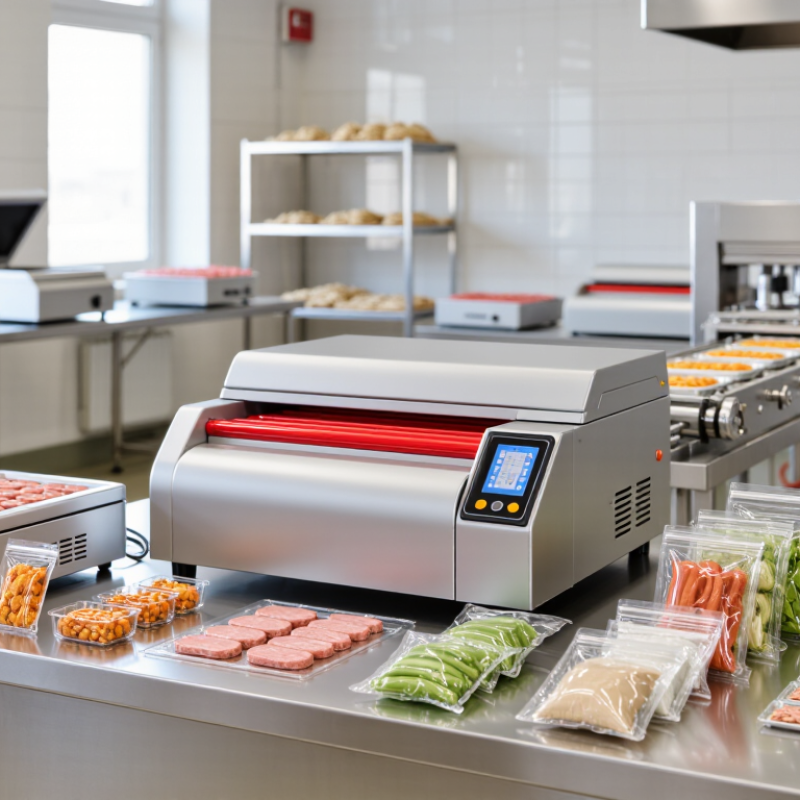
China Top 10 Vacuum Packing Machine Manufacturers?

How China’s Top 10 Are Ranked: Vacuum Level, Throughput, and Service

A useful ranking of China’s top vacuum packing machine manufacturers should compare measured performance, not just catalogue claims. Vacuum level matters, but it must be tested with the same product, bag, and operating conditions. A machine reaching a deep vacuum on an empty chamber may perform differently with moist food or a full load. Ask for pressure readings and repeatable test results. Numbers need context.

Throughput is another key measure. Record completed cycles per hour, including loading and sealing time, rather than relying on a headline speed. Watch the seal width and consistency after repeated runs. Then assess service: spare-part availability, response times, clear operating instructions, and practical training all affect uptime. Ask how support works after installation. Details matter.

A balanced score can weight vacuum performance, real production output, and service quality. The exact weights should reflect the buyer’s product and shift pattern. One weakness in this approach: factory tests may not match daily conditions. A ranking should say how each measure was checked and where evidence is limited. Be cautious with polished demonstrations. A short trial with your own packaging can reveal issues that a brochure cannot.

Machine Types Explained: Chamber, Belt, Rotary, and Thermoforming Systems

Vacuum packing machines differ in how they hold products, move packages, and handle production volume. Chamber machines place the product and open bag inside a sealed chamber. Air is removed from the whole chamber before sealing, which helps maintain consistent results across varied bag sizes. They suit smaller batches, wet foods, and frequent product changes. Operators still need to check seal temperature and product placement; a crooked bag can spoil an otherwise good seal.

Belt machines move bagged products through a continuous vacuum chamber, making them useful for higher output and larger packages. Rotary systems use rotating stations to repeat filling, vacuuming, and sealing steps. They can run quickly, but setup and maintenance are more demanding. Speed is not everything. A line that runs too fast for its operators may create more rejects.

Thermoforming systems shape packages from a film roll, vacuum the formed pockets, and seal a top layer over them. They can reduce manual bag handling and produce uniform packs, though tooling changes may take time. Film compatibility, package depth, cleaning access, and available floor space deserve close attention. Ask for a product trial using the actual pack format, not just a polished demonstration. Even then, results can change with product temperature and moisture. No machine type is perfect for every line.

China Top 10 Vacuum Packing Machine Manufacturers? — Machine Types Explained: Chamber, Belt, Rotary, and Thermoforming Systems

A practical comparison of ten vacuum-packaging system configurations. This is a machine-type guide, not a manufacturer ranking or company list.

No. Machine Configuration Operating Principle Packaging Format Common Applications Key Advantages Points to Check
1 Single-Chamber Tabletop The product bag is placed inside a sealed chamber. Air is removed from the chamber, the bag is sealed, and the chamber returns to atmospheric pressure. Pre-made vacuum pouches Small food businesses, kitchens, laboratories, and low-volume packaging tasks Compact design; straightforward operation; the product remains inside the chamber during evacuation. Production capacity is limited by chamber size, sealing-bar length, and the time needed to load and unload each cycle.
2 Single-Chamber Floor Model Uses the same chamber-vacuum process as a tabletop unit, with a larger chamber and typically longer sealing bars. Pre-made vacuum pouches Meat, seafood, cheese, prepared foods, and other products packed in batches Accommodates larger bags or more bags per cycle than many tabletop units. Check chamber dimensions, usable sealing length, pump capacity, and compatibility with the intended pouch material.
3 Double-Chamber Vacuum Packer Two chambers alternate: while one chamber runs a vacuum-and-seal cycle, the operator can prepare the other chamber for the next load. Pre-made vacuum pouches Medium- to higher-volume batch packing of food and industrial products Can reduce operator waiting time compared with a single-chamber workflow. Requires more floor space and operator coordination; actual output depends on loading, cycle time, and product characteristics.
4 Belt-Conveyor Chamber Machine A conveyor moves loaded bags into a chamber area for repeated automatic vacuum and sealing cycles. Pre-made vacuum pouches Regular production of bagged foods, including products that benefit from controlled chamber evacuation Supports a more continuous loading workflow than manually cycling a single chamber. Confirm the allowed product dimensions, conveyor layout, cleaning access, and whether the machine suits the required line speed.
5 Continuous Belt-Type Vacuum Packer Bags are fed along a conveyor and pass through a continuous vacuum-and-seal process; machine designs vary by product and bag handling method. Pre-made vacuum pouches Production lines packaging repeated batches of similar products Designed for repeated operation and integration with upstream or downstream conveying equipment. Verify bag opening and presentation requirements, sealing performance, product handling, and line synchronization.
6 Rotary Pre-Made-Pouch Vacuum System A rotating indexing platform moves pouches through stations that may include pouch loading, filling, vacuuming, sealing, and discharge. Pre-made pouches; exact pouch styles depend on machine configuration Automated packaging of foods and other products in flexible pouches Combines multiple packaging steps in a repeatable rotary workflow. Check pouch dimensions, product dosing method, number of stations, changeover needs, and required vacuum or gas-flush functions.
7 Rotary Chamber Vacuum Packer Work positions rotate through chamber-based vacuum and sealing stages, allowing loading and unloading to take place alongside machine operation. Pre-made vacuum pouches Higher-throughput bag packaging where products are suitable for chamber vacuum processing Can support a steady operator workflow when loading and sealing stages are arranged around the rotary system. Confirm the actual chamber layout, operator access, product size limits, and whether the rotary design matches the facility’s available space.
8 Vacuum Thermoforming Machine A lower forming web is heated and shaped into cavities; products are loaded, the package is evacuated, and a top web is sealed before cutting. Formed bottom web with a lidding top web Meat, cheese, seafood, medical products, and other items packed in shaped compartments Forms packages in-line and can produce consistent cavity shapes for repeated products. Requires compatible forming and lidding materials; evaluate tooling, cavity layout, changeover time, and material usage.
9 Thermoforming Machine with Modified Atmosphere Packaging After forming and loading, the package area is evacuated and flushed with a selected gas mixture before sealing; the process is commonly called vacuum-gas-flush or MAP packaging. Formed bottom web with a sealed top web Foods for which a specified package atmosphere and sealed presentation are required Allows gas flushing as part of an integrated form-fill-seal process. Gas selection and residual oxygen targets must be validated for the product; packaging does not replace proper food-safety controls.
10 Multi-Lane Thermoforming System Multiple package cavities are formed across the web width and processed through loading, evacuation or gas flushing, sealing, and cutting stages. Multiple formed packs per web cycle Large-scale, standardized production with repeatable product and package dimensions Uses the web width to create multiple packs in a production cycle. Assess product uniformity, tooling and web width, loading automation, line footprint, and the effects of format changes on output.

Selection note: Machine output is model- and application-dependent. Compare equipment using the same product, pouch or film, package dimensions, target residual oxygen, cycle settings, and loading method; request a product trial before final selection.

Typical Performance Benchmarks: 1–10 mbar Chamber Pressure and Cycle Rate

For China’s vacuum packing machine manufacturers, chamber pressure and cycle rate are more useful than headline pump power alone. A practical screening benchmark is 1–10 mbar residual pressure, with cycle time stated under a defined load. These figures are not universal: a dry pouch and a wet, bulky product behave differently. At 1–10 mbar, even a small leak or poorly seated bag can affect the result. Check whether the quoted pressure is absolute pressure, and ask for readings taken with the chamber loaded.

Cycle rate needs the same care. A 15–30-second cycle equals roughly 2–4 cycles per minute before loading, unloading, and product handling are counted. Shorter claims may reflect empty-chamber tests. Watch a full shift, not just a demonstration. ASTM International’s F2338-24 standard describes vacuum-decay leak testing, a useful way to assess package integrity rather than relying on appearance alone. PMMI’s 2024 State of the Industry report discusses automation pressures, but does not define one universal chamber-machine cycle benchmark. That gap matters. Request recorded pressure, seal time, and accepted-pack rate from a representative product trial. A glossy number can still disappoint.

Quality and Compliance: ISO 9001, CE Marking, and ASTM F2338 Leak Testing

When comparing China’s vacuum packing machine manufacturers, examine quality systems alongside the machine’s actual performance. ISO 9001 sets requirements for a quality management system; certification alone does not prove that every machine seals consistently. The ISO Survey 2022 reported 1,265,216 ISO 9001 certificates worldwide. That figure shows how widely the standard is used, not how well any individual factory controls its process.

Ask for the certificate’s scope, issuing body, and expiry date. Then check whether it covers design, production, and after-sales service. Small details matter.
CE marking indicates a manufacturer’s declaration of conformity with applicable European Union requirements; it is not a universal quality award. For package integrity, ASTM F2338 describes vacuum-decay testing, a nondestructive method for detecting leaks.

A practical supplier demonstration should show the test setup, calibrated reference leaks, and recorded results—not only a passing screen. Ask how operators control chamber conditions and repeat tests when readings vary. A small leak can escape notice during a brief demonstration. Review sample reports from different production runs, and confirm that the tested package matches your material and seal format. The test method is useful, but its results depend on setup, limits, and operator practice.

Top 10 Manufacturer Profiles: Product Range, Target Industries, and Export Markets

China’s vacuum-packing machine makers serve buyers with very different production needs. Grand View Research’s Vacuum Packaging Market report estimated the global market at USD 29.49 billion in 2023. It projected a 4.7% compound annual growth rate from 2024 to 2030. This signals wider demand, but it does not rank Chinese equipment suppliers.

A useful Top 10 comparison should profile each manufacturer by machine range, customer industry, and documented export markets. Product lines may include tabletop chamber units, double-chamber machines, conveyor-belt systems, and thermoforming lines. Target users can range from small food processors to large meat, seafood, and prepared-meal plants. Export records should identify actual destination regions, not rely on broad claims such as “global coverage.” Buyers should also compare sealing width, pump capacity, cycle time, and service support. A fast cycle means little if the seal fails on damp film.

Tip: Ask for a sample run using your product and packaging film. Review the seal, vacuum level, and cycle time. A polished brochure is not a factory test.

China Top 10 Vacuum Packing Machine Manufacturers

Product Range, Target Industries, and Export Markets

The chart summarizes common machine types and the typical industry applications shown for each. Values count the application sectors listed here; they are not manufacturer rankings, sales figures, or market-share data. Export destinations vary by supplier and are not represented as company-specific claims.