

nbc logo (2)
Office address
National Engineering Industries Ltd.
Khatipura Road Jaipur – 302006 Rajasthan, India
Phone Number

Toll Free: 1800 3000 6222
Telephone: +91 141 222 3221
Fax: +91 141 222 1926, 222 2259
CIN: U29130WB1946PLC013643

China Top 10 Elastic Nonwoven Fabric Manufacturers

Elastic Nonwoven Fabric is moving from a specialist material to a practical platform for modern manufacturing. It stretches, recovers, and supports soft contact with skin. These qualities matter in hygiene products, medical garments, sportswear, filtration, and flexible packaging. The material is not simple, though. Fiber choice, web formation, bonding method, and recovery performance can change the final result.

EDANA’s global statistics reported nonwoven production above 15 million tonnes in 2023, showing the sector’s industrial scale. Smithers’ The Future of Global Nonwovens to 2028 also identifies hygiene, healthcare, filtration, and construction as major demand areas. China remains central to this supply chain, with large production clusters, integrated machinery access, and strong export capabilities. Yet production volume alone proves little. A reliable manufacturer must demonstrate stable elongation, even basis weight, clean edges, consistent roll tension, and traceable quality records.

Dr. Seshadri Ramkumar, a recognized nonwovens researcher, has described nonwovens as “the most versatile materials.” That versatility explains their commercial appeal. It also creates risk. A fabric that performs well in a laboratory may fail during high-speed converting. This China Top 10 Elastic Nonwoven Fabric Manufacturers overview therefore considers more than advertised capacity. It examines product range, technical support, certification practices, customization ability, and application experience. Some rankings remain debatable. They should. Buyers still need independent testing, production audits, and sample trials before making a serious decision. A polished website is not proof. Real performance appears on the production line.
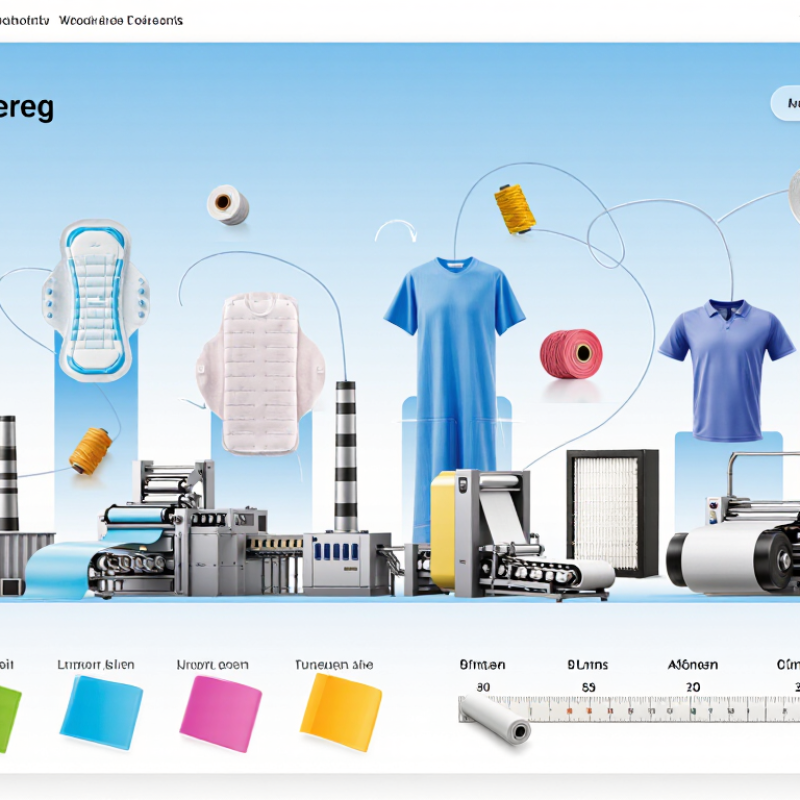
China Top 10 Elastic Nonwoven Fabric Manufacturers

What Is Elastic Nonwoven Fabric?

What Is Elastic Nonwoven Fabric?

Elastic nonwoven fabric is a flexible sheet made from bonded fibers rather than woven yarns. Its stretch usually comes from elastic polymers, elastic fibers, or a carefully designed fiber blend. The fabric can extend under tension and recover its shape after release. Some structures stretch in one direction, while others respond across both directions.

In practical production, this material often combines softness, breathability, and controlled recovery. These qualities support waistbands, hygiene components, medical supports, protective covers, and flexible packaging parts. However, elasticity alone does not prove quality. Buyers should check elongation, recovery rate, tensile strength, thickness, air permeability, and surface consistency. Small samples can feel impressive, yet fail after repeated stretching.

A reliable evaluation includes actual use conditions. Test the fabric when dry, humid, folded, and exposed to ordinary handling. Record changes after repeated extension. This step reveals weaknesses that a supplier datasheet may not show. Fiber bonding also affects performance. Excessive bonding can reduce stretch, while weak bonding may cause tearing or fiber shedding.

The material is not perfect. Greater elasticity can sometimes reduce dimensional stability or increase production costs. A suitable structure depends on the product’s pressure, movement, temperature, and service period. Comparing several samples with the same test method gives a more trustworthy basis for selecting manufacturers in China. Experiences may differ between laboratories, so clear testing records remain essential.
China Top 10 Elastic Nonwoven Fabric Manufacturers – What Is Elastic Nonwoven Fabric?

Elastic nonwoven fabric is a flexible web material designed to stretch and recover its shape. It is commonly produced with elastic polymers, spunbond or meltblown fibers, and is used in hygiene products, medical supplies, apparel, and protective applications.

Typical basis-weight ranges by application: Hygiene products generally use lighter elastic nonwovens, while apparel and support applications often require heavier structures for improved strength and durability. Values are representative industry reference ranges and are not linked to any specific company or brand.

Key Properties and Applications of Elastic Nonwoven Materials

China Top 10 Elastic Nonwoven Fabric Manufacturers

Elastic nonwoven materials combine stretch, softness, air permeability, and controlled recovery. Their web structure allows movement without the bulk of knitted fabric. Typical constructions use elastic fibers, spunbond layers, meltblown webs, or laminated films. They support diaper waistbands, medical fixation products, protective garments, sports supports, and flexible automotive interiors.

Grand View Research reported that the global nonwoven fabrics market was valued at approximately USD 53.5 billion in 2023. Its 2024 outlook also indicates continued growth through 2030. Smithers’ nonwovens market analysis highlights hygiene and healthcare as major demand areas. However, market figures are not perfectly comparable. Definitions, regions, and product categories often differ. Elastic performance depends on elongation, recovery, basis weight, bonding strength, and moisture behavior. A soft fabric may still fail after repeated stretching. That detail is often underestimated.

Tips: Test stretch recovery after washing, heat exposure, and repeated loading. Check both machine-direction and cross-direction performance. For hygiene products, evaluate skin feel, leakage control, and air permeability together. For medical use, confirm low-lint performance and stable attachment. Manufacturers should also inspect edge curling and adhesive compatibility. A practical trial can reveal weaknesses that a specification sheet hides.

How to Evaluate Chinese Elastic Nonwoven Fabric Manufacturers

China Top 10 Elastic Nonwoven Fabric Manufacturers

How to Evaluate Chinese Elastic Nonwoven Fabric Manufacturers

China’s elastic nonwoven sector serves hygiene, medical, filtration, and protective applications. Smithers’ 2024 market outlook places global nonwoven demand above US$50 billion, with steady growth expected through 2028. This growth makes supplier evaluation more important than price comparison. Ask each manufacturer for recent test reports, production capacity, and traceable raw-material records. Check whether the factory controls fiber blending, web formation, bonding, and finishing internally. Outsourcing can increase variation. Sometimes, a low quotation hides this weakness.

Focus on measurable performance. Request elongation, recovery after repeated stretching, tensile strength, basis weight, air permeability, and thickness data. Use ISO 9073 test methods where suitable, then compare results from three separate production lots. A reliable supplier should explain test conditions clearly, including temperature, humidity, stretching speed, and recovery time. Factory experience matters too. During an audit, inspect roll storage, edge trimming, moisture control, and laboratory calibration. These details often predict delivery quality better than polished presentations.

Tips: Order sample rolls, not only small swatches. Test them after washing, heat exposure, or repeated extension when relevant. Confirm the acceptable tolerance before signing. Ask for a corrective-action record from previous quality issues. No supplier is perfect. The important question is whether problems are measured, disclosed, and corrected. Check certificates independently, and keep your own inspection results for comparison.

China Top 10 Elastic Nonwoven Fabric Manufacturers - How to Evaluate Chinese Elastic Nonwoven Fabric Manufacturers

A practical, evidence-based evaluation framework for comparing manufacturers without relying on company names or brand claims

No. Evaluation Dimension Weight Recommended Benchmark Evidence to Request Suggested Scoring
1 Product Elasticity and Recovery 18% Confirm stretch direction, elongation, recovery after repeated extension, and permanent set for the intended application. Values should be agreed by product specification rather than judged by appearance alone. Product technical data sheet, laboratory test reports, sample rolls, and test conditions including gauge length, extension rate, holding time, and recovery time. 5 points Meets or exceeds the approved specification consistently.
2 Basis Weight and Thickness Control 10% Stable basis weight and thickness across the roll width and from lot to lot. The tolerance must be defined in the purchase specification because acceptable limits vary by application. Recent inspection records, roll maps, production tolerance standards, calibrated weighing equipment, and thickness-gauge calibration certificates. 5 points Consistent measurements with documented process control.
3 Tensile and Tear Performance 12% Mechanical strength should be suitable for converting, handling, and end use in both machine direction and cross direction. Directional imbalance should be understood before approval. Test reports using recognized methods such as ISO 9073-3, ASTM D5035, ASTM D5034, or another method agreed in writing. 5 points Results meet the buyer’s minimum values in both principal directions.
4 Air Permeability and Functional Performance 8% Air permeability, liquid handling, softness, and barrier performance must match the intended use, such as hygiene products, medical disposables, filtration, apparel, or packaging. Application-specific laboratory reports, sample testing, pore or permeability data where relevant, and comparative trial results from the buyer’s converting line. 5 points Meets the complete functional specification, not only one property.
5 Raw Material Traceability 10% Polymer type, elastic component, additives, colorants, and recycled content, if claimed, should be clearly identified and traceable by batch. Raw-material declarations, supplier batch records, lot coding, certificates of analysis, safety data sheets, and change-notification procedures. 5 points Full batch traceability from incoming material to finished roll.
6 Quality Management and Process Control 12% A documented quality system should cover incoming inspection, in-process checks, nonconforming product, corrective action, calibration, complaints, and final release. Current quality-management certificate where applicable, quality manual, process-control plan, internal-audit records, corrective-action examples, and inspection checklist. 5 points Preventive controls are documented and supported by records.
7 Testing Capability and Compliance Support 10% The manufacturer should be able to perform or arrange reliable testing for mechanical, physical, chemical, and application-related properties required by the destination market. Laboratory equipment list, calibration records, third-party test reports, restricted-substance declarations, and documentation aligned with applicable market regulations. 5 points Provides reproducible data and responds quickly to compliance requests.
8 Production Capacity and Lead-Time Reliability 8% Capacity should be evaluated against the buyer’s required monthly volume, roll width, basis weight, color range, minimum order quantity, and peak-season demand. Capacity statement, production schedule, historical on-time-delivery data, machine list, maintenance plan, and contingency arrangements for key equipment. 5 points Demonstrates sufficient capacity with reliable delivery performance.
9 Packaging, Storage, and Export Readiness 5% Rolls should be protected against moisture, dust, compression, ultraviolet exposure, and deformation during storage and international transportation. Packaging specification, pallet or container-loading photos, storage conditions, roll-label format, export documentation samples, and transport-damage procedures. 5 points Packaging and documentation are suitable for the destination route.
10 Sustainability and Commercial Transparency 7% Environmental claims should be supported by verifiable material information, energy or waste data where relevant, and clear commercial terms. Sustainability should not replace performance testing. Material-origin statement, recycled-content evidence where claimed, wastewater or waste-management records, environmental certificates, quotation validity, payment terms, and change-control policy. 5 points Claims are documented, measurable, and commercially transparent.
Scoring guidance: Multiply each criterion score by its weight, then add the results for a total score out of 100. Approve a manufacturer only after technical samples, production samples, documentation, and shipment performance have been verified.

China’s Top 10 Elastic Nonwoven Fabric Manufacturers

China’s Top 10 Elastic Nonwoven Fabric Manufacturers represent a broad mix of technical capabilities. These producers commonly supply elastic materials for hygiene products, medical textiles, protective garments, and flexible packaging. Their strengths often include spunbond, meltblown, composite, and breathable elastic structures. A reliable manufacturer should provide clear specifications, including fabric weight, stretch rate, recovery, tensile strength, and air permeability. Factory experience matters, but documented testing matters more.

Tips: Request recent test reports and production samples. Check whether the sample matches the mass-production fabric. Ask about roll width, packing method, lead time, and minimum order quantity. Small details can affect your final cost.

A practical comparison should examine raw-material control, equipment maintenance, quality inspection, and export experience. Look for traceable batch records and stable performance across several deliveries. Some manufacturers offer impressive samples but weaker consistency later. That risk deserves attention. A ranking can also be imperfect because capacity, pricing, and technology change quickly. Buyers should verify certifications independently and conduct application testing before signing a long-term agreement. Experienced suppliers usually discuss failure points openly, rather than promising flawless results. For elastic nonwoven fabric, honest technical communication is often a stronger advantage than attractive marketing language.

Production Standards, Customization, and Export Capabilities in China

China Top 10 Elastic Nonwoven Fabric Manufacturers

China’s leading elastic nonwoven producers compete through repeatable production, not only low prices. Grand View Research valued the global nonwoven fabric market at about USD 53.5 billion in 2023. It expects continued growth through 2030, driven by hygiene, medical, and personal-care applications. This demand raises quality expectations for Chinese suppliers.

Reliable manufacturers document fiber blends, basis weight, elongation, and recovery rates for every production lot. ISO 9001 systems support traceability, while ISO 9073 testing helps verify nonwoven performance. For export orders, experienced factories prepare inspection reports, packing lists, certificates of origin, and destination-specific labeling. Customization may include elastic width, softness, color, roll diameter, adhesive compatibility, and breathable structures. Small changes matter. A two-percent weight variation can affect cutting, bonding, and final comfort.

Tips: Request three consecutive batch samples, not one attractive swatch. Ask for elongation and recovery results after repeated stretching. Compare laboratory data with independent testing when the application is sensitive. Smithers’ nonwovens market analysis highlights hygiene and healthcare as major demand areas, but market reports cannot replace factory audits. Some suppliers describe material as “high elasticity” without defining the test method. That is a warning. Export capability also needs practical proof, such as stable lead times, moisture-resistant packaging, and clear responses to claims. I have found that communication is often the weak point, even when the fabric looks excellent. Do not ignore it.