

nbc logo (2)
Office address
National Engineering Industries Ltd.
Khatipura Road Jaipur – 302006 Rajasthan, India
Phone Number

Toll Free: 1800 3000 6222
Telephone: +91 141 222 3221
Fax: +91 141 222 1926, 222 2259
CIN: U29130WB1946PLC013643

China Top 10 48V Electric Scooter Manufacturers for Buyers

China’s electric two-wheeler market offers buyers a wide range of factories, specifications, and price points. The IEA’s Global EV Outlook 2024 reports nearly 14 million electric two- and three-wheeler sales worldwide in 2023. That growth makes supplier research more important, not less. A 48v Electric Scooter can suit urban trips and light delivery work, but voltage alone says little about real-world performance. Battery capacity, cell quality, controller settings, motor output, and rider load all affect range. So does temperature.

A useful manufacturer comparison looks beyond polished product photos. Buyers should check factory experience, production consistency, sample-test results, component traceability, warranty terms, and export support. Ask for measured range under stated conditions, not just a headline figure. Request details about battery chemistry, battery-management protection, braking components, and spare-parts availability. Small details matter. A loose connector can interrupt a delivery shift.

This guide introduces ten China-based manufacturers for buyers to investigate, rather than treating any list as a guaranteed ranking. Supplier capabilities change, and published specifications may not match every configuration. That deserves a second look. Use the profiles as a starting point, then confirm current models, test documentation, customization limits, minimum order quantities, and delivery schedules directly with each company. Clear records and a representative sample can reveal more than a confident sales pitch.
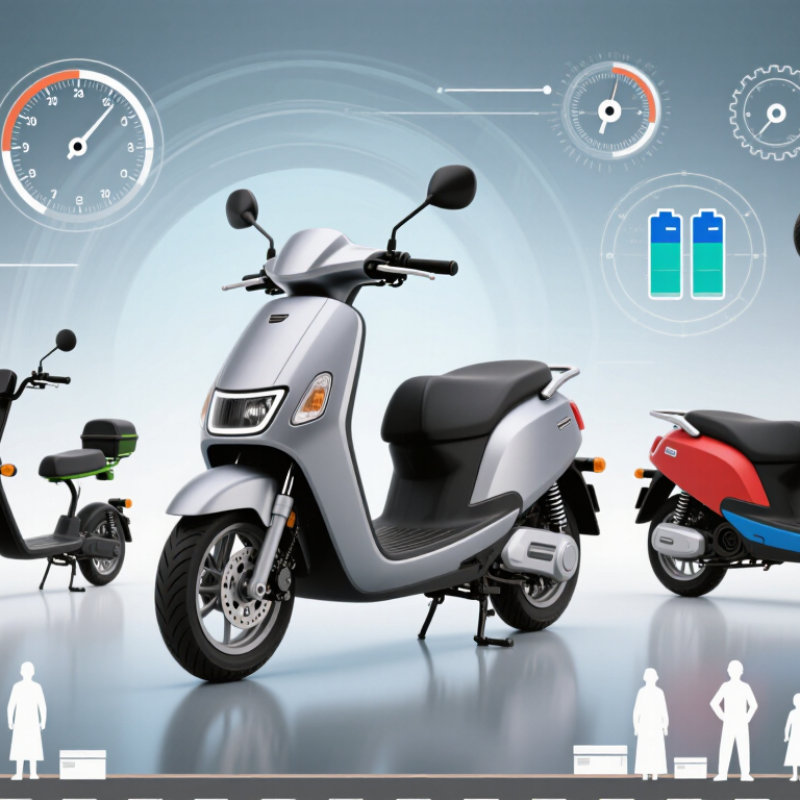
China Top 10 48V Electric Scooter Manufacturers for Buyers

Understanding 48V Electric Scooters and Their Main Applications

A 48V electric scooter uses a battery system with a nominal voltage of 48 volts. In practice, voltage alone does not determine speed or range. Battery capacity, motor rating, rider weight, tire pressure, and road slope all affect performance. A fully charged lithium-ion pack may read above 48 volts, so buyers should compare battery specifications, not labels alone. Small details matter.

These scooters commonly serve short urban commutes, campus travel, and last-mile trips between transit stops and workplaces. Their compact frames suit crowded streets, while a removable battery can make indoor charging easier. The International Energy Agency’s Global EV Outlook 2024 reports that electric two- and three-wheeler sales exceeded 10 million worldwide in 2023. That figure shows the scale of demand, though it does not describe 48V scooters alone.

For daily use, check the rated range under realistic conditions, braking performance, and the time needed to recharge. A quoted range may assume a light rider and flat roads; hills and frequent stops can reduce it. Warehouse or site use may also require stronger tires and a stable stand. A 48V model can be practical, but the badge is not a performance test.

Understanding 48V Electric Scooters: Battery Voltage and Applications

A common lithium-ion battery sold as “48V” uses 13 cells in series. At 3.6V nominal and 4.2V fully charged per cell, the pack measures 46.8V nominal and 54.6V when fully charged. These scooters are commonly used for urban commuting, campus travel, and short-distance delivery; actual range and performance depend on battery capacity, motor, load, terrain, and riding conditions.

An Overview of China’s 48V Electric Scooter Manufacturing Industry

China’s 48V electric scooter manufacturing industry sits within a much larger two-wheeler ecosystem. China Bicycle Association statistics recorded 42.28 million electric bicycles produced in 2023. That figure provides context, not a scooter count: product definitions differ across reports and markets. This distinction matters. Manufacturers can source motors, controllers, frames, displays, and battery packs through extensive domestic supplier networks. Buyers may request changes to range, payload, tire size, and dashboard layout. Yet a 48V label alone does not guarantee equal performance. Cell quality, controller tuning, wiring protection, and real-world load all affect range and durability.

Costs are shifting, too. BloombergNEF’s 2024 Battery Price Survey put the average lithium-ion battery pack price at $115 per kilowatt-hour, 20% below 2023. This is a global benchmark, not a quotation for a finished Chinese scooter. Still, it helps explain why buyers should compare battery chemistry, warranty terms, and pack-level testing, rather than voltage alone. Ask for test conditions: rider weight, speed, terrain, and temperature. Small details matter. Published range figures can look precise, but wind, hills, and frequent stops change results. Supplier audits and sample testing remain useful, although they add time and cost.

Key Criteria for Evaluating 48V Electric Scooter Manufacturers

When comparing 48V electric scooter manufacturers, look beyond the voltage printed on a specification sheet. Ask for battery capacity in amp-hours, cell documentation, and the battery management system’s protections. A 48V label alone cannot predict range. Numbers need context.

Request test data under stated conditions, including rider load, speed, temperature, and terrain. A scooter tested on a flat indoor track may behave differently on a hilly route. Check whether the motor’s rated output, controller settings, and battery capacity are clearly explained. Vague figures make fair comparison difficult.

Inspect a production sample closely. Look at weld consistency, cable routing, brake response, tire fit, and how firmly the battery locks into place. Test the scooter over bumps and repeated stops, not just a short showroom ride. Test the sample. Ask how each production batch is checked and whether the factory can share inspection records, component traceability, and clear warranty terms.

Also confirm the availability of replacement batteries, controllers, tires, and brake parts. That matters.

A polished brochure can still leave practical questions unanswered, and even a careful checklist cannot replace independent sample testing. A small detail, such as an awkwardly placed charging port, may become a daily annoyance.

China’s Top 10 48V Electric Scooter Manufacturers for Buyers

For buyers comparing China’s top 10 48V electric scooter manufacturers, treat the list as a shortlist, not a quality ranking. The International Energy Agency’s Global EV Outlook 2024 reports that global electric two- and three-wheeler sales reached about 11 million units in 2023, with China remaining the largest market. That scale supports broad manufacturing capacity, but it does not prove consistent quality. For a 48V scooter, request battery capacity in amp-hours and watt-hours, not voltage alone. A 48V, 20Ah pack stores about 960Wh nominally. Actual range can drop with rider weight, hills, cold weather, and frequent stops. Small details matter.

When assessing candidates, request route-based range logs, battery-cycle records, braking test results, frame-load checks, and written warranty terms. Confirm whether the motor rating is continuous or peak; these figures are not always presented clearly. Ask about serial-level traceability, spare-part lead times, and sample-unit testing. The IEA’s market figures describe demand, not product reliability. A supplier that explains test conditions and realistic limitations may be a better choice than one promising exceptional range without evidence. I would still verify claims independently; polished documents do not always reflect the support buyers receive after delivery.

How to Compare Suppliers, Scooter Models, and Purchase Terms

Comparing 48V scooter suppliers takes more than checking quoted prices. Ask for a dated specification sheet covering battery capacity, motor rating, controller limits, braking system, tire size, and stated water resistance. Then request test conditions behind the advertised range: rider weight, speed, terrain, and temperature can change results substantially. Ask for evidence. A neat specification sheet can still leave gaps, so confirm which details apply to the exact model and configuration you plan to order.

Compare models using practical needs, not headline figures alone. A larger battery may add weight, while wider tires can affect handling and shipping costs. Request clear photos of wiring, connectors, folding joints, and battery labels, plus sample inspection records if available. Small details matter. Check whether the supplier can provide replacement batteries, tires, brake parts, and manuals, and ask how warranty claims are handled. Responses that stay specific are easier to evaluate than broad promises.

Before placing an order, put the purchase terms in writing: sample cost, minimum order quantity, production lead time, packaging, payment schedule, delivery responsibility, and remedies for defects. Confirm which quality checks occur before shipment and whether you can review inspection results. One detail is easy to miss: quoted lead times may exclude component delays. Compare the full landed cost and delivery assumptions across suppliers; the cheapest quotation may not be the easiest order to manage.

China Top 10 48V Electric Scooter Manufacturers for Buyers - How to Compare Suppliers, Scooter Models, and Purchase Terms
No. Comparison Area Data to Request for Each Supplier or Model How Buyers Can Compare Purchase-Term Check
1 Supplier capability Factory or trading-company status; production and quality-control processes; relevant export experience. Request a live factory audit or current production evidence, and confirm which operations are performed in-house. Confirm the contracting entity, invoice details, and who is responsible for product quality and after-sales support.
2 48V battery configuration Battery chemistry, nominal voltage, capacity in Ah and Wh, cell configuration, battery-management-system protections, and charger output. Compare usable energy and stated test conditions, not Ah alone. Confirm that the charger is compatible with the supplied battery chemistry. Specify battery make or approved equivalent, documentation, warranty coverage, and replacement-battery pricing in the contract.
3 Motor and controller Motor type, rated power, peak power, controller current, and overload or thermal-protection details. Compare rated power separately from peak power; request the model-specific datasheet and confirm that the components match the quoted configuration. List the exact motor and controller specifications on the purchase order; define approval requirements for substitutions.
4 Speed, range, and load Maximum speed, claimed range, maximum payload, and the conditions used for each test. Range depends on factors such as rider weight, terrain, speed, temperature, and battery condition. Compare results only when test conditions are stated consistently. Agree on the required configuration and acceptance test; avoid treating an unspecified marketing range as a guaranteed result.
5 Brakes, tires, and suspension Brake type and configuration, tire size and type, suspension arrangement, and availability of replacement parts. Check suitability for the intended road conditions and confirm that the advertised components appear on the sample and final specification sheet. Request prices and lead times for wear parts, including tires, brake pads, cables, and suspension components.
6 Safety and compliance documents Test reports and certificates applicable to the destination market, product configuration, battery, charger, and shipping method. Verify document scope, model identifiers, issuing body, and validity. Requirements differ by country and product classification. State which documents the supplier must provide and who pays for any additional testing or market-specific changes.
7 Customization and packaging Available color and configuration options, logo or packaging services, carton dimensions, and gross weight. Separate standard specifications from custom options; review a pre-production sample or approved artwork before bulk production. Confirm minimum order quantities, customization charges, sample fees, and responsibility for packaging approval.
8 Price, MOQ, and payment Unit price by order quantity, minimum order quantity, sample price, tooling or setup fees, and payment schedule. Compare like-for-like specifications and quantities. Check whether the quote includes accessories, packaging, inspection, and export preparation. Record currency, payment milestones, bank charges, quotation validity, and applicable Incoterms® rule with a named place.
9 Production and delivery Sample time, production lead time, inspection date, shipping method, and estimated transit time. Ask for lead times in writing and clarify when the clock starts, such as after deposit receipt or final sample approval. Define shipment window, inspection and dispatch milestones, delay communication, and responsibility for freight and import costs under the agreed Incoterm.
10 Warranty and spare parts Written warranty period and exclusions, claim process, spare-parts list, technical support, and replacement-part lead times. Compare coverage by component and check whether labor, freight, batteries, and consumable parts are treated differently. Attach warranty terms and a spare-parts price list to the agreement; specify evidence required for claims and the remedy for confirmed defects.

Buyer note: Supplier prices, minimum order quantities, lead times, specifications, and warranty terms are quotation-specific. Verify the details against the final sample, written quotation, and purchase contract.