

Toll Free: 1800 3000 6222
Telephone: +91 141 222 3221
Fax: +91 141 222 1926, 222 2259
CIN: U29130WB1946PLC013643
Founded in 1946, National Engineering Industries Ltd (NEI) is India’s leading bearings manufacturer and exporter, renowned for excellence in quality and delivery.

China’s packaging and print-finishing sector includes manufacturers serving projects from small cosmetic cartons to large book covers. This guide introduces ten China-based Bronzing Machine Manufacturers and the factors buyers can use to compare them. The aim is not to treat a ranked list as a guarantee. A supplier’s fit depends on the job, materials, production volume, and available service.
Bronzing Machines apply metallic foil to paper, board, labels, or other compatible surfaces. Performance can depend on steady heat, even platen pressure, accurate foil feeding, and reliable registration. A sample run can reveal details that a brochure may not: whether fine lettering stays sharp, whether foil waste is manageable, and how quickly operators can change a job. Small tests matter.
When reviewing manufacturers, buyers should check machine formats, automation options, stated production capacity, customization limits, installation support, and access to spare parts. Ask for technical specifications and a demonstration using materials similar to the intended application. Clear answers about maintenance and operator training can be as valuable as an impressive speed figure. Details matter.
The companies in a “top ten” article should be compared using consistent, verifiable criteria, such as product range, documented experience, and available customer support. Claims still need checking. Public information may be incomplete, and a strong machine is not automatically the right investment for every workshop. Use this overview as a starting point, then confirm requirements directly with each manufacturer before requesting a quotation.
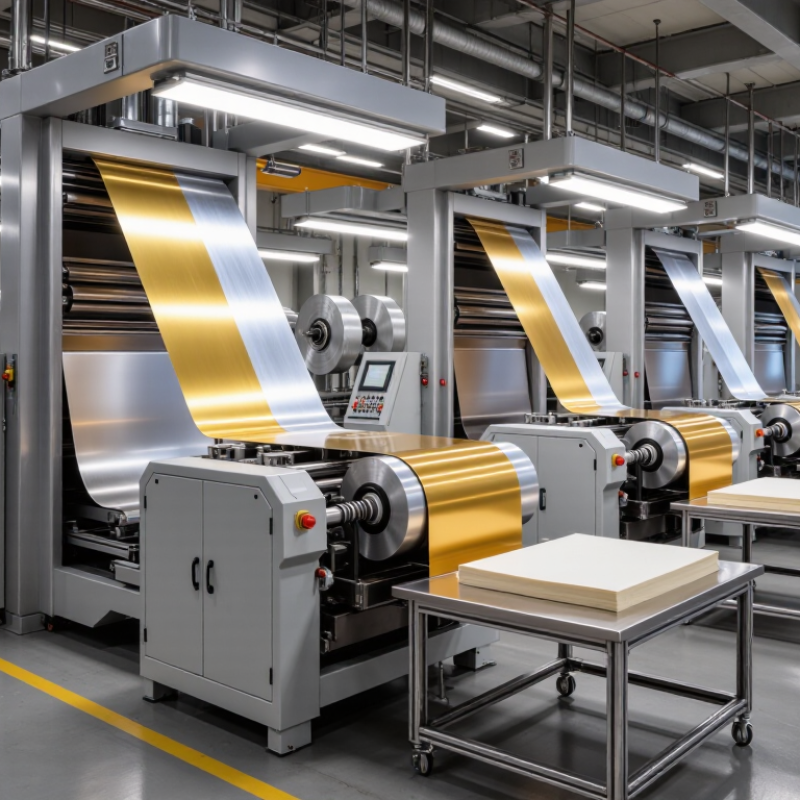
Bronzing machines add metallic decoration by transferring a thin foil layer onto a surface, usually with heat and pressure. A heated die presses the foil against paper, card, or another suitable material. The result may be a logo, border, or fine lettering. Small details matter. Temperature, pressure, dwell time, and foil choice all affect adhesion and edge definition.
In packaging, the machines are used for cartons, labels, and gift boxes, where a metallic finish can help key information stand out. Print shops also use them for book covers, invitations, and business cards. Flatbed machines suit sheet materials and short runs; roll-fed systems can support continuous production. Neither format is right for every job. Material thickness, design size, and required output should guide the choice.
Operators usually test settings on sample stock before a production run. Too much heat can mark or distort a surface, while too little may leave patchy transfer. Registration can also drift, especially with intricate artwork. It is easy to assume a glossy result means a successful setup, but clean edges and consistent placement matter more. Foil scraps and rejected sheets are real costs, so setup time deserves attention too. Even experienced teams need to check results across a full run.

China Top 10 Bronzing Machine Manufacturers
The Development of China’s Bronzing Machine Industry
China’s bronzing-machine industry has grown with the country’s wider printing and equipment manufacturing base. More converters now seek machines that can apply crisp metallic details to cartons, labels, and book covers. On a shop floor, progress shows in practical changes: steadier foil feeding, quicker job setup, and cleaner registration around small lettering. These details matter when a batch contains many short-run designs.
The National Bureau of Statistics’ Statistical Communiqué on 2023 National Economic and Social Development reported that manufacturing value added rose 5.0%, while equipment manufacturing grew 6.8%. These figures describe broad sectors, not bronzing machines specifically. That distinction matters. They suggest a supportive industrial environment, but do not prove that every machine maker has advanced at the same pace. Current development increasingly emphasizes automation, energy use, and operator-friendly controls. Yet upgrades can be uneven. A small workshop may still rely on manual adjustments, where a slight pressure change can leave foil dull or edges rough. Better sensors help, but they cannot replace skilled setup or consistent maintenance. The industry’s next gains will depend on both.
Industry overview: the table summarizes common technologies, applications, and development trends. Machine configurations and performance vary by model; no company or brand rankings are included.
| No. | Industry dimension | Current industry snapshot | Development direction |
|---|---|---|---|
| 1 | Core process | Hot stamping transfers a decorative foil layer onto a substrate using a heated die, pressure, and a controlled dwell time. | Improved control of temperature, pressure, and registration helps produce more consistent impressions. |
| 2 | Machine formats | The market includes platen, flatbed, and rotary configurations, as well as sheet-fed and roll-fed equipment. | Equipment selection is increasingly matched to job size, substrate, production volume, and finishing-line layout. |
| 3 | Substrate range | Common applications include paper and paperboard; compatible plastics and other materials depend on the foil, surface, and machine setup. | Broader material compatibility requires substrate-specific testing and appropriate foil selection. |
| 4 | End-use sectors | Hot-stamped products are used in packaging, labels, book covers, greeting cards, and other printed materials. | Demand for visual differentiation supports use in premium packaging and decorative print finishing. |
| 5 | Automation | Available configurations range from manually assisted feeding to automated sheet feeding, delivery, and job controls. | Automation can reduce repetitive handling and support steadier production, subject to job and operator requirements. |
| 6 | Registration and setup | Accurate positioning depends on the machine’s registration system, tooling, material consistency, and setup procedure. | Easier make-ready and repeatable positioning are important design priorities for multi-job production. |
| 7 | Foil and waste management | Foil consumption is affected by the image layout, foil-feed settings, job design, and the area stamped. | Adjustable foil feeding and efficient layout planning can help limit unnecessary foil use. |
| 8 | Digital controls | Modern equipment may use digital interfaces to set and monitor operating parameters such as temperature and production speed. | Clearer controls and stored settings can make job changes and process monitoring more manageable. |
| 9 | Safety and maintenance | Hot surfaces and moving parts require suitable guarding, operating procedures, and regular inspection. | Accessible service points, protective devices, and operator training support safer, more reliable operation. |
| 10 | Purchasing considerations | Buyers typically compare usable format, substrate compatibility, automation level, installation needs, service support, and operating costs. | A production trial using representative materials and artwork is a practical way to assess suitability before purchase. |
Evaluating Chinese bronzing machine manufacturers starts with the work the machine must perform. Share your substrate, sheet size, foil type, and target production speed. Ask the supplier to run a sample using your own materials, not only a prepared demonstration sheet.
Check fine lines, solid coverage, edge sharpness, and registration under normal shop lighting.
Small defects matter.
A bright sample can hide uneven pressure or excessive foil waste.
Inspect the machine’s heating stability, pressure adjustment, feeding accuracy, and changeover time. Request a written specification, a parts list, and clear details about installation and operator training.
Ask how maintenance is handled and which components need routine replacement.
Then verify lead times and after-sales response with recent customer references. A low quotation is not enough. Compare the same configuration and service scope across suppliers.
It is easy to overvalue a polished showroom; a repeatable test run is more useful.
I would also record the settings used, since vague notes make later comparisons surprisingly difficult.
Ask for operating and maintenance documents in a language your technicians can use.
China’s leading bronzing-machine manufacturers differ less in sales claims than in feeding stability, foil control, and service depth. A useful ten-manufacturer profile should compare machine format, rated speed, substrate range, registration tolerance, tooling changes, and spare-parts response. Ask for a live sample run. A brochure cannot reveal foil breaks, edge lift, or uneven pressure on textured stock.
Smithers’ The Future of Global Printing to 2028 estimates global print production value at about $818 billion in 2023, rising to $874 billion by 2028. This broader market outlook does not prove demand for any single machine type. It does, however, make finishing performance worth close attention. The ten profiles can distinguish sheet-fed and roll-fed systems, compact workshop models, and automated production lines. Details matter.
For each manufacturer, buyers should verify quoted speed against the chosen material and design. Compare foil waste, changeover time, operator access, and the consistency of repeated samples. One weakness in many comparisons is sparse, independently checked performance data. Treat unverified figures as claims, not guarantees. Factory trials and written service terms provide firmer evidence than catalogue specifications alone.
For a fair comparison of China’s ten leading bronzing-machine manufacturers, look beyond maximum speed. Check whether the stated rate holds on your actual stock, foil width, and design. Ask for a live test using a fine-line pattern and a solid area. Watch registration, pressure consistency, and foil waste. A clean sample matters more than a polished brochure.
Smithers’ The Future of Global Packaging to 2028 valued the global packaging market at about US$1.17 trillion in 2023 and projected continued growth. That scale supports demand for reliable finishing, but it does not prove any machine will suit a specific shop. Compare usable sheet size, heating-zone control, changeover time, and hourly output under realistic production conditions. Ask for test results, not only rated capacity. Small details matter.
Service can separate similar machines. Request spare-parts lead times, remote troubleshooting hours, installation scope, and operator-training plans in writing. A technician’s response time may matter more than a slightly faster cycle. That matters. Also inspect a maintenance checklist and ask how often common wear parts need replacement. Specifications rarely tell the whole story; even a careful factory test may not reproduce a long production run. This comparison takes judgment.
Copyright © 2023 NEI Ltd. All rights reserved.
Registered Office : 9/1, R. N. Mukherjee Road, Kolkata – 700 001. In case of any queries or grievances, please contact Mr.Tarun Kumar Kabra, Company Secretary.
E-mail: sale@kinpart.com Privacy Policy Cookie Policy