Essential Tips for Choosing the Right Thrust Bearing?
Choosing the right thrust bearing is critical in industrial applications. A significant percentage of equipment failures stem from improper bearing selection. According to a report by the Bearing Industry Association, nearly 30% of equipment downtime is linked to bearing issues. This highlights the importance of making informed choices.
John Smith, a renowned expert in the bearing industry, emphasizes, “Selecting the right thrust bearing can make or break a project.” His insight reflects the necessity of understanding the specific requirements of an application. Different loads, speeds, and environmental factors all influence the performance of thrust bearings.
Moreover, manufacturers often overlook details such as lubrication methods or material compatibility. These factors can lead to premature wear or failure. A thorough analysis of the operating conditions is essential. It may seem simple, but the consequences of neglecting these factors can be substantial. Thus, taking the time to evaluate options will save costs and enhance reliability.
Understanding the Functionality of Thrust Bearings
Thrust bearings play a crucial role in various machinery. They support axial loads and reduce friction between moving parts. This functionality is vital for ensuring efficiency and longevity in high-load applications. According to industry studies, a well-chosen thrust bearing can enhance the service life of equipment by up to 30%.
Choosing the right thrust bearing requires careful consideration. Assess the load capacity and operating conditions before making a decision. For example, if the load is consistent, a roller thrust bearing may be advantageous. If there are variations in the load, a different design may be necessary.
Here are some tips: Check the bearing's material. Steel is common, but ceramic can offer lower friction. Also, consider environmental factors like temperature and moisture. A bearing might need sealing if water exposure is a concern.
Remember, the wrong choice could lead to premature failure. This could result in significant downtime and costs. Be sure to gather adequate data before finalizing your selection.
Types of Thrust Bearings and Their Applications
Thrust bearings are integral in various mechanical systems. They bear axial loads while allowing smooth rotation. Different types serve specific purposes, making it crucial to choose wisely.
There are several types of thrust bearings, including ball, roller, and fluid types. Ball thrust bearings are compact and efficient, typically used in low-load applications. Roller thrust bearings handle heavy loads and provide stability. Fluid thrust bearings rely on lubricant films, making them suitable for high-speed applications. Each type has unique installation requirements and operational limits.
Understanding the application and environment is vital. Environmental factors, like temperature and contaminants, can impact performance. Overlooking these elements may lead to failures. Always consider load capacity and alignment as well. Choosing the right thrust bearing involves careful analysis, not just a quick decision.
Key Factors to Consider When Selecting Thrust Bearings
When selecting thrust bearings, several key factors demand attention. Load capacity is critical. Reports indicate that bearings should support specific axial loads without failing. The industry standard for precision can vary, but many thrust bearings should operate within tolerances of less than 0.01 mm for optimal performance.
Material choice is equally important. Steel bearings are preferred for high-load applications, yet composite materials have gained traction. They provide excellent resistance to wear and corrosion. According to market studies, nearly 30% of manufacturers are opting for advanced materials to enhance durability.
Another aspect that cannot be overlooked is lubrication. Proper lubrication ensures smooth operations and extends bearing life. Studies reveal that inadequate lubrication was a factor in 40% of bearing failures. This highlights the importance of routine maintenance and proper selection of lubricants tailored to specific environments. The balance of factors can make or break performance in real-world applications.
Essential Tips for Choosing the Right Thrust Bearing - Key Factors to Consider When Selecting Thrust Bearings
| Factor |
Description |
Consideration |
| Load Capacity |
Maximum load that the bearing can support without failure. |
Ensure it meets your application requirements. |
| Material |
The composition of the bearing affects durability and wear resistance. |
Select material based on environment and load conditions. |
| Type of Thrust Bearing |
Different types include ball, roller, and fluid thrust bearings. |
Choose based on friction, speed, and space limitations. |
| Operating Temperature |
The temperature range within which the bearing can function effectively. |
Ensure the bearing can operate at the expected temperatures. |
| Lubrication |
Type and amount of lubrication can affect performance and lifespan. |
Determine lubrication method (grease or oil) based on application. |
| Speed Rating |
Maximum rotational speed the bearing can handle. |
Verify speed requirements align with bearing specifications. |
Material Selection for Optimal Thrust Bearing Performance
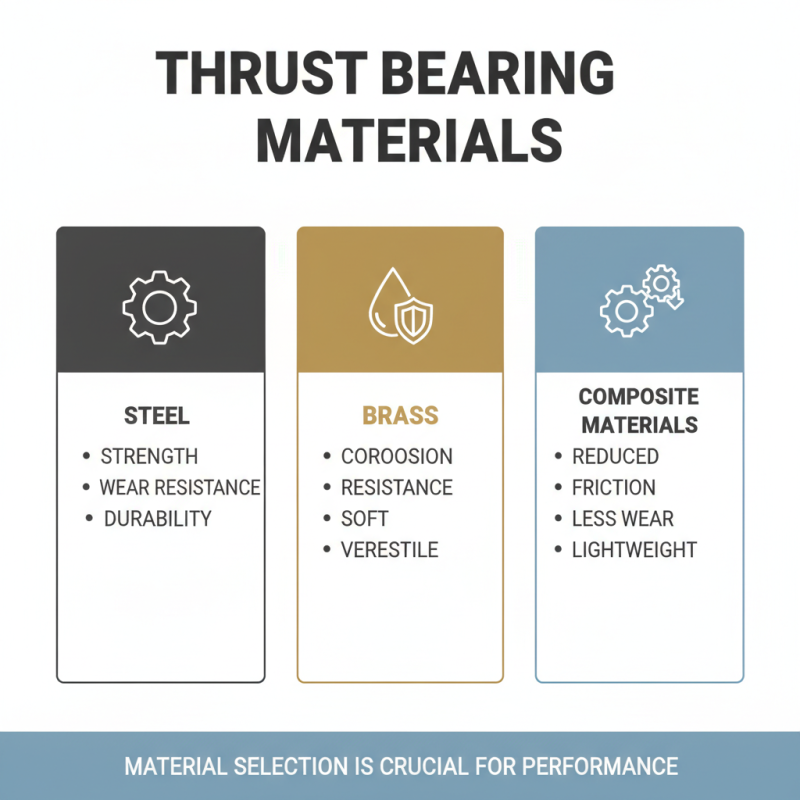
Material selection is crucial for thrust bearing performance. Different materials offer distinct attributes. Common choices include steel, brass, and composite materials. Steel provides strength and wear resistance. Brass is softer but has excellent corrosion resistance. Composite materials can reduce friction and wear.
When choosing material, consider the application. For high-load situations, steel might be preferable. Yet, the risk of wear can be significant. Composite materials might fail under extreme conditions. It's important to evaluate operating environments, such as temperature and humidity.
The type of lubricant also affects performance. Certain materials work better with specific lubricants. Poor lubrication can lead to increased wear, reducing bearing lifespan. Testing different materials in practical scenarios may yield surprising results. Making informed choices involves understanding both advantages and disadvantages of each option.
Maintenance Tips for Prolonging Thrust Bearing Life
When it comes to thrust bearings, regular maintenance is crucial. It can significantly extend their lifespan and improve performance. According to industry reports, improper maintenance can lead to a decrease in bearing life by up to 50%. Ensure that your lubrication practices are consistent. Use the recommended lubricant types and follow the specific application frequencies. Neglecting this can cause increased friction, leading to premature wear.
Monitoring operating conditions is also essential. Check temperature and load regularly. A temperature rise beyond normal operating limits can signal issues. For instance, consistent temperatures over 120°C can shorten bearing life drastically. Implementing routine inspections can help identify wear patterns early. Early detection can save costs and prevent catastrophic failures. Pay attention to vibrations too; they can indicate misalignment or imbalance.
Don't overlook contamination control. Keeping the surrounding area clean can prevent particles from entering the bearing. This is particularly vital in harsh environments. Installing seals or shields can help, but they might not be foolproof. Even with the best precautions, some contamination may still occur. Regular cleaning and checks are essential to maintain optimal performance. Negligence in this area may lead to irreversible damage over time.