7 Tips to Choose an Automatic Price Labelling Machine?
Choosing an Automatic Price Labelling Machine is not simply a matter of comparing prices and production speeds. It affects shelf presentation, barcode accuracy, labor efficiency, and daily production stability. A machine that performs well in a demonstration may struggle with dusty packaging, uneven surfaces, or changing label sizes. That gap deserves attention.
Mike Fairley, a respected labeling-industry educator, has stated, “A label is only effective when it remains accurate, readable, and consistent throughout production.” His point is practical. The best equipment must match your products, labels, conveyor layout, and working environment. Consider round containers, flexible bags, cartons, and shrink-wrapped packs. Each surface may require a different applicator, sensor, or pressure setting.
This guide presents seven useful tips for selecting an Automatic Price Labelling Machine. It examines label compatibility, application speed, printing accuracy, software integration, machine flexibility, maintenance access, and total operating cost. The evaluation should include real product samples, not only supplier photographs. Run test labels at normal line speed. Check wrinkles, edge lifting, barcode readability, and placement tolerance.
Small details matter. Can operators replace a roll without stopping production for too long? Is the display clear under factory lighting? Does the supplier provide responsive training and spare parts? These questions often reveal more than a polished brochure.
No machine is perfect. A faster model may offer less flexibility. A cheaper unit may demand more maintenance. Careful comparison can prevent an expensive mistake and support dependable labeling performance.
Define Your Product Labeling Requirements and Workflow
7 Tips to Choose an Automatic Price Labelling Machine
Define Your Product Labeling Requirements and Workflow
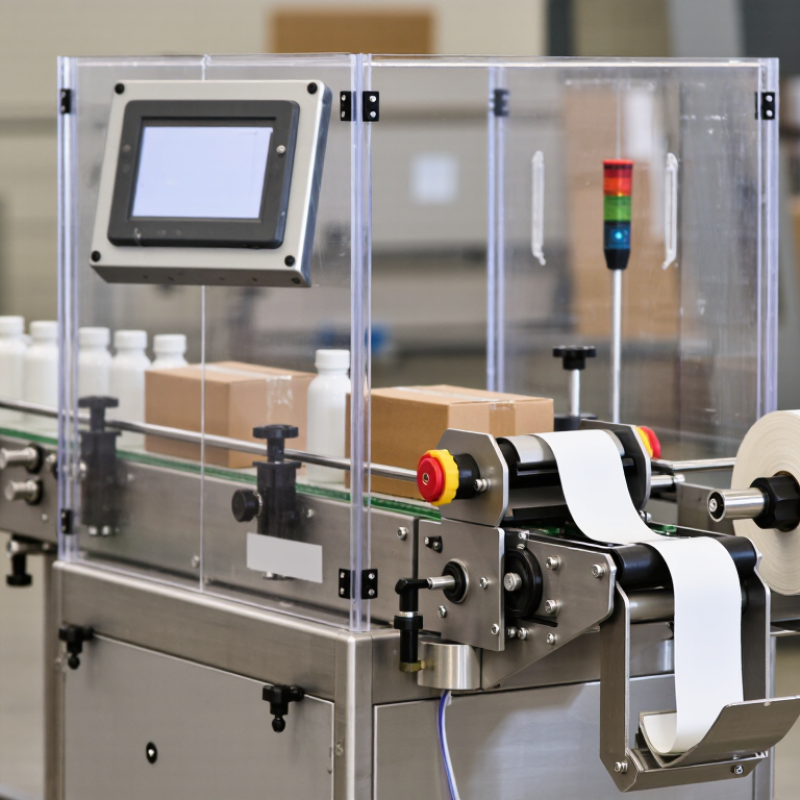
Choosing an automatic price labelling machine starts with your product, not the machine. Record each product’s shape, material, dimensions, weight, and surface condition. A smooth tray behaves differently from a flexible pouch. Note label size, print content, placement, and required readability. Include production speed and daily operating hours. Small details matter.
Tip 1: Map the complete workflow. Show where products enter, weigh, print, label, inspect, and leave. Identify manual handling points. These often cause delays.
Tip 2: List every product changeover. Frequent changes may require adjustable guides, simple controls, and quick cleaning access.
Tip 3: Check data requirements carefully. Prices, dates, batch information, and weights should transfer accurately from approved systems. Test the connection before purchase.
During practical evaluations, ask operators to run real products through the proposed setup. Watch for tilted labels, product jams, slow adjustments, and unclear screens. A machine can look efficient during a demonstration but struggle with irregular packaging. That happens. Allow time for testing.
Define acceptance standards before comparing machines. Measure label position, print clarity, output speed, waste, and restart time. Consider the working environment too. Dust, moisture, temperature changes, and limited floor space can affect performance. Cleaning should be straightforward, with safe access to contact areas. Review manuals, service response, training, and spare-part availability. Do not judge by speed alone. A faster machine may create more rework. Reflect on the process after each trial; your first requirements list may be incomplete.
Compare Machine Types, Speed, and Labeling Accuracy
7 Tips to Choose an Automatic Price Labelling Machine
Compare Machine Types, Speed, and Labeling Accuracy
Tip one: match the machine to your products. Weigh-price labellers suit fresh goods, while print-and-apply systems fit cartons and fixed-price items. Tip two: measure real throughput, not brochure speed. A machine rated at 60 packs per minute may slow near 45 when products vary in size. That difference matters during busy hours.
Tip three: check label accuracy at the smallest print size. ISO/IEC 15416 and 15415 provide barcode grading methods, so ask for verified test results. Tip four: inspect the applicator design. Pneumatic tamping works well on flat cartons, while wipe-on units handle continuous surfaces. Tip five: compare changeover time. PMMI industry research repeatedly identifies labor availability and flexible automation as major packaging concerns. A five-minute adjustment can prevent repeated production delays.
Tip six: test software integration before buying. The machine should receive price, batch, and product data without manual retyping. A 2023 global warehousing study reported that 58% of decision-makers planned to deploy fixed industrial scanning by 2028, showing the direction toward connected operations. Tip seven: calculate waste and maintenance costs. Reliable sensors, simple cleaning access, and clear fault messages often matter more than maximum speed. I would test mixed products for several hours. One perfect sample proves very little. Human loading errors remain possible, even with accurate equipment.
Check Label Compatibility, Software, and System Integration
An automatic price labelling machine should match your real workflow, not just a showroom demonstration. Check label width, roll diameter, adhesive type, print resolution, and barcode format. Test labels on chilled, dusty, or uneven packaging. Small changes can affect adhesion. Ask for samples from your actual products.
Confirm the software supports your product database, price updates, user permissions, audit trails, and error alerts. It should exchange data with your point-of-sale, inventory, and weighing systems through standard interfaces. PMMI’s 2023 report on packaging automation identifies connectivity and data exchange as major automation priorities. That matters on busy production days. A fast machine is still risky when operators enter prices manually. Keep the interface simple. Fewer clicks help.
System integration deserves a live test. Send a price change, print a label, scan it, and verify the returned data. Include offline recovery and duplicate-label prevention. A 2023 warehousing industry study reported that 58% of decision-makers planned to deploy RFID by 2028, showing the growing need for connected identification systems. Do not assume every “compatible” device will communicate smoothly. I would request an integration map, response-time records, and operator training evidence. Also check technical support, spare parts, and software update policies. The weakest connection may control the whole line.
7 Tips to Choose an Automatic Price Labelling Machine
A practical 100-point evaluation framework covering label compatibility, software, system integration, and daily operation.
Prioritize compatibility and integration first: the machine should support your label sizes, materials, adhesives, product shapes, and existing systems. Then compare print accuracy, throughput, software usability, maintenance requirements, and total operating cost before making a final decision.
Assess Total Cost, Supplier Support, and Future Scalability
Buying an automatic price labelling machine requires more than comparing purchase prices. Calculate total cost across five years: equipment, labels, ribbons, energy, maintenance, training, integration, and downtime. A low-priced unit can become expensive after repeated calibration or slow service. In one practical review, a two-hour stoppage during a busy shift cost more than several months of planned maintenance. The spreadsheet looked tidy. Reality did not.
Supplier support deserves measurable terms. Ask about response times, remote diagnostics, spare-parts availability, operator training, and local technicians. The Deloitte 2023 Smart Manufacturing and Operations Survey found that 86% of manufacturers expect smart manufacturing to become a primary competitiveness factor within five years. That expectation makes technical support part of the investment, not an optional service. Request references from facilities with similar product speeds and label formats. Generic promises are not enough.
Plan for growth before signing. Check whether the machine can connect with existing weighing, inventory, and production systems. Confirm software licensing, data security, printer compatibility, and upgrade costs. PMMI industry reports repeatedly highlight labor pressure and the need for flexible automation in packaging operations. Choose modular equipment when product sizes may change. Leave physical space for another line. A perfect forecast is impossible. That is the uncomfortable part. Test future scenarios: double the daily volume, add new packaging, or change label information. If the supplier cannot demonstrate those cases, scalability remains a claim, not evidence.