

Toll Free: 1800 3000 6222
Telephone: +91 141 222 3221
Fax: +91 141 222 1926, 222 2259
CIN: U29130WB1946PLC013643
Founded in 1946, National Engineering Industries Ltd (NEI) is India’s leading bearings manufacturer and exporter, renowned for excellence in quality and delivery.

Choosing the right Spray Gun can determine whether your project looks polished or painfully uneven. The decision affects coverage, material waste, working speed, and surface texture. A small furniture panel needs different control than a vehicle body or a large workshop wall. The wrong gun may create dry spray, heavy edges, or frustrating runs.
Jon Kosmoski, founder of House of Kolor and an experienced custom-painting authority, offers a practical reminder: “The gun is an extension of your hand.” That idea matters. A professional Spray Gun cannot rescue poor preparation, incorrect pressure, or unsuitable paint viscosity. It must match your material, surface, compressor, and finishing expectations. It also needs to feel balanced after several minutes of use.
This guide examines the details that are easy to overlook. We will compare gravity-feed and siphon-feed designs, nozzle sizes, spray patterns, air requirements, and transfer efficiency. Your paint type matters. So does your workspace. A compact compressor may struggle with a high-demand gun, even when the product specifications look impressive.
There is no universally perfect choice. That is the uncomfortable part. Many buyers focus on price and overlook cleaning time or replacement parts. I have seen attractive finishes fail because the operator ignored airflow and test-panel results. A short spray test can reveal more than a long product description.
The best Spray Gun is not always the most expensive model. It is the one that gives you predictable control, manageable maintenance, and a finish you can repeat.
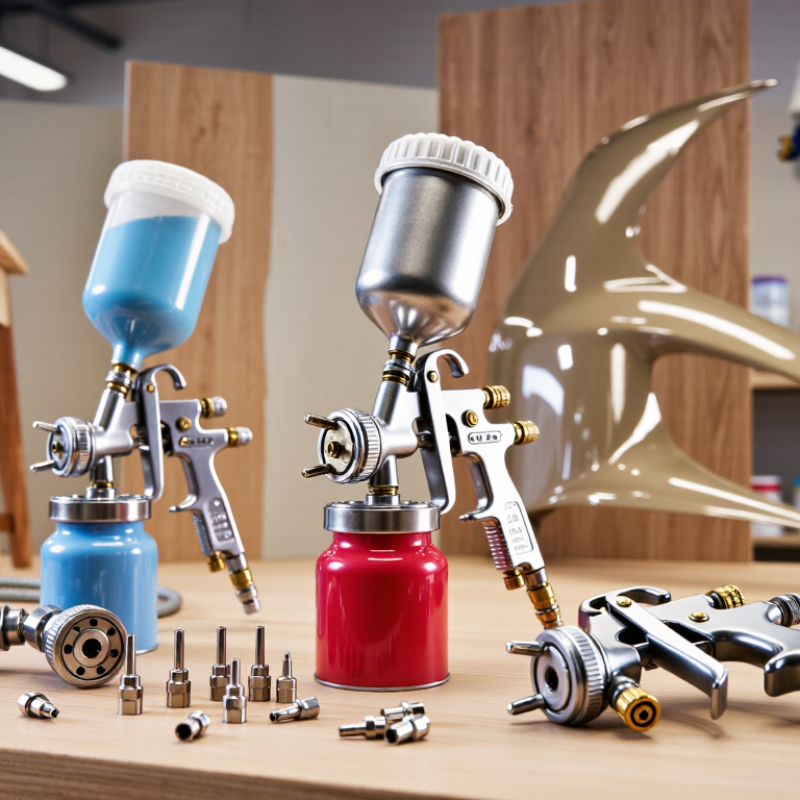
How to Choose the Right Spray Gun for Your Project?
Understanding spray gun types starts with transfer efficiency, finish control, and material thickness. Conventional guns use higher air pressure and create more overspray. They can produce a fast, wet coat, but waste more material. HVLP guns work with lower pressure and deliver a softer spray pattern. They suit furniture, cabinets, and controlled workshop jobs. LVLP guns need less air volume, making them useful with smaller compressors. Airless guns use fluid pressure instead of compressed air. They handle thick coatings quickly, including exterior paint and protective finishes. Air-assisted airless systems add air control for smoother results.
According to South Coast AQMD Rule 1151, compliant spray equipment commonly targets at least 65% transfer efficiency. That figure matters. Higher transfer efficiency can reduce clouding, cleanup, and wasted coating. A 2024 Grand View Research analysis also projects continued growth in the global spray gun market, driven by construction and industrial finishing demand. Market growth does not mean one gun fits every project. That assumption needs challenging. I have seen users choose airless equipment for small panels, then struggle with heavy edges and cleaning.
Tips: Match the nozzle to the coating, not only the surface. Check the technical data sheet for recommended tip size and pressure. Test on cardboard first. Keep the gun perpendicular and maintain a steady distance. A two-second trigger delay can create a visible wet spot. Also inspect compressor output under load, because its advertised capacity may look better than real performance. A small mistake here can ruin an otherwise careful finish.

Matching spray gun features to project requirements starts with the coating, surface, and production speed. A small furniture panel needs different control than a large metal enclosure. For thin stains, choose a smaller fluid nozzle and adjustable fan. Thick primers usually need a larger nozzle and stronger fluid delivery. Check the coating’s technical data sheet before changing settings. It often specifies viscosity, tip size, and pressure. Measure the surface. Then estimate how much material the gun must place per minute. High-volume low-pressure (HVLP) guns can reduce overspray, but they may work slowly on broad surfaces. Conventional air spray can cover faster, yet it may waste more coating.
Transfer efficiency makes that trade-off measurable. The U.S. Environmental Protection Agency’s AP-42 Chapter 4.2 reports typical efficiency ranges of 20–40% for conventional air spray and 40–65% for HVLP. Electrostatic systems can reach 60–95% under suitable conditions, according to the same technical reference. These figures are not guarantees. Shape, operator distance, air movement, and paint viscosity change results. Select a gun with ergonomic balance, replaceable seals, and controls you can adjust while wearing gloves. A fine-finish project benefits from a stable fan pattern more than maximum output. A large structural part may reward a wider pattern and larger cup. Test before committing. A short spray panel can reveal dry edges, runs, or excessive texture. The European Commission’s 2020 BAT Reference Document supports controlled application practices, though real workshops rarely behave perfectly.
Matching spray gun nozzle size to common project requirements
Nozzle size is a practical starting point when selecting a spray gun. Smaller nozzles around 0.8–1.0 mm suit fine detail work, while 1.3–1.5 mm is commonly used for automotive coatings and furniture finishes. Thicker primers and wall paints generally require larger 1.8–2.5 mm nozzles. Always confirm the coating manufacturer’s technical specifications before spraying.
Choosing a spray gun starts with the coating, not the handle. Read the material’s technical data sheet before selecting a nozzle. Thin stains often need a 1.0–1.3 mm nozzle, while primers and textured coatings may require 1.8–2.5 mm. The finish tells you. A nozzle that is too small causes spitting and uneven coverage. A large nozzle can flood edges and waste material. I still test on cardboard first because published size ranges cannot predict every mixture.
Pressure must match the nozzle and coating viscosity. For many water-based coatings, begin around 20–30 psi at the gun, then adjust gradually. Measure pressure at the gun, not only at the compressor. The U.S. EPA’s spray-application guidance reports that HVLP systems can achieve about 65% transfer efficiency or higher, compared with roughly 30–50% for conventional spraying. Lower overspray can improve material use, but excessive pressure still creates bounce-back and a dusty surface. More pressure is not always better.
Material capacity affects control and fatigue. A 600 ml cup suits small furniture panels, while larger tanks reduce refilling during doors or cabinets. A full cup adds noticeable wrist weight. Keep the gun perpendicular and maintain a steady distance of 15–20 centimetres. Move your arm, not your wrist. I sometimes choose a smaller cup than needed, and that costs time. Yet a lighter gun often gives cleaner overlaps and fewer tired-hand mistakes. EPA control-technique guidance and OSHA’s spray-finishing manual both stress ventilation, equipment adjustment, and controlled application.
How to Choose the Right Spray Gun for Your Project?
Choosing a spray gun starts with its power source, then becomes a question of pattern control and material efficiency. Pneumatic guns offer fine atomization, but they require a compressor, stable air pressure, and careful hose selection. Airless systems handle thick coatings quickly and cover large panels well. HVLP systems use lower pressure, producing less overspray in small workshops. The U.S. EPA’s AP-42 Chapter 4.2 estimates typical transfer efficiency at about 50–65% for HVLP equipment, compared with roughly 30–50% for conventional air spray. These figures vary with operator technique, coating viscosity, and gun setup.
Spray pattern matters as much as power. A wide fan suits doors and vehicle panels, while a narrow pattern gives better control around edges, corners, and narrow rails. Hold the gun perpendicular to the surface, and overlap each pass consistently. A practical test spray reveals more than a specification sheet. On one project, I selected a wider tip for speed and created heavy edges instead. That mistake showed an uncomfortable truth: faster coverage can increase sanding time. The European Commission’s surface-treatment guidance also emphasizes reducing overspray and improving material use through controlled application.
Tips: Match the nozzle to the coating’s viscosity. Begin with lower fluid flow. Test on cardboard first. Check the fan at a steady distance, usually 15–20 centimeters. Keep a wet edge, but do not chase every dry spot immediately. Record pressure, tip size, and mixing ratio for repeatable results.
| Spray Gun Type | Power Source | Typical Operating Range | Common Spray Pattern | Typical Transfer Efficiency | Best-Fit Projects and Practical Considerations |
|---|---|---|---|---|---|
| Conventional Air Spray | Compressed air at relatively high atomizing pressure | Approximately 35–60 psi (2.4–4.1 bar) at the gun, depending on the coating and setup | Adjustable round to wide fan; strong atomization with a defined, controllable edge | Approximately 25–40% | Useful for detailed finishing, small parts, and coatings that require fine atomization. It usually consumes more air and creates more overspray than lower-pressure systems. |
| HVLP Air Spray | Compressed air delivered at high volume and low pressure | Typically 8–15 psi (0.55–1.0 bar) at the air cap; inlet pressure may be higher | Adjustable wide fan, narrow fan, or round pattern | Approximately 55–70% | Suitable for furniture, cabinets, trim, automotive refinishing, and many water- or solvent-based coatings. It offers good control and reduced overspray but may apply material more slowly. |
| LVLP Air Spray | Compressed air at low volume and low pressure | Often around 20–30 psi (1.4–2.1 bar) inlet pressure, with model-specific air-flow requirements | Adjustable fan pattern, generally narrower and softer than conventional spray | Approximately 60–75% | A practical choice where the compressor has limited capacity. It can reduce bounce-back and overspray, although production speed and atomization depend strongly on nozzle size and coating viscosity. |
| Air-Assisted Airless | High-pressure fluid pump plus a small amount of compressed air for pattern control | Fluid pressure commonly about 300–1,500 psi (21–103 bar); air-cap pressure is much lower | Wide, uniform fan with adjustable edge softness and pattern width | Approximately 65–85% | Well suited to cabinets, doors, millwork, and medium-production finishing. It combines higher output with improved control, but requires more equipment adjustment and cleaning. |
| Airless | High-pressure fluid pump; no atomizing air is normally used | Commonly about 1,000–3,000 psi (69–207 bar), depending on the material and tip | Fan pattern selected by tip size and spray angle; typically fast and broad | Approximately 50–70% | Effective for walls, ceilings, siding, fences, and other large surfaces. It provides high production speed but can produce substantial overspray and is less forgiving for small or detailed work. |
| Electrostatic Spray | Compressed air or rotary atomization combined with an electrostatic charge | Operating pressure varies by atomizer; the coating is electrically charged and the workpiece is grounded | Usually a controlled fan or rotary bell pattern; wraparound coverage can occur on suitable shapes | Approximately 60–90% under suitable conditions | Best for conductive coatings and properly grounded metal parts with accessible edges. Transfer efficiency decreases on nonconductive materials, recessed areas, poor grounding, or complex geometries. |
| Battery-Powered or Portable HVLP | Battery-driven turbine or compact electric motor | Pressure and air volume vary widely; many systems operate at lower pressure than shop-compressor guns | Adjustable round, horizontal fan, or vertical fan | Approximately 50–70% | Convenient for touch-ups, small furniture, crafts, and locations without a compressor. Runtime, cup capacity, coating viscosity, and added tool weight can limit continuous production. |
Choosing the right spray gun begins with compatibility, not appearance. Check the coating’s thickness, the gun’s nozzle range, and your compressor’s air delivery. A thick protective coating may need a wider nozzle, while a thin finish usually needs finer control. The gun should match the hose, fittings, and available pressure. A mismatch can cause pulsing, overspray, or a rough surface. I have seen careful users blame the coating when the real problem was insufficient air volume.
Maintenance needs should also influence your choice. Some spray guns have simple passages that clean quickly, while others contain small parts that trap dried material. After each session, flush the gun immediately and inspect the nozzle under strong light. A soft brush is safer than a sharp wire. Even a tiny blockage can distort the spray pattern. Do not skip seals and needles. They often wear quietly, then create leaks or uneven coverage.
Tips: Match the gun to your actual project, not an ideal future project. Beginners may benefit from adjustable controls and clear markings. Skilled users can handle more precise settings, but precision increases cleaning responsibility. Test the spray on cardboard first. Watch the edges, listen for uneven airflow, and adjust one setting at a time. Keep a small maintenance log. It may feel unnecessary, yet it reveals recurring problems. I sometimes over-clean equipment, too; excessive disassembly can damage delicate threads. Choose a routine you can perform consistently.
Copyright © 2023 NEI Ltd. All rights reserved.
Registered Office : 9/1, R. N. Mukherjee Road, Kolkata – 700 001. In case of any queries or grievances, please contact Mr.Tarun Kumar Kabra, Company Secretary.
E-mail: sale@kinpart.com Privacy Policy Cookie Policy