

Toll Free: 1800 3000 6222
Telephone: +91 141 222 3221
Fax: +91 141 222 1926, 222 2259
CIN: U29130WB1946PLC013643
Founded in 1946, National Engineering Industries Ltd (NEI) is India’s leading bearings manufacturer and exporter, renowned for excellence in quality and delivery.

Choosing an aluminum furnace is a production decision, not merely an equipment purchase. The right system affects melt quality, energy use, maintenance, safety, and delivery schedules. A furnace that looks efficient on paper may perform poorly with wet scrap, inconsistent charge sizes, or frequent alloy changes. The choice matters.
Industry data supports a careful approach. The International Aluminium Institute reports that recycled aluminum requires about 5% of the energy used for primary aluminum production. This makes scrap melting attractive, but furnace design still controls actual savings. The U.S. Department of Energy identifies process heating as a major industrial energy demand. Therefore, burner efficiency, insulation quality, exhaust recovery, and standby losses deserve close attention. A few unnecessary furnace hours can quietly increase operating costs.
Capacity should match real production, not optimistic forecasts. A small foundry may need a 500-kilogram batch furnace, while a high-volume plant may require continuous melting equipment. Consider alloy temperature, holding time, charge material, loading method, and available floor space. Operators should also examine temperature uniformity, metal oxidation, dross generation, controls, and spare-part access. Safety requirements should align with standards such as NFPA 86 and EN 746-2, where applicable.
No spreadsheet captures every shop-floor surprise. I may overemphasize energy figures if maintenance conditions are ignored. Ask suppliers for measured fuel consumption, thermal uniformity results, reference installations, and service response times. Compare total ownership cost over several years. The cheapest aluminum furnace may become the most expensive asset when downtime begins.
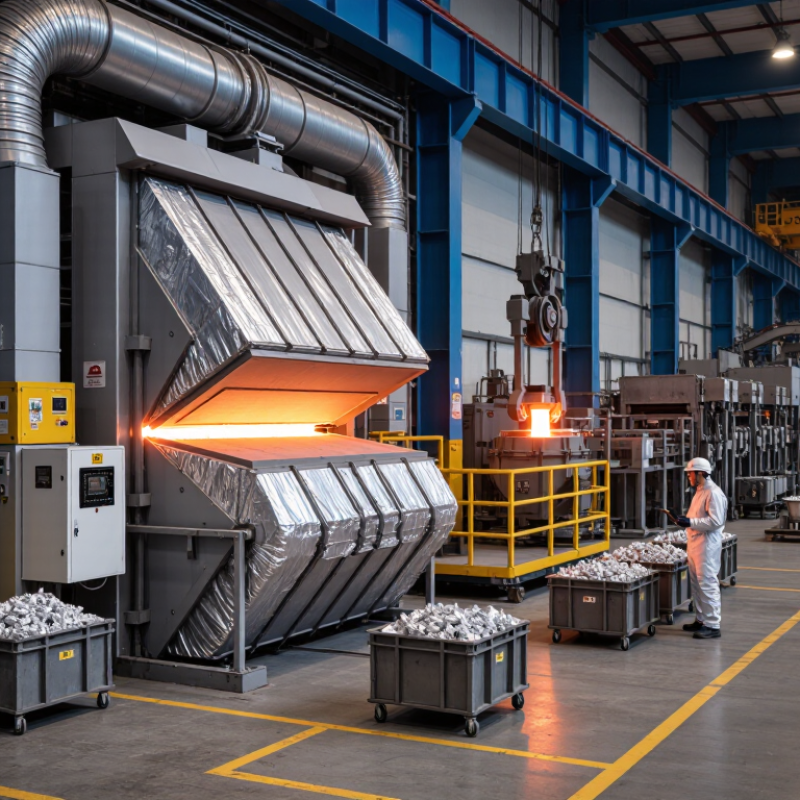
Before comparing furnace designs, define what the production line must actually deliver. Record the alloy grades, daily melt volume, batch size, target temperature, and pouring schedule. An aluminum casting shop making 500 kilograms per shift needs different capacity from a continuous operation. Include peak demand, not only the average. Write down available power, fuel, floor space, ventilation capacity, and lifting limits. These details expose constraints that brochures often hide.
Then connect furnace capacity to measurable production goals. Set an hourly melting rate, acceptable temperature variation, recovery time, and maximum holding period. Ask whether the furnace will melt clean returns, ingot, or mixed charge materials. Charge size affects cycle time, energy use, and metal quality. Specify temperature measurement methods and control accuracy before requesting quotations. A furnace that reaches temperature quickly may still fail if heat distribution is uneven. That difference matters near thin-wall castings.
Safety and operating discipline belong in the requirement list. Check access around the furnace, refractory inspection points, emergency isolation, guarding, and fume extraction. Confirm that the proposed installation can meet applicable workplace and environmental requirements. Maintenance planning also needs real numbers: expected refractory life, service intervals, spare parts, and technician training. Do not overstate precision. Production records may be incomplete, and early forecasts can be wrong. Build adjustable capacity where possible, then test assumptions through a small trial or process review.

Define your required melt rate, batch size, operating temperature, and energy-efficiency target before selecting furnace capacity. The chart below compares representative aluminum melting furnace planning benchmarks.
Small batch furnaces generally provide flexibility for variable production, while larger continuous systems can deliver higher throughput and lower specific energy use. Aluminum melts at approximately 660°C, with typical operating temperatures often maintained above the melting point to support efficient transfer and process control. Actual performance depends on furnace design, charge material, insulation, operating practices, and heat recovery.
Choosing an aluminum furnace starts with the metal, batch size, and production rhythm. A small workshop may prefer a crucible furnace for simple, flexible melting. It uses limited floor space and supports frequent alloy changes. However, manual charging can increase heat loss and operator exposure.
For larger batches, a reverberatory furnace offers strong capacity and steady temperature control. Its open hearth suits ingots and clean production scrap. It may consume more energy and create more dross if the process is poorly controlled. A rotary furnace is better for coated or mixed aluminum scrap. Its rotating chamber improves melting contact, but sorting, flux control, and exhaust management remain essential. Induction furnaces provide fast, precise heating for clean material and repeated alloy production. Aluminum’s electrical properties can make induction design more demanding. Results vary with coil geometry and charge preparation.
Production records should guide the final choice. Track melt time, metal loss, energy use, and temperature stability during a controlled trial. Keep thermocouples calibrated. Inspect refractory wear near doors and charging areas. Small leaks can become costly. I would not select a furnace from capacity alone. A furnace rated for two tonnes may perform poorly with irregular scrap or short production runs. Local emission rules, ventilation design, maintenance access, and operator training also affect reliability. The perfect option may not exist. A slightly slower furnace can be wiser when it reduces dross and improves alloy consistency.
Choosing an aluminum furnace starts with your actual production rhythm, not a brochure’s maximum capacity. Measure daily batch sizes, alloy types, loading methods, and peak demand. A furnace rated for 500 kilograms may perform poorly when repeatedly loaded with smaller, uneven charges. Leave practical room for growth, but avoid excessive capacity. An oversized chamber can increase heating time and energy waste. Capacity calculations are useful, though real loading habits often change the result.
Energy efficiency depends on insulation, burner or heating-element design, door sealing, and heat recovery. Ask for tested consumption data under operating conditions similar to yours. Compare energy used per melted kilogram, not only the advertised power rating. Temperature control deserves equal attention. Look for stable sensors, responsive controls, and even heat distribution across the chamber. Small temperature swings can affect melt quality, oxidation, and holding time. Control systems look precise on paper, but calibration and operator training still matter.
Tips: Request a site assessment before purchase. Test temperature uniformity at several chamber points. Check how quickly the furnace recovers after opening. Review maintenance access, spare-part availability, and alarm records. A lower purchase price may hide higher operating costs. I would also record energy use for several weeks after installation. Early assumptions can be wrong, especially when production schedules change. Choose the furnace that fits measured needs, supports repeatable control, and remains practical for daily operators.
Choosing an aluminum furnace requires more than comparing purchase prices. Safety, maintenance, and operating costs often decide the real return. Look for monitored combustion, automatic temperature limits, door interlocks, and emergency shutoff controls. These features should remain accessible during a power failure. A furnace that cannot fail safely is not economical.
Energy use deserves close attention. The International Aluminium Institute reports that recycling aluminum uses about 95% less energy than producing primary aluminum. However, poor insulation, open doors, and oversized chambers can erase those savings. The U.S. Department of Energy’s Operations & Maintenance Best Practices Guide states that predictive maintenance may reduce maintenance costs by 25–30% and downtime by 35–45%. These figures are useful, but actual results depend on operator training and furnace condition. A cheaper furnace can look clever on paper. It may not be.
Tips: Request an energy-per-ton estimate using your actual alloy, batch size, and production schedule. Check whether thermocouples, burners, refractory linings, and filters can be inspected quickly. Keep spare sensors nearby. Small delays become expensive during continuous production. Review service records before approval, not after installation. Also calculate ventilation, fuel, electricity, refractory replacement, and planned shutdown costs. I would question any forecast that excludes maintenance labor. It is an easy number to forget. Safety interlocks should be tested under documented procedures, with results retained for audits and staff training.
How to Choose an Aluminum Furnace for Your Business?
Choose a supplier that understands your alloy, production volume, and daily operating rhythm. Ask for documented furnace capacity, temperature uniformity, energy use, and refractory life. Request references from facilities with similar casting demands. Their answers should include measurable results, not broad promises. A reliable supplier also explains maintenance access, spare-part availability, operator training, and response times. Check the technical drawings carefully. Small omissions can become expensive changes later.
Plan installation before signing the purchase agreement. Confirm the foundation, furnace clearance, loading path, electrical supply, fuel system, ventilation, and exhaust routing. The layout should leave room for inspection and safe material movement. Include temperature sensors, emergency shutoffs, guarding, and fire protection in the design. Coordinate the supplier with your electrical, construction, and safety teams. Local requirements must guide every connection and approval.
Commissioning deserves the same attention as equipment selection. Require factory testing, site acceptance checks, calibration records, and written operating procedures. Record heat-up times, temperature variation, fuel consumption, and melt-loss performance during the first production runs. Operators should practice alarm responses before full production begins. No plan is perfect. Early assumptions may prove wrong, especially around crane access or ventilation capacity. Build a small contingency budget and schedule. Long-term performance depends on honest follow-up, disciplined inspections, and timely repairs.
| Decision Area | Practical Planning Benchmark | Why It Matters | Supplier Information to Request | Installation and Long-Term Performance Check |
|---|---|---|---|---|
| Required melting capacity | Calculate hourly demand from batch size, melt rate, operating hours, and a reasonable production allowance. Common industrial furnace capacities range from approximately 0.5 to 20 metric tonnes, depending on the process. | An undersized furnace creates production delays, while an oversized furnace can increase heat loss, capital cost, and holding time. | Rated capacity, usable capacity, melting rate, holding capacity, heat-up time, and performance data for a material mix similar to yours. | Reserve adequate space for charging, tapping, maintenance access, refractory work, and future production growth without blocking safety routes. |
| Furnace configuration | Choose among melting, holding, or combination equipment. Common configurations include crucible, reverberatory, rotary, tower, and electric resistance or induction designs. | The best configuration depends on alloy family, scrap condition, required throughput, metal cleanliness, floor space, and available utilities. | A process-flow recommendation explaining why the proposed design suits your alloys, charge materials, batch size, and operating schedule. | Confirm foundation loads, charging direction, tapping height, crane access, drainage, and separation from combustible materials. |
| Operating temperature and control | Aluminum melts at approximately 660°C. Many industrial operations control the bath within roughly 680–780°C, depending on alloy, casting practice, and process requirements. | Excessive temperature increases oxidation, hydrogen pickup, refractory wear, and energy consumption. Insufficient temperature can affect transfer and casting stability. | Temperature uniformity results, sensor type, control accuracy, alarm functions, data logging, and calibration procedures. | Provide safe access for thermocouple replacement and verify that control panels are protected from heat, dust, vibration, and wash-down exposure. |
| Energy source and consumption | Compare electricity, natural gas, LPG, or other approved fuels using site-specific utility prices. Actual consumption varies with furnace size, charge temperature, insulation, and operating practice. | Energy cost is often one of the largest lifetime expenses and can exceed the initial equipment price over several years. | Guaranteed or tested energy use per tonne, utility pressure and voltage requirements, burner efficiency, standby consumption, and emissions data. | Confirm utility capacity, cable sizing, gas train design, ventilation, emergency shutoff points, and local permitting requirements before delivery. |
| Charge material and alloy range | Define the expected percentage of ingot, clean returns, coated scrap, chips, and contaminated material. Include the aluminum alloy families used in production. | Charge density, moisture, coatings, and contamination influence melting speed, dross formation, metal recovery, and safety risk. | Approved charge specifications, maximum moisture limits, scrap-handling recommendations, and recovery data for representative materials. | Install covered charge-storage areas and moisture controls. Wet or sealed material must never be introduced into molten aluminum. |
| Refractory and insulation | Select refractory materials compatible with molten aluminum, operating temperature, flux exposure, mechanical impact, and expected cleaning methods. | Refractory condition affects heat retention, metal contamination, unplanned downtime, and furnace service life. | Refractory construction drawings, material grades, expected service life, curing procedure, replacement parts, and repair training. | Plan a protected curing period, inspection schedule, spare refractory inventory, and a safe method for removing dross and buildup. |
| Metal quality and recovery | Set measurable targets for metal temperature, oxide or dross generation, melt loss, hydrogen level, inclusion control, and alloy chemistry. | A furnace that melts quickly but produces excessive oxidation or inconsistent chemistry may reduce overall profitability. | Test results using your material mix, sampling method, degassing compatibility, flux recommendations, and metal-transfer procedures. | Provide sampling points, metal-cleaning equipment interfaces, calibrated instruments, and procedures that minimize turbulence during transfer. |
| Emission and ventilation system | Design local exhaust ventilation for furnace openings, charging, tapping, fluxing, and dross handling. The required airflow depends on enclosure design and local regulations. | Effective capture reduces worker exposure to fumes, heat, and dust while supporting environmental compliance. | Exhaust volume, hood design, filtration method, pressure loss, maintenance requirements, noise data, and applicable compliance documentation. | Coordinate duct routing, roof penetrations, make-up air, access for filter replacement, and monitoring points with the facility engineer. |
| Automation and safety | Core functions should include over-temperature protection, flame monitoring where applicable, emergency shutdown, door or lid interlocks, and fault alarms. | Consistent automation improves repeatability and helps prevent serious incidents involving molten metal, fuel, electricity, and moving equipment. | Risk assessment, safety-circuit description, control-system backup method, cybersecurity provisions, operator training, and compliance certificates. | Keep emergency exits clear, mark hot surfaces, install guarding and interlocks, and validate safety functions during commissioning. |
| Supplier capability and support | Evaluate demonstrated experience with similar capacity, alloys, charge materials, energy source, and production conditions rather than relying only on a standard specification. | Technical support, spare-parts availability, and response time strongly influence lifetime uptime. | Comparable reference installations, service coverage, spare-parts lead times, warranty scope, training plan, and escalation contacts. | Include installation supervision, commissioning assistance, preventive-maintenance documentation, and defined response times in the contract. |
| Total cost of ownership | Compare purchase price with installation, utilities, refractory replacement, consumables, labor, planned downtime, emissions equipment, and end-of-life costs over the expected service period. | The lowest initial quotation may have higher operating costs or require more frequent repairs. | Itemized quotation, utility assumptions, annual maintenance estimate, consumable costs, warranty exclusions, and recommended spare parts. | Use a lifecycle-cost model and require clear acceptance criteria for capacity, energy consumption, temperature control, safety, and documentation. |
Copyright © 2023 NEI Ltd. All rights reserved.
Registered Office : 9/1, R. N. Mukherjee Road, Kolkata – 700 001. In case of any queries or grievances, please contact Mr.Tarun Kumar Kabra, Company Secretary.
E-mail: sale@kinpart.com Privacy Policy Cookie Policy