

Toll Free: 1800 3000 6222
Telephone: +91 141 222 3221
Fax: +91 141 222 1926, 222 2259
CIN: U29130WB1946PLC013643
Founded in 1946, National Engineering Industries Ltd (NEI) is India’s leading bearings manufacturer and exporter, renowned for excellence in quality and delivery.

An Explosion-Proof Fan is designed for workplaces where flammable gases, vapors, or combustible dust may meet an ignition source. It is not simply a stronger industrial fan. Its motor, wiring, housing, and rotating parts must reduce ignition risks during normal operation and foreseeable faults.
These fans commonly serve paint rooms, solvent storage areas, chemical processing facilities, grain-handling sites, battery rooms, and some wastewater plants. Picture a coating room with solvent vapor near the floor. Air movement must remove that vapor without creating dangerous sparks. Fan selection depends on the hazardous-area classification, gas or dust group, temperature class, airflow demand, and installation environment. A certified product still needs correct installation.
James Reason, a respected industrial safety expert, wrote, “We cannot change the human condition, but we can change the conditions under which humans work.” That idea fits Explosion-Proof Fan selection closely. Good engineering reduces dependence on perfect human behavior.
Practical experience also reveals uncomfortable details. A fan may carry suitable certification yet perform poorly after incorrect wiring, blocked ducts, loose guards, or neglected bearings. Small faults matter. Maintenance teams should inspect vibration, grounding, fasteners, seals, and motor temperature. They should also verify certification against the actual site classification. No single fan suits every hazardous location. That assumption deserves challenge. Reliable protection comes from matching the fan, the environment, and the maintenance plan as one complete system.
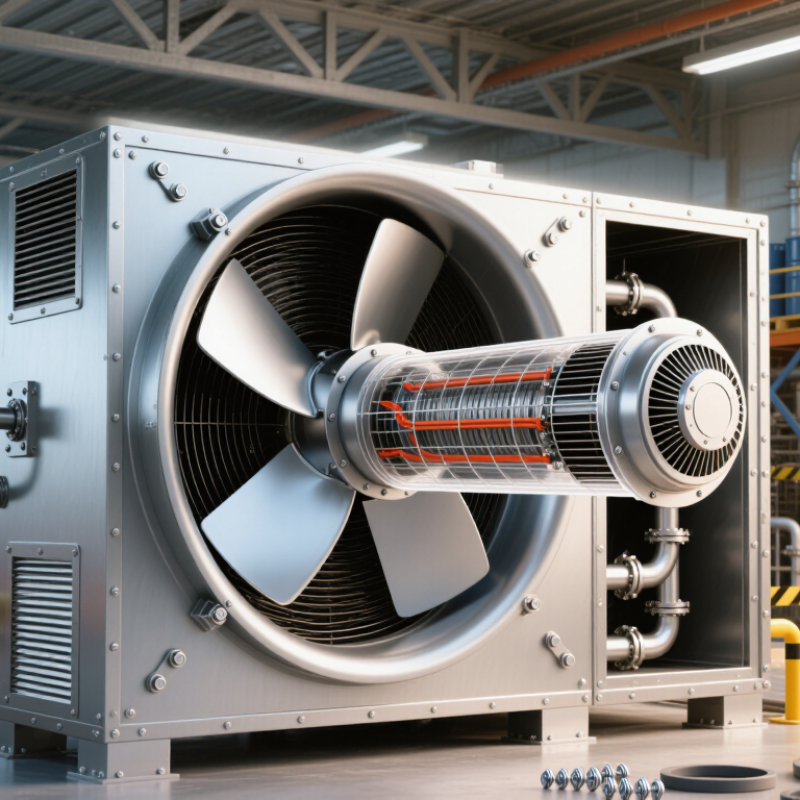
An explosion-proof fan is designed for areas where flammable gases, vapors, or dust may be present. Its purpose is not to prevent every explosion. Instead, it helps stop internal sparks, heat, or flames from igniting the surrounding atmosphere.
The fan usually has a robust metal enclosure, protected electrical connections, and a motor selected for hazardous locations. Small clearances and sealed joints can limit flame escape. Some models also use non-sparking impellers or temperature controls. These details matter. A fan may look ordinary outside, yet its internal construction is carefully engineered. Certification markings, temperature ratings, airflow capacity, and area classification should match the actual workplace. Choosing by appearance alone is a serious mistake.
Tips: Confirm the hazard type before purchase. Check gas, vapor, or dust classifications with a qualified engineer. Inspect grounding, wiring, guards, and bearings regularly. Keep the intake clear of rags and loose debris. In practice, maintenance records often reveal problems earlier than a visual inspection. One overlooked detail can change the risk level. Even a certified fan needs correct installation, routine testing, and suitable ventilation design. Local safety requirements should guide the final decision.

An explosion-proof fan helps control ignition in hazardous areas, rather than making explosions impossible. Its enclosed motor limits flames and hot gases from escaping after an internal electrical fault. Certified components also reduce sparks, surface temperatures, and static discharge near flammable vapors or combustible dust.
The fan’s impeller should suit the classified atmosphere. Spark-resistant materials can reduce contact ignition when particles enter the housing. Proper bonding and grounding help control static electricity. Temperature ratings matter, too, because a hot motor surface can ignite nearby vapors. IEC 60079 standards provide widely used requirements for equipment in explosive atmospheres.
No fan is magic.
Ventilation also lowers vapor concentration below the flammable range. However, airflow must be calculated for the room, process, and contaminant. OSHA’s combustible dust safety report recorded 281 explosions, 119 deaths, and 718 injuries in the United States between 1980 and 2005. These figures show why dust extraction cannot rely on ordinary fans.
Small gaps matter. Duct design, filter loading, maintenance, and correct certification all affect real protection.
A certified fan installed in the wrong zone may still create danger. This is where practical judgment becomes essential. Regular inspections should check bearings, vibration, grounding continuity, and accumulated dust. Operators sometimes focus on the label and overlook the installation. That mistake deserves more attention.
What Is an Explosion Proof Fan and Where Is It Used?
Explosion-proof fans are designed for areas where flammable gases, vapors, or combustible dust may exist. They appear in paint rooms, grain facilities, chemical plants, battery rooms, and fuel-handling spaces. The U.S. Chemical Safety Board’s 2006 Combustible Dust Hazard Study documented 281 fires and explosions, 119 deaths, and 718 injuries from 1980 to 2005. Ventilation cannot remove every risk. It can reduce vapor concentration and heat buildup when correctly engineered.
Main Types and Construction Methods of Explosion-Proof Fans
Axial fans move large air volumes at relatively low pressure. They suit tunnels, warehouses, and general exhaust systems. Centrifugal fans create higher pressure and handle duct resistance, filters, and process extraction. Mixed-flow fans sit between both designs. Portable units offer flexibility, but their temporary wiring often needs closer inspection.
Construction matters more than appearance. Spark-resistant impellers commonly use aluminum alloys, coated steel, or non-ferrous materials. AMCA Standard 99-0401 classifies spark-resistant construction methods. Direct-drive designs remove belt friction and reduce ignition sources. Motors may use certified hazardous-location enclosures, sealed bearings, and grounded conductive parts. IEC 60079-0 and IEC 60079-1 provide important protection requirements for electrical equipment in explosive atmospheres.
A recurring weakness is treating “explosion-proof” as a complete guarantee. It is not. Engineers must match the fan, motor, temperature rating, and enclosure to the site classification. Dust layers also require attention. A technically compliant fan can still perform poorly when filters clog or airflow changes. That uncomfortable detail deserves regular testing.
Main Types and Construction Methods of Explosion-Proof Fans
Hazardous areas are classified according to how often an explosive atmosphere may occur. Gas and vapor areas use Zones 0, 1, and 2, while combustible-dust areas use Zones 20, 21, and 22. Explosion-proof fans used in these locations require suitable certification, spark-resistant construction, appropriate motor protection, and compatibility with the specified gas or dust group and temperature class.
What Is an Explosion-Proof Fan and Where Is It Used?
An explosion-proof fan is built for areas where flammable vapors, gases, dust, or fibers may exist. Its motor, housing, and electrical parts are designed to reduce ignition risks. It also helps remove heat, fumes, and contaminated air from enclosed workspaces. However, it does not make an unsafe room completely safe. Correct classification, installation, grounding, and maintenance remain essential.
Industries using these fans include chemical processing, paint manufacturing, pharmaceutical production, grain handling, battery production, and wastewater treatment. Common locations include solvent rooms, mixing areas, spray booths, storage rooms, silos, loading zones, and underground work areas. A fan may look suitable and still be wrong for a specific hazard. Airflow needs, dust behavior, temperature, corrosion, and cleaning routines can all change the selection. In practice, this decision is rarely simple.
Tips: Check the hazardous-area classification before choosing a fan. Confirm the required airflow with a qualified ventilation professional. Inspect blades, guards, seals, wiring, and vibration regularly. Keep combustible dust from collecting around the equipment. Follow the manufacturer’s instructions and applicable safety requirements. Do not assume a higher airflow rating provides better protection. That assumption can create new risks. Review the installation when processes, materials, or room layouts change.
| Industry or Application | Typical Location | Potential Flammable Hazard | Why an Explosion-Proof Fan Is Used | Common Fan Configuration | Important Selection Considerations |
|---|---|---|---|---|---|
| Oil and Gas | Refineries, tank farms, loading areas, drilling sites, and compressor stations | Flammable hydrocarbon vapors and gases | Helps remove hazardous vapors while reducing the risk of ignition from the fan motor, wiring, or rotating parts | Fixed axial or centrifugal ventilation fans; portable units may be used for temporary work | Hazardous-area classification, gas group, temperature class, airflow, static pressure, corrosion resistance, and grounding |
| Chemical Manufacturing | Process rooms, solvent storage rooms, blending areas, and chemical transfer points | Flammable solvents, reactive vapors, and combustible chemical atmospheres | Provides controlled ventilation in areas where vapor concentrations may reach an ignitable range | Chemical-resistant centrifugal fans or ducted exhaust systems | Chemical compatibility, exhaust location, material construction, hazardous-location certification, and required air changes |
| Paint and Coating Operations | Spray booths, paint mixing rooms, finishing rooms, and coating storage areas | Solvent vapors, paint mist, and combustible coating residues | Maintains airflow and removes flammable vapors from enclosed coating areas | Dedicated exhaust fan connected to a spray booth or local exhaust system | Non-sparking construction where required, motor placement, booth airflow, filter loading, and compliance with local fire codes |
| Pharmaceutical Manufacturing | Solvent handling rooms, granulation areas, production suites, and storage rooms | Flammable solvents and combustible pharmaceutical dust | Supports ventilation and helps limit the accumulation of ignitable vapors or dust during processing | Cleanable centrifugal exhaust fans or specialized dust-handling systems | Hygienic design, dust-control requirements, solvent compatibility, filtration, pressure balance, and certification |
| Food Processing | Flour mills, sugar handling areas, grain elevators, bakeries, and dust collection rooms | Combustible dust from flour, grain, sugar, starch, or other organic materials | Reduces the possibility that sparks, hot surfaces, or mechanical friction will ignite suspended dust | Dust-collection fans, radial-blade centrifugal fans, and process exhaust systems | Dust classification, particle loading, spark-resistant construction, cleanability, abrasion resistance, and explosion-relief design |
| Coal and Bulk Material Handling | Coal preparation plants, conveyor transfer points, silos, and enclosed handling areas | Coal dust and other combustible particulate matter | Controls airborne dust and supports safe ventilation around material-transfer equipment | Heavy-duty centrifugal fans and dust-extraction systems | Abrasion resistance, dust concentration, spark prevention, airflow capacity, access for inspection, and grounding |
| Mining | Underground mines, mine workshops, processing plants, and enclosed maintenance areas | Methane, coal dust, metal dust, and other combustible materials | Provides ventilation in potentially explosive atmospheres and helps dilute or remove hazardous gases and dust | Main ventilation fans, auxiliary fans, and portable duct fans approved for the applicable mining environment | Mining regulations, methane monitoring, fan duty, emergency operation, power supply, duct compatibility, and maintenance access |
| Wastewater Treatment | Headworks, wet wells, lift stations, sludge areas, and enclosed treatment rooms | Methane, hydrogen sulfide, and other flammable or hazardous gases | Ventilates confined or poorly ventilated spaces where gases can accumulate | Ducted exhaust fans, wall-mounted fans, or portable confined-space ventilation fans | Gas detection, continuous or intermittent ventilation, corrosion resistance, confined-space procedures, and electrical classification |
| Battery Manufacturing and Charging | Battery rooms, charging stations, formation areas, and electrolyte-handling rooms | Hydrogen released during charging and flammable electrolyte vapors | Helps prevent hydrogen accumulation above the lower flammable limit | Continuous exhaust systems, high-level exhaust fans, and mechanically ventilated battery-room systems | Hydrogen characteristics, fan placement, make-up air, ventilation rate, corrosion resistance, and alarm interlocks |
| Aerospace and Aircraft Maintenance | Aircraft hangars, fuel-system maintenance areas, paint facilities, and component cleaning rooms | Jet fuel vapors, solvent vapors, and combustible coating materials | Provides ventilation during fueling, cleaning, painting, and maintenance activities | Portable duct fans, high-volume low-speed systems, and dedicated exhaust units | Mobility, airflow distribution, grounding, fuel-vapor control, noise, and applicable aviation or fire-safety requirements |
| Marine and Shipbuilding | Cargo tanks, engine rooms, fuel-storage areas, ship holds, and enclosed compartments | Fuel vapors, cargo vapors, hydrogen, and gases released during tank cleaning | Supports safe ventilation of enclosed spaces before and during maintenance work | Portable explosion-protected fans, axial fans, and flexible-duct ventilation systems | Marine approvals, saltwater corrosion resistance, portability, bonding and grounding, airflow reach, and gas testing |
| Printing and Packaging | Press rooms, ink-mixing areas, laminating lines, and solvent storage rooms | Ink and adhesive solvents, alcohol vapors, and combustible paper dust | Removes vapors and dust generated during high-speed printing, coating, and laminating processes | Local exhaust fans, ducted process fans, and solvent-vapor extraction systems | Solvent compatibility, capture velocity, dust accumulation, motor protection, filtration, and electrical-area classification |
Note: An explosion-proof fan is designed and certified to limit the risk of ignition in a specified hazardous location. Fan selection should be based on the site classification, hazardous material, temperature class, airflow requirements, applicable regulations, and the equipment certification—not on the fan label alone.
What Is an Explosion Proof Fan and Where Is It Used?
An explosion-proof fan is designed for areas where flammable gases, vapors, or dust may create an ignition risk. Its certified construction helps contain internal sparks and prevent them from igniting the surrounding atmosphere. These fans may serve chemical rooms, paint facilities, grain-processing areas, fuel storage spaces, and battery charging rooms. The exact application depends on the classified hazard.
Safety standards matter more than appearance. Select a fan certified for the site’s hazardous-area classification, gas or dust group, and temperature class. Check airflow, static pressure, operating temperature, corrosion resistance, and motor suitability. A fan that moves air well in a clean warehouse may fail in a dusty process room. Local regulations and inspection requirements should guide the final decision. Certification labels alone are not enough. Verify the certificate and installation conditions.
Tips: Record the fan’s vibration, noise, and current readings during routine checks. Inspect guards, wiring, grounding, fasteners, seals, and bearings. Remove dust using an approved procedure, and isolate power before maintenance. Never modify the motor or enclosure without technical approval. Small changes matter. In practice, maintenance teams sometimes focus on the impeller and overlook damaged cable glands. That oversight can weaken protection. Keep service records, replace worn parts with correctly rated components, and reassess the fan when the process, materials, or ventilation layout changes.
Copyright © 2023 NEI Ltd. All rights reserved.
Registered Office : 9/1, R. N. Mukherjee Road, Kolkata – 700 001. In case of any queries or grievances, please contact Mr.Tarun Kumar Kabra, Company Secretary.
E-mail: sale@kinpart.com Privacy Policy Cookie Policy