

nbc logo (2)
Office address
National Engineering Industries Ltd.
Khatipura Road Jaipur – 302006 Rajasthan, India
Phone Number

Toll Free: 1800 3000 6222
Telephone: +91 141 222 3221
Fax: +91 141 222 1926, 222 2259
CIN: U29130WB1946PLC013643

What Are the Different Types of Cosmetic Squeeze Tubes?

Cosmetic Squeeze Tubes come in more forms than their familiar soft, narrow shape suggests. The right tube can help control dosage, protect a formula, and make a product easier to carry. But a package that looks simple may involve several design choices.

Packaging scholar Dr. Susan E. M. Selke’s work informs this practical principle: “Good packaging connects product protection with everyday usability.” This is an editorial paraphrase, not a verbatim quotation. In the sections ahead, we’ll compare laminate, plastic, and aluminum tubes, then look at openings, closures, and dispensing styles. A flip-top cap may suit a cleanser used with wet hands. A fine nozzle can deliver a smaller amount of cream. A wider opening may make a thick mask easier to dispense.

Details matter. So does the formula inside. Material compatibility, barrier needs, and product thickness can affect which tube performs well. Some trade-offs are easy to miss. A tube that feels sturdy may be harder to squeeze near the end, while a softer one may crease after repeated use. There is no universal best option. Even a polished package can disappoint if it feels awkward in a real routine. This guide offers a clear starting point for comparing tube types and choosing features that fit the product, the user, and the intended experience.
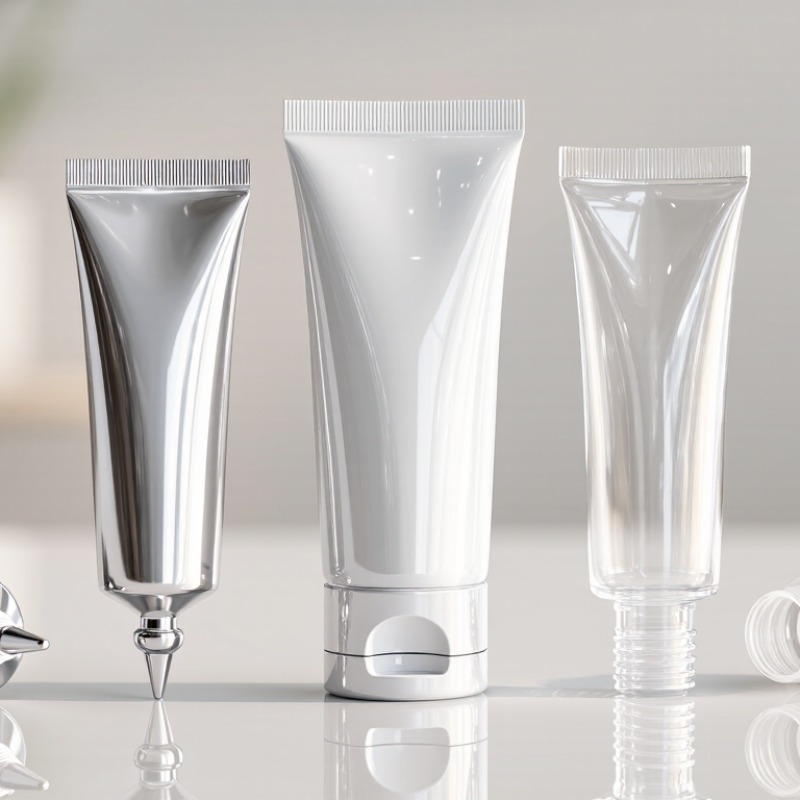
What Are the Different Types of Cosmetic Squeeze Tubes?

What Cosmetic Squeeze Tubes Are and How They Dispense Products

Cosmetic squeeze tubes are flexible containers designed to hold products such as lotion, cleanser, or hand cream. Their bodies are commonly made from plastic or layered materials, with a sealed end and an opening fitted with a cap or nozzle. The package bends as it is squeezed, then springs partly back. Simple, but useful.

Dispensing relies on pressure from the user’s fingers. Pressing the tube reduces its internal space and pushes product through the opening. A small nozzle generally produces a narrow ribbon, while a wider opening can release thicker creams more easily. The cap helps keep the opening covered between uses; some designs also use a flip-top for one-handed access. Small details matter.

The amount released is not perfectly measured. It can vary with the product’s thickness, the nozzle size, and how firmly someone presses. A watery gel may come out quickly, while a dense balm may need more pressure. Near the end, product can collect in the shoulder or fold of the tube, making it awkward to remove. That is a familiar packaging trade-off, and not every tube handles it equally well. Users can roll the sealed end upward, though this may crease the material and look a little untidy.

Common Materials Used in Cosmetic Squeeze Tubes

Polyethylene (PE) is a common choice for cosmetic squeeze tubes because it is flexible, lightweight, and easy to form. Its walls spring back after squeezing, though some formulas may leave a dent. Low-density PE feels softer, while higher-density grades can make a firmer tube. The exact feel depends on wall thickness and tube design.

Polypropylene (PP) is often used for caps and closures because it holds its shape well. Some tubes combine several plastic layers, including a barrier layer such as EVOH, to help limit oxygen transfer. Aluminum laminate tubes use a thin foil layer between plastic layers. This can provide a strong barrier against light and air, but the tube may crease as it empties. Not every formula needs that protection.

Material choice should match the formula, dispensing needs, and expected shelf life. Oils, fragrances, and active ingredients can interact differently with packaging, so compatibility testing matters. Ask for testing with the actual formula, not just a general material sheet. A tube that feels premium may also be harder to sort after use, depending on its layered construction and local recycling systems. Look closely at the shoulder, cap, and printed surface during trials; small details can affect both handling and material recovery.

What Are the Different Types of Cosmetic Squeeze Tubes? - Common Materials Used in Cosmetic Squeeze Tubes

Tube Type / Material Typical Construction Key Characteristics Common Cosmetic Uses Packaging Considerations
LDPE (Low-Density Polyethylene) Usually a single-layer, flexible polyethylene tube. Soft and easy to squeeze; offers good flexibility and moisture resistance. Its barrier performance against oxygen and some volatile ingredients is limited compared with multilayer structures. Hand creams, lotions, cleansers, and other products that do not require a high oxygen barrier. Often suitable for straightforward formulations. Confirm compatibility and shelf-life requirements with packaging testing.
HDPE (High-Density Polyethylene) A polyethylene tube with a firmer feel; may be used in a single-layer or combined structure. Typically stiffer than LDPE and offers good moisture resistance. It may require more force to dispense product, depending on tube thickness and design. Body-care products, cleansers, and other formulations where a firmer tube is appropriate. Tube flexibility and dispensing performance depend on the resin grade, wall thickness, and overall construction.
PP (Polypropylene) Used in some tube components and, in suitable designs, as part of the tube body or a mono-material structure. Lightweight and resistant to many chemicals. Its feel and flexibility differ from polyethylene; performance depends on the design and material grade. Selected personal-care and cosmetic packs, as well as caps and closures on many tube formats. Check squeeze feel, sealing, and compatibility for the specific formulation. Recycling options vary by local collection systems and package design.
ABL (Aluminum Barrier Laminate) A multilayer laminate that includes an aluminum foil barrier layer between polymer layers. Provides a strong barrier to oxygen, moisture, and light. The tube typically creases as product is dispensed and may not return to its original shape. Barrier-sensitive creams, gels, and treatments that benefit from protection from air or light. The combined layers can make recycling more challenging than a compatible mono-material package; confirm local recycling guidance.
PBL (Plastic Barrier Laminate) A multilayer plastic tube that uses a barrier layer, commonly EVOH, within polymer layers. Can improve oxygen barrier performance while retaining a smooth, flexible tube feel. Barrier performance depends on the layer design and thickness. Lotions, creams, and other products that need more protection than a basic single-layer tube may provide. Multiple material layers can affect recyclability. Some designs aim to be compatible with specific recycling streams, but acceptance varies by location.
Aluminum A formed aluminum tube, generally fitted with a separate closure. Offers a strong barrier to light, oxygen, and moisture. It tends to retain creases after squeezing and may be dented during handling. Selected creams, ointment-like products, and formulations requiring a high barrier. Material compatibility, internal coatings, seam integrity, and closure design should be evaluated for the product formulation.

Note: Tube suitability depends on the formulation, required shelf life, dispensing needs, closure, and local recycling infrastructure. Compatibility and stability testing should be completed before selecting a package.

Main Types of Cosmetic Squeeze Tubes by Design

Main Types of Cosmetic Squeeze Tubes by Design

Round tubes are the familiar choice for cleansers, lotions, and hand creams. Their curved body sits comfortably in the palm and squeezes evenly as the product level drops. Oval and flat tubes use less shelf depth and present a broad, stable face for printed instructions. They can look neat on a narrow bathroom ledge, though a flat pack may crease during use. Small detail. Big difference. Slim tubes with pointed nozzles suit spot application, such as eye creams or targeted gels. A narrow opening also helps control the amount dispensed, but can clog if a thick formula is paired with a tiny orifice.

Airless squeeze designs use an inner pouch or moving component to help push product toward the outlet, limiting air exposure during use. Dual-chamber tubes keep two formulas apart until dispensing; the outlet and internal channels need careful matching to deliver them consistently. These choices matter in a growing category: Grand View Research valued the global cosmetic packaging market at US$34.3 billion in 2023 and projected a 4.1% compound annual growth rate from 2024 to 2030. That figure covers cosmetic packaging broadly, not tubes alone. It signals market scale, not proof that one design performs better. In practice, test the tube with the actual formula, cap, and expected squeeze force. A design that looks elegant may still be awkward with wet hands.

What Are the Different Types of Cosmetic Squeeze Tubes?

Main types by design and their indicative capacity ranges

Capacity ranges are indicative examples, not fixed standards. Actual sizes vary by product, tube dimensions, and manufacturer. Round, oval, and flat tubes are commonly used for creams and lotions; precision-tip designs help dispense smaller amounts, while airless formats limit product exposure to air.

Closures and Applicators for Different Tube Types

Cosmetic squeeze tubes vary in diameter, material, and opening size, so their closures should match the product’s texture and use. A flip-top cap is convenient for lotions used with one hand, while a screw cap can provide a secure fit for thicker creams. Small nozzle openings help control flow, especially with spot treatments. But a narrow nozzle may clog if the formula dries around its tip. It is a practical detail, not a minor one.

Applicators can shape the experience as much as the tube itself. A soft, rounded tip may suit gentle application around small areas, while a flat or angled tip can spread cream across a broader patch of skin. Roll-on heads distribute lightweight formulas in a cool, even layer, though they need careful cleaning and compatibility checks. Not every applicator improves usability. Some add parts that are harder to rinse or may dispense unevenly. Testing the filled tube matters: check how much product comes out with a light squeeze, whether the cap stays clean, and how easily users can close it with damp hands. Small trials often reveal awkward details that drawings miss.

How to Choose a Tube for a Cosmetic Product

When choosing a cosmetic squeeze tube, start with the formula, not the shelf appearance. A light lotion flows through a narrow opening, while a dense balm may need a wider nozzle. Test the actual product at room temperature and after storage; a sample that dispenses easily on day one may become stubborn later. Small details matter.

Match the tube material to the formula and its sensitivity to air, light, or oils. Ask the packaging supplier for compatibility data, then test a filled sample for changes in color, scent, texture, and leakage. Check the seal too. A tube that looks sturdy can still split at the shoulder after repeated squeezing. That is easy to overlook.

Choose capacity and closure around how people will use the product. A small tube suits a handbag or targeted application, while a larger one may work better beside a sink. Flip-top caps allow quick access; screw caps can reduce accidental opening in a travel bag. Consider whether users can get nearly all the product out. There is no perfect tube. Weigh protection, dispensing comfort, cost, and recyclability, then test with real hands—not just a packaging mock-up.