

Toll Free: 1800 3000 6222
Telephone: +91 141 222 3221
Fax: +91 141 222 1926, 222 2259
CIN: U29130WB1946PLC013643
Founded in 1946, National Engineering Industries Ltd (NEI) is India’s leading bearings manufacturer and exporter, renowned for excellence in quality and delivery.

A busy court can reveal more about a stringing machine than a glossy product photo. Frames arrive with different patterns, players request different tensions, and a loose clamp can turn a quick job into a frustrating one. In 2026, choosing a Tennis Stringing Machine means matching its features to your real workload—not buying the most complicated model available.
The USTA’s 2024 participation update reported that 23.8 million people in the United States played tennis in 2023. That figure signals a large playing community, but it does not measure machine sales or prove that every shop needs the same equipment. Numbers help. Your daily stringing volume matters more. A home player restringing a few frames each month has different needs from a club technician handling several racquets between lessons.
This guide compares the details that shape everyday use: electronic or manual tensioning, mounting stability, clamp quality, tension consistency, maintenance, and access to replacement parts. It also considers price against expected workload. A machine that holds tension accurately and secures the frame firmly can make repeat jobs less fiddly; poor ergonomics may become obvious after a long afternoon. Specifications are useful, but they cannot show every setup’s feel. That is an imperfect part of buying online. Use this overview to shortlist options, then check current manufacturer specifications and, where possible, test the machine before purchasing.
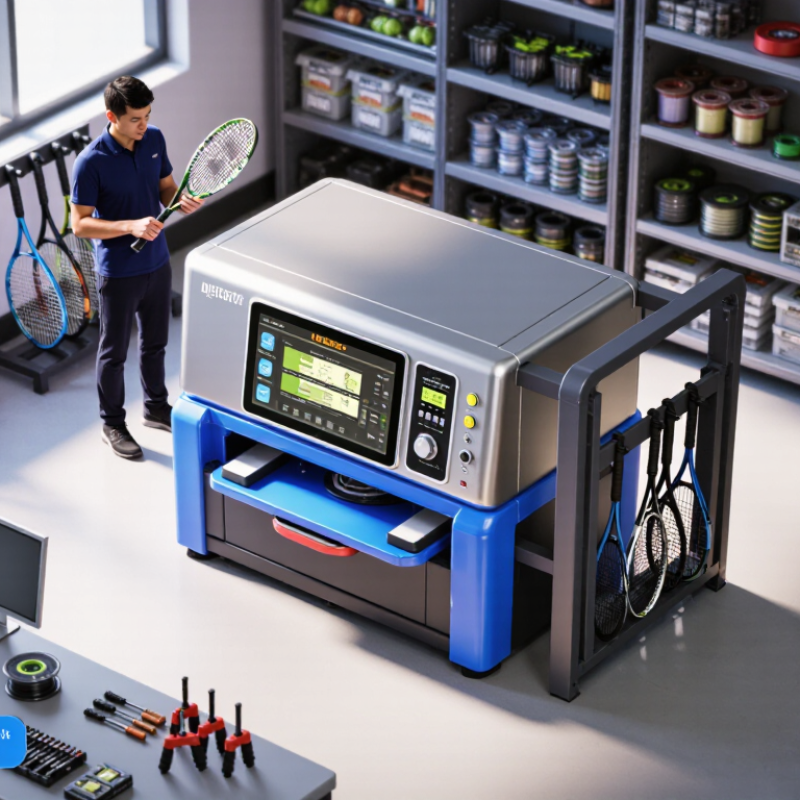
Tennis stringing machines fall into three main tensioning types: drop-weight, crank, and electronic.
A drop-weight machine uses a weighted arm to pull string tension. The operator lowers the arm until it sits level, then adjusts if it rises or falls. This simple mechanism needs no power and is relatively easy to maintain. It can be slower, especially when tension must be reset often. Keep the arm clear of the table edge. A small bump can change its position.
A crank, or lockout, machine pulls string to a set tension, then locks. It is generally quicker than a drop-weight model, but tension may shift slightly before the string is clamped.
Electronic machines use a motor to pull and hold tension, often with settings for pull speed and pre-stretch. They suit frequent work, though calibration and service still matter.
More features do not guarantee better results. Not always.
The mounting system and clamps also affect consistency. For occasional home restringing, a basic machine may be enough; a busy shop may value speed and repeatability. Try operating the tension head before buying, if possible. Comfort is easy to overlook, and published speed claims may not include every pause.
Choose a machine around your actual racquet volume, not your imagined future business. The USTA’s 2023 Tennis Participation Report counted 23.8 million U.S. tennis players. That figure signals a broad player base, but it does not tell you how often local players restring. Ask nearby players, clubs, or coaches about their real weekly demand.
For occasional personal use, a drop-weight machine keeps costs down and teaches steady technique. It is slower, and each pull needs careful attention. That matters. If you string several racquets each week, a crank or electronic constant-pull machine can save time and support repeatable tension. Check clamp movement, mounting stability, and calibration before buying; a low price means little if parts or service are hard to find.
Set a full budget, including tools, starting clamps, maintenance, and stringing practice. Beginners may underestimate the learning curve. A machine cannot correct poor knots or careless weaving. Not always. I would question the assumption that faster is automatically better: a reliable manual setup may suit a careful hobbyist better than an expensive machine used twice monthly. Leave room in your budget for mistakes, because early strings may need to be cut out and redone.
Compare typical new-machine budget ranges by stringing mechanism. Prices are approximate USD estimates and vary by features and market.
How to use this chart: Drop-weight machines suit beginners and occasional home stringing; crank lockout machines can fit regular club use; electronic constant-pull machines are often chosen for frequent work and more consistent tension control. Consider how often you string, the features you need, your experience, and your budget before choosing.
Compare Tensioning Systems, Mounts, and Clamping Mechanisms
A machine’s tensioning system affects both workflow and consistency. Drop-weight models use gravity and need little calibration, but each pull takes time. Crank systems are quicker, though they may need occasional checks to maintain accuracy. Electronic tensioners offer repeatable pulls and convenient settings. They cost more and rely on functioning electronics. Consider how often you string, and test the tension head if possible. Feel the difference.
Mounts hold the frame steady while you work. A two-point system is often simpler and faster to set up. A six-point system supports more areas of the frame, which can help limit movement during stringing. Either setup can work well when adjusted carefully. Clamps matter, too. Fixed clamps stay aligned but need enough space around the machine. Swivel clamps move freely, yet their bases should lock firmly. Loose clamps can slip and waste time. Small details matter.
Tips: Bring a racquet you know and ask for a demonstration. Check that supports touch the frame without forcing it, and that clamps grip string without crushing it. Listen for a smooth tension pull and watch for frame movement. A quick test is useful, but it cannot tell you everything; your stringing pace and work space may change what feels practical. No setup is perfect.
Evaluate Accuracy, Ease of Use, Maintenance, and Space Requirements
Accuracy affects how consistently a racket plays. Look for a machine that holds tension steadily and grips the frame without slipping. Check whether its settings are easy to read and repeat. Small errors matter. If possible, test the machine with a familiar racket and compare results across several pulls. A complicated interface can slow routine work, especially when you are learning.
Ease of use is more than a clear display. Consider loading time, clamp movement, and how comfortably you can reach each control. Maintenance deserves equal attention: dust and string residue can affect moving parts, so accessible cleaning points are useful. Think about your actual setup, too. A large machine may be stable, but awkward in a crowded room. I would not choose by features alone; some may go unused, and my own priorities could change after regular use. Check the warranty and service guidance before deciding.
A tennis stringing machine can seem affordable until a clamp slips or a tension head needs service. Read the warranty before comparing prices. Check whether it covers parts, labor, shipping, and commercial use; coverage can differ for home and shop use. Keep the terms in writing. “Parts included” may not mean labor or return shipping is covered.
Ask how support works after purchase. Can you reach a technician by phone or email? Are replacement clamps, springs, and calibration tools readily available? A machine that sits idle for two weeks can cost more than its invoice suggests. Note expected response times, service locations, and any fees for diagnosis. Keep receipts and service records.
Estimate operating costs over several years, not just the checkout total. Include calibration checks, worn components, shipping, and possible downtime. A manual machine may need less specialized service, while an electronic model can add convenience and repair complexity. I would not assume the cheaper option always wins; the estimate can miss an odd part failure or a busy season. Leave some room in the budget, and compare the written warranty against the support you can actually access.
Copyright © 2023 NEI Ltd. All rights reserved.
Registered Office : 9/1, R. N. Mukherjee Road, Kolkata – 700 001. In case of any queries or grievances, please contact Mr.Tarun Kumar Kabra, Company Secretary.
E-mail: sale@kinpart.com Privacy Policy Cookie Policy