How to Choose the Best Forklift Collision Detection System?
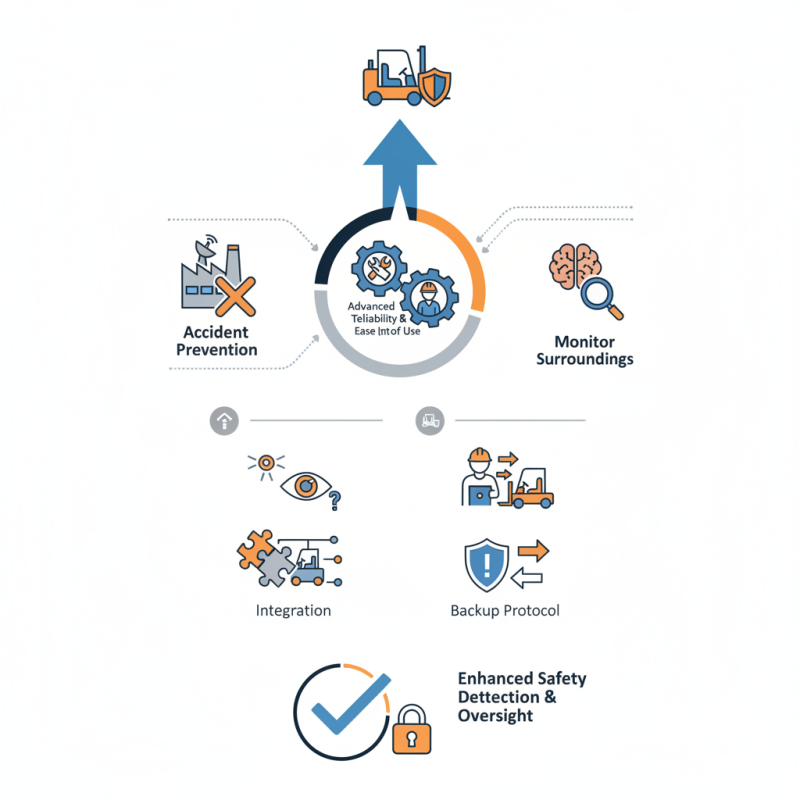
Choosing the best Forklift Collision Detection System is vital for workplace safety. These systems can prevent accidents and injuries in busy environments. Effective detection systems utilize advanced technology to monitor surroundings, ensuring swift responses to potential hazards.
When selecting the right system, consider factors like reliability and ease of use. Many options vary in features and cost. Some systems may over-rely on sensors, which might miss critical details. It's essential to evaluate how these systems integrate with existing equipment.
Remember, it’s not just about technology. Employee training matters too. Workers must understand how to use these systems effectively. Sometimes, systems can fail to detect collisions in complex scenarios. Therefore, having a backup safety protocol is wise. Ultimately, a good Forklift Collision Detection System enhances safety but requires proper implementation and oversight.
Understanding the Importance of Forklift Collision Detection Systems
Forklift collision detection systems play a crucial role in enhancing workplace safety. These systems help prevent accidents between forklifts and pedestrians or other equipment. Statistics show that many workplace injuries can be traced back to equipment collisions. Therefore, understanding their importance is vital for any warehouse or industrial setting.
Implementing an effective collision detection system requires careful consideration. Sensors and cameras can provide real-time alerts, reducing response time during potential accidents. However, not all systems are foolproof. Some may have limitations, like blind spots or environmental interference. Evaluating the specific layout and traffic patterns of your facility can help identify the most suitable system.
A reliable detection system can save lives and property. Yet, no system is perfect. Regular training for operators is essential for maximizing effectiveness. Continuous assessment of the system's performance will ensure it evolves with your operational needs. Emphasizing both technology and human factors creates a safer workplace.
Key Technologies Used in Forklift Collision Detection Systems
When selecting a forklift collision detection system, understanding the key technologies is crucial. These systems are designed to enhance safety and efficiency in busy work environments. Powerful laser sensors are one of the leading technologies. They can accurately measure distances and detect obstacles. According to industry reports, around 25% of forklift accidents result from collision-related incidents.
Another important technology is camera-based systems. These utilize advanced imaging and computer vision algorithms to identify hazards. A study indicated that visual inspection alone can miss up to 80% of potential hazards, which highlights the importance of integrating these systems.
Tips: Regularly train staff on using these systems. Awareness can prevent accidents. Also, consider feedback from workers who interact with these technologies daily. They can provide insights on potential improvements. Lastly, keep the software updated. This ensures optimal functionality and adapts to new challenges in the workspace.
Evaluating the Effectiveness of Collision Detection Algorithms
Choosing an effective collision detection algorithm is crucial for forklift safety. Different algorithms approach the problem differently. Some rely on sensors, while others utilize computer vision. Both methods have strengths and weaknesses. The ideal system should combine multiple techniques for reliability.
When evaluating these algorithms, consider their response time and accuracy. Fast response times are essential to prevent accidents. However, accuracy cannot be compromised. A faulty detection system can lead to serious safety risks. Testing algorithms under various conditions can reveal their true effectiveness.
Implementing a collision detection system is not infallible. Operators may still make errors, or sensors might fail. Continuous training and maintenance are vital. In the quest for safety, constant evaluation helps ensure the chosen system remains effective. Regular reviews can uncover potential improvements and encourage innovation.
Industry Standards and Regulations for Forklift Safety Systems
When it comes to forklift safety systems, understanding industry standards is crucial. The Occupational Safety and Health Administration (OSHA) emphasizes that nearly 35,000 forklift accidents occur annually in the U.S. alone. Many of these incidents could be prevented with effective collision detection systems. The American National Standards Institute (ANSI) states that a certified forklift safety system can reduce accidents by up to 70%.
There are several standards to consider. For instance, the ANSI/ITSDF B56.1 regulation outlines safety requirements for powered industrial trucks, focusing on operator visibility and environmental factors. Compliance with these regulations is essential for any workplace using forklifts. Many industry experts recommend frequent safety audits to ensure that systems meet current safety standards.
Tips: Regular training sessions can help employees stay aware of potential hazards. Consider integrating real-time monitoring systems. These can alert operators to their surroundings, enhancing safety measures significantly. Always review reports on safety incidents. This can help identify patterns and inform adjustments to safety protocols.
Cost-Benefit Analysis of Implementing Collision Detection Solutions
When evaluating the cost-benefit analysis of implementing a forklift collision detection system, it's essential to examine both direct and indirect costs. The average cost of a collision in warehouse environments can exceed $30,000, which includes damage, downtime, and potential injuries. A reliable collision detection solution can significantly reduce these expenses. According to industry reports, facilities with integrated systems reported a 40% decrease in collision-related incidents.
Return on investment (ROI) should also factor into the decision. Investing in advanced technology typically yields long-term savings. Facilities have witnessed up to a 20% increase in operational efficiency after implementing such systems. Yet, one must ponder if the upfront costs justify these benefits, especially for smaller operations. The ongoing maintenance and training expenses can sometimes overshadow initial investments, leading to a need for careful consideration.
Ultimately, the effectiveness of implementing a collision detection system hinges on how well the technology is integrated into existing processes. Proper training and adaptation to new tools are crucial. Some organizations report employee resistance to change, which can hinder implementation. Understanding these dynamics can help in crafting a robust deployment strategy.
Cost-Benefit Analysis of Forklift Collision Detection Systems