

nbc logo (2)
Office address
National Engineering Industries Ltd.
Khatipura Road Jaipur – 302006 Rajasthan, India
Phone Number

Toll Free: 1800 3000 6222
Telephone: +91 141 222 3221
Fax: +91 141 222 1926, 222 2259
CIN: U29130WB1946PLC013643

How to Choose a Rubber Slitter Cutting Machine in 2026?

Choosing a Rubber Slitter Cutting Machine in 2026 takes more than comparing prices or maximum roll widths. The right choice depends on the rubber compound, sheet thickness, required strip width, and daily production volume. A machine that cuts soft sponge rubber may not handle dense rubber sheet cleanly. Small differences matter.

Manufacturing expert Shigeo Shingo is often credited with the observation, “The most dangerous kind of waste is the waste we do not recognize.” That principle is useful when evaluating a slitter. Unnoticed setup delays, uneven edges, material stretch, and frequent blade changes can quietly reduce output. Ask suppliers to demonstrate the machine using your own material, if possible. Inspect the cut edges under good light.

This guide examines the factors buyers should weigh: cutting method, blade adjustment, feed control, guarding, maintenance access, and operator training. It also explains how to compare specifications with real production needs, rather than relying on headline speed alone. A fast machine is not always the better machine. Check whether it can hold your target width across a full production run, and ask how quickly routine adjustments can be made. Some details are easy to overlook. Your first choice may still need revision after a practical trial.
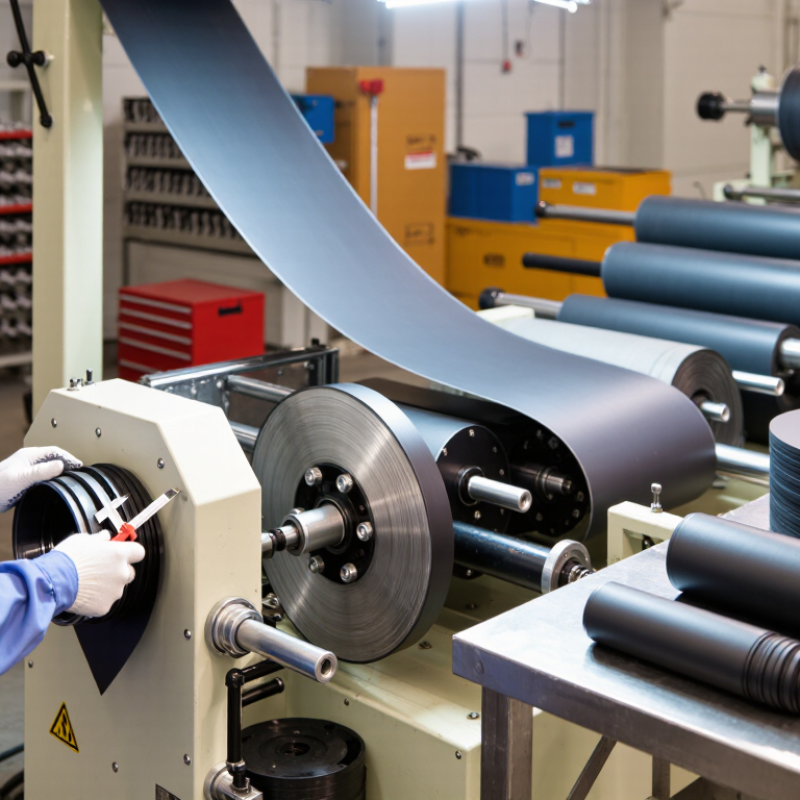
How to Choose a Rubber Slitter Cutting Machine in 2026?

Assess Your Rubber Slitting Needs and Production Goals

How to Choose a Rubber Slitter Cutting Machine in 2026?

Assess Your Rubber Slitting Needs and Production Goals

Start with the material, not the machine speed. Record the rubber compound, sheet or roll thickness, usable width, and roll diameter. Natural rubber, silicone, and reinforced rubber can behave differently under a blade. Note whether edges must be clean, or whether minor surface marks are acceptable. Small details matter.

Define the finished strip width and tolerance for each product. A line cutting narrow strips may need finer adjustment than one producing wide gasket stock. Estimate daily output using realistic shifts, changeovers, and setup time—not the fastest speed on a specification sheet. Measure scrap, too. It adds up.

Consider how often operators change materials and widths. Quick adjustments can save time, while a simple control layout may reduce setup errors. Ask suppliers for a test cut using your actual rubber, and inspect edge quality, width consistency, and material distortion. Check blade replacement access and routine cleaning requirements. Safety guarding and clear operating instructions should be part of the evaluation. Even good estimates miss something; an unusual compound or warm workshop can change how rubber feeds. Leave room in the plan for trials, operator feedback, and a revised production target.

Match the Machine Type to Your Rubber Materials

A rubber slitter should match the material’s form, thickness, and behavior—not just the desired strip width. For continuous rolls of thin sheet, a rotary slitting machine can make steady, repeatable cuts. Check that its feed system controls tension without stretching soft rubber. Too much tension can leave strips narrower than expected.

Thicker sheets may suit a guillotine-style cutter, especially when cuts are made in separate lengths rather than from a running roll. Soft natural rubber can deform under blade pressure, while harder compounds may need a sharper blade and a more rigid support. Fabric-reinforced rubber needs particular care: exposed fibers can pull or fray if the blade and cutting angle are poorly matched. That matters.

For sticky or heat-sensitive materials, watch for rubber building up on the blade or edges becoming rough during longer runs. A small test helps. Run samples at the intended thickness and speed, then inspect the edges and measure several strips. This is more useful than relying on a machine’s stated capacity alone. There may be trade-offs: a faster setup can increase waste if feed control or blade clearance is not right. Record the material grade, roll width, thickness, and acceptable edge quality before comparing machine types.

Compare Cutting Methods, Capacity, and Precision

In 2026, compare rubber slitting machines by cutting method, usable capacity, and repeatable precision—not by headline speed alone. Rotary knives suit continuous rolls and steady production, while shear cutting can give clean edges on thicker or firmer stock. A crush-cut setup is simpler, but may compress soft rubber and leave a distorted edge. Check the sample material before deciding. Small details matter.

Capacity means more than maximum width. Confirm the machine’s working width, material thickness range, roll diameter, and feeding limits against your actual production stock. A line that handles a wide roll may still struggle with a heavy one or a tacky surface. Ask how speed changes with material hardness and thickness. Published figures may assume ideal conditions; real stock rarely behaves so neatly.

Precision depends on blade alignment, feed tension, and how consistently the material tracks through the machine. Ask for cut samples at your target width, then measure several strips rather than one. Look for edge tearing, width variation, and compression marks. I would not judge accuracy from a specification sheet alone. It is easy to overlook changeover time, too, but frequent blade adjustments can slow a shift more than expected.

How to Choose a Rubber Slitter Cutting Machine in 2026?

Compare cutting methods by typical capacity, edge precision, and material versatility.

Ratings are qualitative selection guidance on a 1–5 scale, not guaranteed machine specifications. Rotary shear and razor methods suit continuous web slitting; crush cutting is a simpler option for suitable materials, while guillotine cutting is generally used for batch cuts. Actual throughput and cut quality depend on rubber compound, thickness, blade setup, and machine configuration.

Evaluate Automation, Safety, and Maintenance Features

A rubber slitter should match your production routine, not just its advertised speed. Test it with the rubber grades and roll widths you actually handle. Watch how the feed system controls tension, and check whether operators can adjust slit width without repeated trial cuts. Automation is useful when sensors detect misalignment or material changes early. Still, extra controls can complicate simple jobs.

Safety features deserve a hands-on review. Check that guards cover moving blades and that emergency stops are reachable from normal working positions. Ask how the machine is safely stopped during threading, cleaning, and blade replacement. Observe an operator completing these tasks, rather than relying only on a checklist. Small details matter. A guard that slows routine access may tempt workers to bypass it, which signals a design problem worth addressing.

Maintenance affects both uptime and cut quality. Look for clear access to wear parts, straightforward lubrication points, and practical instructions for blade changes. Ask how often routine checks are needed, and whether common replacement parts are readily available. A maintenance log can reveal recurring alignment or blade-wear issues before scrap piles up. Not every automated feature pays off. Compare the time saved with the added upkeep, then judge the machine on a real production trial.

How to Choose a Rubber Slitter Cutting Machine in 2026? - Evaluate Automation, Safety, and Maintenance Features

Evaluation Area What to Check Manual or Basic Machine Semi-Automatic Machine Fully Automatic Machine
Automation and Loading Identify which steps are automatic: roll loading, material feeding, width setting, cutting, unloading, and waste handling. Operators generally position and feed material and manage more of the cutting cycle manually. May automate feeding, clamping, or repeated cutting while requiring operator setup and material handling. Can coordinate several steps in a programmed cycle; confirm which tasks still require manual handling.
Material Compatibility Confirm the machine is designed for the specific rubber type, hardness, thickness, roll width, roll diameter, and core size. Can suit varied or short-run work when operators can make frequent adjustments. Can suit repeat jobs with a defined range of materials and sizes. Works best when the material range and production process are well specified; verify the machine's limits for each material.
Cutting Method and Quality Ask for a test cut using representative material. Check edge quality, width consistency, deformation, and blade suitability. Cut quality may depend more on operator setup and handling. Repeat settings can help maintain consistency across batches when the material and setup remain stable. Programmable settings can support repeat production; verify results with actual material rather than relying only on sample specifications.
Capacity and Throughput Match rated working width, roll dimensions, cutting range, and cycle capability to the largest regular job—not just the average job. Often appropriate for lower-volume work or changing job requirements. Can reduce repetitive manual steps for regular production runs. May support higher-volume, repeatable production, but actual output depends on material, setup, loading, and changeover time.
Controls and Setup Review control clarity, setting adjustment, recipe storage, changeover steps, and operator training needs. Simple controls may be easier to learn, but settings can require more manual adjustment. Look for clear adjustment controls and repeatable settings for common jobs. Check that the interface supports the required recipes, access permissions, alarms, and recovery procedures.
Safety Features Inspect guarding, access interlocks where applicable, emergency stops, safe blade access, and procedures for clearing jams. Confirm that operator access to blades and moving parts is controlled during operation and setup. Check safeguards around powered feed, clamping, and cutting motions, as well as safe setup and cleaning procedures. Verify safeguards at all loading, cutting, and discharge areas; automation does not remove the need for risk assessment and operator training.
Maintenance and Blade Changes Ask for the maintenance schedule, blade-change procedure, lubrication points, wear parts list, and required tools. Check that routine inspection and blade replacement are straightforward and documented. Confirm access to feed components, sensors, and cutting parts without bypassing safeguards. Review maintenance access, fault diagnostics, spare-part availability, and the procedure for safely isolating energy before service.
Reliability and Support Request operating and maintenance documentation, recommended spares, service response arrangements, and commissioning details. Assess whether in-house staff can handle routine setup and servicing. Confirm support for control systems, sensors, and common wear components. Check the availability of qualified service for the control and automation systems, as well as mechanical parts.
Best-Fit Decision Compare total operating needs, including labor, changeovers, training, maintenance, and production variability. Consider for simpler workflows, variable jobs, and lower production demand. Consider when repeated jobs justify automating selected steps while retaining operator flexibility. Consider when production is repeatable and the expected labor and process benefits justify the added system complexity.
Selection note: Features and performance vary by machine design. Confirm capacity, cutting results, safeguards, and maintenance requirements with the supplier using your actual rubber material and production conditions.

Check Supplier Support, Compliance, and Total Cost in 2026

How to Choose a Rubber Slitter Cutting Machine in 2026?

A rubber slitter is only as dependable as the support behind it. Ask who handles installation, operator training, troubleshooting, and replacement parts. Get response times in writing, not just a general promise of “ongoing support.” Deloitte and MAPI’s 2024 Smart Manufacturing Survey found that 92% of manufacturing executives saw smart manufacturing as a key competitiveness driver over the next three years. That is not a slitter-specific finding, but it highlights the value of capable controls and service. Small details matter.

Check safety documentation before comparing quotations. Ask for a machine-specific risk assessment, guarding details, interlock checks, and clear operating and maintenance instructions. ISO 12100 provides a framework for machinery risk assessment; ISO 13849-1 addresses safety-related control systems. Neither reference alone proves a machine is suitable for your site or market. Ask what standards the supplier designed against, and have your own safety team review the evidence.

Compare total cost, not just the purchase price. Include installation, blades, routine maintenance, training, energy use, scrap, and expected downtime. Request a spare-parts list and realistic lead times. A low quotation can become expensive when a small component stops a shift. I would not pretend every downtime hour has a neat price; production schedules rarely cooperate. Still, estimate it using your own output and labor figures, then compare suppliers on the same assumptions.