

Toll Free: 1800 3000 6222
Telephone: +91 141 222 3221
Fax: +91 141 222 1926, 222 2259
CIN: U29130WB1946PLC013643
Founded in 1946, National Engineering Industries Ltd (NEI) is India’s leading bearings manufacturer and exporter, renowned for excellence in quality and delivery.

Choosing the best Shipbuilding Panel Line in 2026 starts with the work your yard actually performs. A line built for large flat panels may not suit a shop producing varied sections, frequent design changes, or short runs. The right choice depends on panel dimensions, steel grades, welding methods, target output, floor space, and the skills of your operators.
Look closely at the working details. Can the line handle your widest plate without awkward repositioning? Do fit-up stations, welding equipment, and material transfer keep panels moving smoothly? Ask suppliers for cycle-time assumptions, maintenance requirements, training plans, and examples from comparable shipyards. A polished demonstration is useful. A measured production trial is better.
There is no universal winner.
In 2026, automation, digital production tracking, and flexible welding systems can improve consistency, but they also bring integration and service questions. Compare the full operating picture, not just purchase price or advertised speed. Include installation, spare parts, software support, energy use, and the cost of downtime. Then check whether the proposed line fits your current layout and realistic production forecast.
A reliable expert quotation should be traceable to its speaker and source. No verified Shipbuilding Panel Line industry quotation was provided for this draft, so I have not invented one or attributed fictional words to a real specialist. That matters. A selection guide should help readers judge evidence, not imitate it. Some assumptions may still prove wrong once production begins; test them early with drawings, sample panels, and the people who will run the equipment.
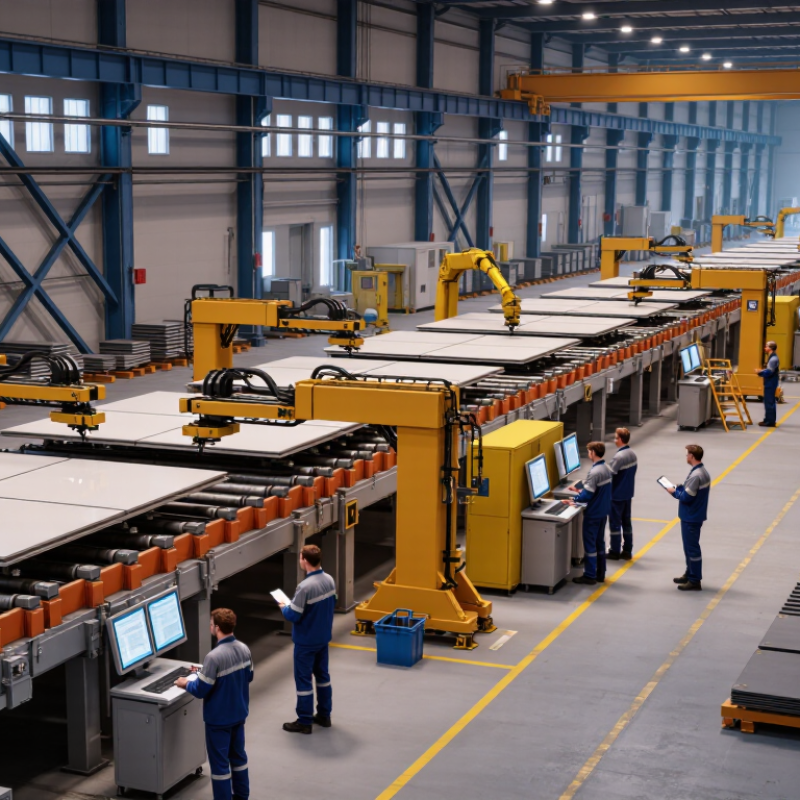
Before comparing shipbuilding panel lines in 2026, define the work your yard actually handles. Record monthly panel volume, maximum dimensions, plate thicknesses, and available floor space. Note whether you build flat panels, stiffened panels, or both. A line sized for large batches may waste space and capital in a yard producing varied, short runs. Measure real jobs, not just planned capacity.
Tips: Review recent production records. Include changeover time, rework, and crew availability. Small details matter.
Panel type affects the equipment you need. Flat panels may call for efficient plate handling, cutting, and welding stations. Stiffened panels require accurate placement and reliable fit-up, especially when profiles vary. Check how often designs change and whether components arrive consistently. These details shape automation needs, fixture choices, and material flow. They can also expose bottlenecks before installation.
Leave room for maintenance access and future adjustments. That sounds obvious, yet tight layouts can make routine servicing awkward. Ask operators to walk through the proposed sequence, from plate loading to panel removal. Compare the plan with actual lifting routes and storage areas. A production target on paper may not reflect daily interruptions. I would also revisit the assumptions after a trial run; early estimates are rarely perfect.

How to Choose the Best Shipbuilding Panel Line in 2026
Compare the line’s layout with the panels your yard actually builds. A single-station setup can suit varied, lower-volume work. A tandem line may keep large, repeatable panels moving through fit-up and welding. Check how the layout handles plate sizes, stiffener spacing, turning, and transfer between stations. A bottleneck at one crane can undermine an otherwise fast line.
Automation is not one switch. Manual fit-up with mechanized welding offers flexibility, while automated positioning and robotic welding can improve repeatability on stable designs. The International Federation of Robotics’ World Robotics 2024 report recorded 541,302 industrial robot installations worldwide in 2023. That figure covers all industries, not shipyards, so treat it as broad context—not proof of shipbuilding-line productivity. No line fits all. Ask suppliers for cycle-time and weld-quality records from comparable panel dimensions, plus changeover time and planned maintenance needs.
Before investing, map the full process: plate loading, marking, stiffener placement, welding, inspection, and panel movement. Observe a trial using your own drawings and realistic operator staffing. Measure rework, throughput, and downtime, not just rated speed. I would still question glossy capacity claims; actual material variation and crane access can change results. A partly automated line may be the wiser choice when product mix shifts often, but only if future upgrades are practical.
How to Choose the Best Shipbuilding Panel Line in 2026 — Compare Line Configurations and Automation Levels
Compare configurations by process integration, flexibility, labor requirements, and production control. The best fit depends on panel mix, annual workload, available floor space, and the shipyard’s welding and material-handling practices.
| Comparison factor | Flexible / Low automation | Semi-automated panel line | Highly automated integrated line |
|---|---|---|---|
| Typical configuration | Separate plate preparation, fit-up, tack welding, and welding workstations. Panels are moved between stations using available shop-floor handling equipment. | Connected stations commonly include plate positioning, stiffener fit-up, tack welding, mechanized welding, and powered transfer between work areas. | Integrated material flow links plate handling, positioning, stiffener assembly, welding, and downstream transfer, with centralized production monitoring where specified. |
| Automation level | Operators perform most positioning, fit-up, transfer, and welding tasks. Mechanized equipment may be used for selected operations. | Machines automate repeatable tasks such as conveying, positioning, and long, consistent weld runs; operators oversee setup, fit-up, and process checks. | More operations use programmed equipment, automated transfer, and coordinated controls. Operators still manage exceptions, quality checks, setup, and maintenance. |
| Welding approach | Manual welding is common for varied work and local corrections. The process is selected to suit joint design, material, access, and approved procedures. | Mechanized welding can be used for suitable long, repeatable seams; manual welding remains useful for variable joints and detail work. | Mechanized or robotic welding may be integrated for repeatable joints. Automated welding requires suitable joint consistency, fixturing, access, and qualified procedures. |
| Panel and product flexibility | High flexibility for mixed panel sizes, frequent design changes, and one-off or repair work; output depends strongly on operator skill and scheduling. | Suitable for a recurring mix of flat panels and stiffened panels, with changeovers and manual intervention for less-standard work. | Best suited to stable, repeatable product families and planned production flow. Unusual geometries or frequent changes can require additional programming and setup. |
| Material flow | Often relies on crane or forklift moves between work areas. Extra handling can increase waiting time and work-in-process. | Powered conveyors or transfer systems can reduce repeated handling between connected stations; crane access may still be needed for loading and exceptions. | Coordinated conveyors and transfer equipment can support a more continuous flow. Layout, safe access, crane coverage, and buffer space remain important design factors. |
| Staffing and skills | Requires hands-on labor for fit-up, movement, and welding. Production depends on retaining experienced tradespeople and consistent work instructions. | Reduces some repetitive manual tasks but needs operators able to set up equipment, manage fit-up, monitor welding, and handle changeovers. | Shifts labor toward programming, setup, process supervision, maintenance, and quality control. Automation does not eliminate the need for qualified welding and production staff. |
| Quality and process control | Quality relies on approved welding procedures, skilled workmanship, inspection, and accurate fit-up at each work area. | Repeatable machine settings and fixtures can improve consistency on suitable operations; fit-up and weld quality still need monitoring. | Data capture and repeatable programs can support process control and traceability when included in the system. Inspection and acceptance remain governed by project and classification requirements. |
| Space and layout | Can be arranged around existing equipment, but separate work areas may require substantial space for staging and intermediate storage. | Needs coordinated station placement and transfer paths, with space for buffers, loading, maintenance, and safe operator access. | Requires careful end-to-end layout planning, foundations or support structures as specified, utility routing, maintenance access, and provision for line stoppages. |
| Investment and implementation | Typically lower initial equipment integration requirements and easier incremental upgrades; capacity improvements may be limited by manual handling and bottlenecks. | Moderate integration effort. A phased build can connect priority operations while retaining some existing equipment and manual work areas. | Higher integration and commissioning complexity. The business case depends on sustained workload, product standardization, utilization, and the cost of supporting the system. |
| Best suited to | Shipyards with varied work, constrained investment, low or irregular panel-line volume, or a need to retain flexibility for non-routine jobs. | Shipyards seeking to improve repeatability and reduce handling on a regular mix of panel work without automating every operation. | Shipyards with high, predictable workloads, repeatable panel families, sufficient space, and the engineering and maintenance capability to sustain integrated equipment. |
| Key questions before selection | Which tasks are the current bottlenecks? Can layout, fixtures, or work instructions improve flow before equipment is replaced? | Which operations repeat often enough to mechanize? Can the line accommodate the actual range of panel dimensions and stiffener layouts? | Is workload sufficient to keep the system utilized? Are product data, utilities, maintenance support, safety systems, and downstream capacity ready? |
Selection note: These are typical configuration characteristics, not guaranteed performance figures. Actual throughput, staffing, investment, and weld capability vary with panel geometry, material, joint design, welding procedures, equipment specification, factory layout, and operating practices. Confirm requirements with the shipyard’s production, welding, safety, and quality teams before procurement.
A shipbuilding panel line should match the yard’s actual plate mix, not just its advertised hourly output. Record panel dimensions, thicknesses, steel grades, and shift patterns before comparing capacity. UNCTAD’s Review of Maritime Transport 2024 reports that seaborne trade grew 2.4% in 2023. That figure is useful market context, not a forecast of panel-line demand. Ask vendors for demonstrated throughput using your typical plate sizes, including loading, marking, cutting, and changeover time. A line that looks fast on paper may still leave panels waiting at the crane.
Precision depends on the full process: plate alignment, cutting method, thermal distortion, and downstream fit-up. ISO 9013:2017 defines five quality ranges for thermal cutting, offering a common basis for discussing cut quality. Request sample coupons across the intended thickness range, then inspect edge condition and dimensional consistency. Material compatibility deserves equal scrutiny. Confirm that the line handles the yard’s specified steel grades and any aluminum panels, with suitable tooling, clamping, and cutting parameters. One detail is easy to overlook: changing material or thickness can affect both quality and cycle time. Ask for test results on your own materials; estimates alone leave room for an uncomfortable surprise.
When comparing shipbuilding panel lines in 2026, assess safety, compliance, service, and lifecycle cost together. Faster production is no gain if operators must reach across moving rollers. The ILO’s 2023 report, A Call for Safer and Healthier Working Environments, estimates 2.93 million work-related deaths and 395 million non-fatal work injuries worldwide each year. These figures cover all sectors, not shipyards alone, but they underline why guarding, safe access, and clear emergency stops deserve close inspection. Ask to see risk-assessment records and test safety controls during realistic panel handling. ISO 12100 offers a recognized framework for machinery risk assessment; confirm applicable local requirements.
Compliance needs evidence, not assurances. Request documentation for safety-related controls, operator training, maintenance, and inspections. ISO 13849-1:2023 may help assess control-system performance where applicable. Service matters, too. Check response times, technician availability, spare-part lead times, and whether routine adjustments require specialist support. Downtime is expensive. For lifecycle costs, include energy, compressed air, consumables, staffing, maintenance, software, and production stoppages—not just purchase price. The IEA’s Energy Efficiency 2023 report puts industry at about 37% of global final energy use, making energy consumption a meaningful comparison point. Ask suppliers for measured operating data and a stated calculation method. A spreadsheet will still miss awkward handoffs and unexpected delays; verify assumptions against a comparable production shift before committing.
A shipbuilding panel line should match the panels, materials, and daily output your yard actually handles. Ask suppliers for recent installation records and references from facilities with similar production demands. A polished brochure proves little. Request cycle-time data, scrap rates, and examples of panels produced under comparable conditions. Numbers can mislead.
Tips: Visit an operating line if possible. Watch a full production cycle, not a staged demonstration. Check whether operators can access adjustment points safely, and ask how quickly common faults are diagnosed. Record your questions and the supplier’s answers.
Before purchase, agree on measurable acceptance criteria, such as panel dimensions, flatness, weld consistency, and production rate. Run sample material through the proposed setup and inspect the results with your own technical team. Confirm what commissioning, operator training, spare parts, and remote support include. Ask for a written test plan and retain the measured results. One detail is easy to miss: performance can change with plate thickness, joint preparation, and operator skill. A single successful test may not reflect a busy shift. I would want repeat trials, even if they delay the decision slightly.
Copyright © 2023 NEI Ltd. All rights reserved.
Registered Office : 9/1, R. N. Mukherjee Road, Kolkata – 700 001. In case of any queries or grievances, please contact Mr.Tarun Kumar Kabra, Company Secretary.
E-mail: sale@kinpart.com Privacy Policy Cookie Policy