Why Choose a Spiral Heat Exchanger for Your Business Needs?
In the dynamic landscape of industrial processes, choosing the right heat exchanger is crucial. The Spiral Heat Exchanger has gained attention for its efficiency and space-saving design. According to a report by Market Research Future, the global heat exchanger market is projected to reach $23.5 billion by 2026, indicating a significant demand for innovative solutions like spiral configurations. Experts highlight the unique advantages these units offer.
Dr. Emily Carter, a renowned expert in thermal systems design, states, "Spiral heat exchangers revolutionize the way industries manage heat transfer." Her insights underline the advantages of these exchangers, particularly their enhanced thermal performance and lower maintenance needs. With rising energy costs, businesses must consider such solutions to stay competitive.
However, potential buyers should reflect on their specific requirements. Spiral heat exchangers may not be suitable for all applications. Understanding the intricacies of fluid dynamics and heat exchange principles is vital. With careful assessment, the right choice can lead to improved efficiency and reduced operational costs. Investing in a Spiral Heat Exchanger can ultimately provide both immediate and long-term benefits for numerous industries.
Benefits of Spiral Heat Exchangers in Industrial Applications
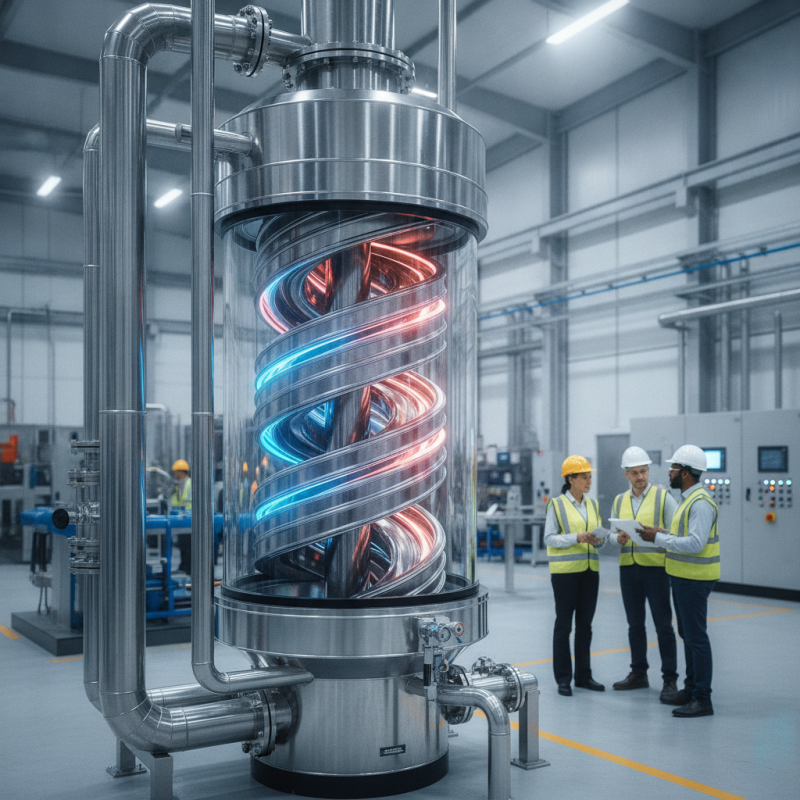
Spiral heat exchangers offer significant benefits for industrial applications. Their unique design allows for efficient heat transfer, which is crucial in many processes. The spiraled configuration promotes turbulent flow, enhancing heat exchange. This can lead to lower energy costs and improved efficiency.
Another advantage is their compact size. Unlike traditional heat exchangers, spiral designs save space. They fit easily into tight installations. This is beneficial for factories with limited room for equipment. Additionally, they handle high-pressure and high-temperature fluids effectively.
Maintenance is another consideration. While spiral heat exchangers are durable, they can be tricky to clean. Depending on the application, fouling may occur. Regular assessments are necessary to ensure optimal performance. Companies must weigh the high efficiency against potential maintenance challenges. This reflection can guide better decisions for long-term operations.
Comparison with Other Types of Heat Exchangers
When considering heat exchangers, spiral models stand out for several reasons. Unlike traditional shell-and-tube or plate heat exchangers, spiral heat exchangers provide a compact design. This design leads to a lower footprint, making them ideal for facilities with limited space. The continuous spiral flow improves heat transfer efficiency, which can enhance overall process performance.
In comparison, shell-and-tube heat exchangers often require more maintenance due to their complex structure. They can suffer from fouling, which impacts efficiency. While plate heat exchangers offer great thermal performance, they can be more cumbersome to clean. Spiral designs simplify maintenance processes. Their ability to handle a variety of fluids, including slurries and viscous materials, expands their applications.
However, spiral heat exchangers are not without challenges. They may not be the best choice for every situation. High-pressure applications might be limiting. Understanding specific business needs is crucial. Careful evaluation of factors like fluid properties and flow rates can lead to better decision-making. These considerations ensure you choose the most suitable heat exchanger type for your operations.
Applications of Spiral Heat Exchangers Across Various Industries
Spiral heat exchangers are versatile tools across various industries. Their unique design allows for efficient heat transfer in compact spaces. These exchangers rotate fluid flows in a spiral, promoting improved thermal performance. This can be crucial in sectors like food processing, chemical manufacturing, and HVAC.
In food processing, spiral heat exchangers are used for pasteurization. They efficiently heat liquids, ensuring safety and quality. In the chemical industry, they handle aggressive fluids, maintaining process efficiency. Their compact size saves on floor space, allowing for optimized facility layouts.
Tips: Select a spiral heat exchanger that fits your specific requirements. Consider factors like fluid type, temperature range, and flow rates. Regular maintenance is essential to ensure longevity and efficiency. Always monitor for any signs of wear or leakage.
Another important application is in energy recovery systems. Many industries leverage this technology to recycle wasted heat. It can significantly reduce energy costs over time. Proper installation and operation are vital to achieve desired efficiency levels. Evaluate performance regularly for best results.
Energy Efficiency and Cost Savings Offered by Spiral Heat Exchangers
When considering a spiral heat exchanger, energy efficiency is a standout feature. The unique design allows for effective heat transfer with minimal energy loss. This efficiency translates into significant cost savings over time. Many industries face rising energy costs. A well-designed spiral heat exchanger can mitigate these expenses by maximizing thermal efficiency.
The compact nature of spiral heat exchangers also plays a role in cost savings. Their design minimizes the space required for installation. This can lead to lower infrastructure costs. Companies often overlook installation expenses, but these add up quickly. A smaller footprint means less material is needed for the installation, benefiting both the environment and your budget.
While the advantages are clear, it’s essential to consider the specific needs of your operations. Not all processes may benefit equally from a spiral design. It’s wise to consult with experts who can evaluate your system. Each situation is unique, and what works well in one instance may not apply to another. Emphasizing tailored solutions can result in more efficient operations and better cost management.
Energy Efficiency and Cost Savings of Spiral Heat Exchangers
Maintenance and Durability Aspects of Spiral Heat Exchangers
Spiral heat exchangers are known for their efficiency and compact design. Maintenance and durability are key factors in choosing these systems. Their unique design reduces fouling, which means less frequent cleaning. Fewer maintenance activities can save businesses time and money. However, it's essential to regularly inspect these units to ensure optimal performance.
Durability plays a crucial role in the longevity of spiral heat exchangers. Made from robust materials, they withstand high pressures and temperatures. Yet, the environment can wear down any equipment. Corrosion from certain fluids may still impact their lifespan. Choosing the right material is vital to avoid unexpected failures.
Moreover, installation can also impact maintenance. Improper installation may lead to leaks and increased wear. It's crucial to consult with experts during setup to mitigate risks. Companies should consider periodic assessments and maintenance schedules. This proactive approach can address potential issues before they escalate.
Why Choose a Spiral Heat Exchanger for Your Business Needs? - Maintenance and Durability Aspects of Spiral Heat Exchangers
| Aspect | Description | Benefits | Maintenance Frequency |
| Design Efficiency | Compact design allows for heat exchange with minimal space. | Saves space and can fit in limited areas. | Annual Inspection |
| Material Durability | Constructed from high-quality materials, resistant to corrosion. | Longer service life and reduced replacement costs. | Bi-annual Check |
| Cleaning and Maintenance | Easy to disassemble and clean without special tools. | Reduces downtime and operational disruption. | Quarterly Cleaning |
| Performance Stability | Maintains optimal performance over a wide range of conditions. | Consistent operational efficiency. | Annual Performance Review |
| Energy Efficiency | Designed to maximize heat transfer while minimizing energy loss. | Reduced energy costs and environmental impact. | Monthly Efficiency Audit |