China Top 10 Power Distribution Transformer Manufacturers?
China’s electricity system is expanding, and reliable distribution equipment remains essential. A Power Distribution Transformer lowers voltage for safe delivery to homes, factories, and commercial buildings. Its performance affects energy losses, maintenance schedules, and the stability of local networks.
The National Energy Administration reported that China’s electricity consumption reached 9.22 trillion kilowatt-hours in 2023, an increase of 6.7% from 2022. That scale helps explain why buyers closely assess transformer capacity, efficiency, and service support. The International Energy Agency’s 2023 report, Electricity Grids and Secure Energy Transitions, says annual grid investment must rise to more than US$600 billion by 2030. The report covers grids broadly, not transformer demand alone. Still, it highlights the infrastructure pressures that manufacturers must address.
This guide examines ten Chinese manufacturers through practical criteria: product range, technical capability, quality systems, project references, and after-sales coverage. A factory’s catalogue can look impressive. Field performance matters more. Public information is uneven, and company rankings can change with project scope or independent verification. So this list should be treated as a starting point, not a final procurement decision. Check current specifications, test records, and service terms before comparing suppliers.
What Defines a Distribution Transformer in China’s 10–35 kV Grid?
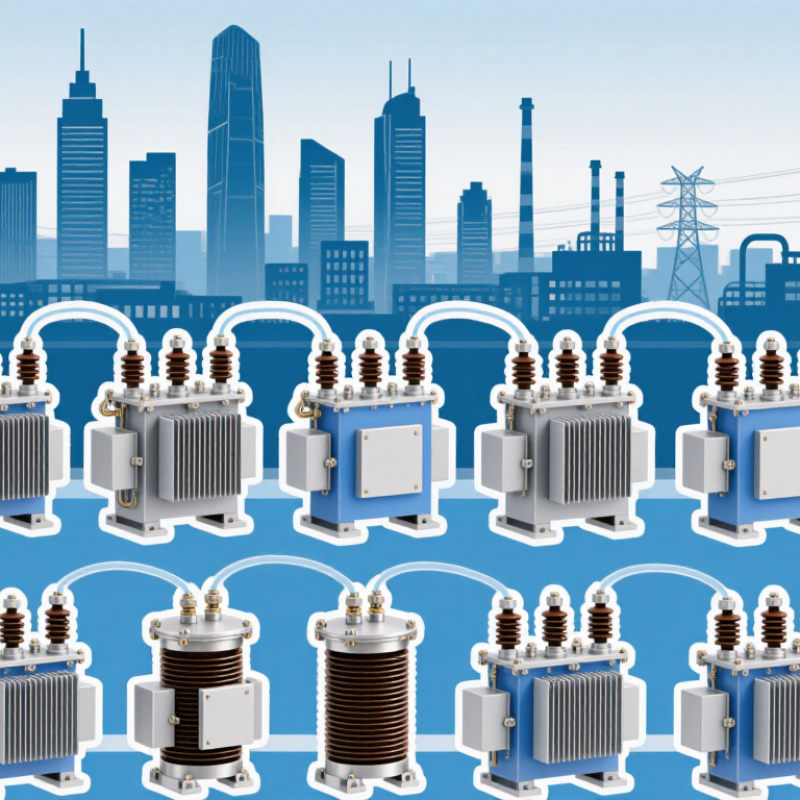
In China’s 10–35 kV grid, a distribution transformer is defined by its role, not by voltage alone. It receives medium-voltage power and steps it down for local use, commonly to a 0.4 kV low-voltage bus. China’s GB/T 156-2017 standard lists 10, 20, and 35 kV among standard system voltages. These levels serve different network layouts, so a transformer’s primary voltage, rated capacity, insulation, and cooling method must match its installation.
The National Energy Administration reported that China’s electricity consumption reached 9.22 trillion kWh in 2023, up 6.7% year on year. That growth makes efficiency and dependable operation practical concerns, not just catalogue figures. Engineers compare no-load and load losses, impedance, temperature rise, and short-circuit withstand. They also check whether the unit will sit outdoors, in a compact substation, or inside a building. A specification can look complete on paper and still miss local load patterns. That happens.
Tips: Verify the actual feeder voltage and peak demand before comparing transformer ratings. Check the test report against the applicable product standard, such as GB/T 6451 for oil-immersed units or GB/T 10228 for dry-type units.
Which Market and Production Data Help Identify Leading Manufacturers?
Market data can show which power distribution transformer manufacturers have durable demand, not just strong promotion. Compare domestic sales, export volume, project awards, and service coverage over several years. Separate oil-immersed and dry-type units, because their customers and market conditions differ. Numbers need context. A high market share may reflect one large project, while steady repeat orders suggest broader acceptance. Check whether reported figures are independently sourced and clearly dated; market estimates often use different product boundaries.
Production data helps test whether a supplier can meet demand reliably. Review annual output, rated capacity, capacity utilization, delivery lead times, and the range of voltage ratings produced. Factory visits or third-party audits can confirm whether assembly lines, winding equipment, and routine testing facilities match published claims. Ask for recent test records and defect or warranty data, where available. A short lead time looks attractive, but it may not prove dependable quality. No ranking is perfect. Public data can be incomplete, and some figures are self-reported. Comparing several indicators, then checking them against project references, gives a more grounded view of manufacturing strength.
China’s Top 10 Power Distribution Transformer Manufacturers: Which Market and Production Data Matter?
China electricity consumption by sector, 2023 (billion kWh)
Electricity demand is a market signal for distribution transformer needs, not a manufacturer ranking. To assess leading manufacturers, compare this demand context with verifiable production capacity, annual shipments, order backlog, export records, and product certifications. Source: National Energy Administration of China, 2023 electricity consumption statistics.
How Do Transformer Types, Ratings, and 50 Hz Designs Compare?
Power distribution transformers differ by construction, cooling method, and installation needs. Oil-immersed units use insulating liquid to remove heat, making them common outdoors and at higher capacities. Dry-type units use air and solid insulation, which can suit indoor locations where liquid containment is undesirable. Neither type is automatically better; site conditions matter.
Ratings deserve more than a quick glance. Capacity is stated in kVA or MVA, while voltage ratio, impedance, temperature rise, and tap range affect actual performance. For example, a 1,000 kVA unit may still be unsuitable if its primary voltage or connection arrangement does not match the network. Check the nameplate and technical datasheet, not capacity alone. A tidy comparison table can hide important details.
Frequency matters, too. A 50 Hz transformer is designed around its rated voltage-to-frequency ratio and magnetic flux. Applying the wrong voltage or frequency can increase core flux, heating, or noise; compatibility should be confirmed with the manufacturer’s specifications. A unit designed for 50 Hz may behave differently on a 60 Hz system, even when its voltage appears suitable. Small details count. In practice, checking load profile, ambient temperature, and installation space helps narrow the options, though early estimates are not a substitute for an engineering review.
How Do GB 20052-2020 Efficiency Grades Shape Manufacturer Rankings?
GB 20052-2020 changes how China’s power distribution transformer manufacturers should be compared. The standard sets energy-efficiency grades using transformer loss limits. Lower losses can support a higher grade, but comparisons need to match voltage class, capacity, and test conditions. Otherwise, a ranking may compare unlike products.
Look beyond a grade label. Check whether technical documents show tested no-load and load losses, and whether the offered model matches the tested design. No-load losses continue while a transformer is energized; load losses rise with current. Both affect operating costs, though the actual impact depends on use. Details matter.
For buyers, a stronger manufacturer ranking should weigh verified grade performance alongside production consistency, documentation, and service capability. A top grade is meaningful, not magical. It cannot guarantee lower lifetime cost in every installation. I would be cautious about rankings based on efficiency claims alone; that is an easy shortcut, and not a very reliable one. Compare equivalent models and confirm the applicable standard and test evidence before drawing conclusions.
Who Are China’s Top 10 Power Distribution Transformer Manufacturers?
China’s top ten power distribution transformer manufacturers should be assessed by more than production volume. A credible shortlist would include suppliers with proven experience in oil-immersed and dry-type units, clear technical documentation, and routine factory testing. Ask for rated capacity, voltage range, impedance, temperature-rise results, and noise data. Specific records matter.
Look for manufacturers that can show consistent winding quality, reliable insulation materials, and traceable inspection reports. Their engineering teams should explain how a design suits local temperatures, humidity, installation conditions, and expected loads. Independent certifications can support a supplier’s claims, but check their scope and validity. Do not treat a certificate as proof of every product’s performance.
There is no universal ranking. That is a limitation worth stating. Without company names, the most useful answer is a selection standard: compare the ten candidates using the same specifications, test evidence, delivery history, and after-sales arrangements. Request sample test reports and clarify warranty terms before making a decision. A polished brochure is not enough.