

nbc logo (2)
Office address
National Engineering Industries Ltd.
Khatipura Road Jaipur – 302006 Rajasthan, India
Phone Number

Toll Free: 1800 3000 6222
Telephone: +91 141 222 3221
Fax: +91 141 222 1926, 222 2259
CIN: U29130WB1946PLC013643

What Are China's Top 10 Forklift Pallet Suppliers?

Choosing among China’s top forklift pallet suppliers requires more than comparing catalog prices. Buyers need products that match their loads, handling equipment, storage conditions, and daily operating pace. This guide introduces ten suppliers and the factors that can help distinguish their offerings. Forklift Pallets may be made from plastic, wood, or metal, and each material brings different strengths. A plastic pallet can suit washdown areas, while a wooden model may fit common warehouse systems. Details matter. Check rated capacity, dimensions, entry style, and whether the pallet works with your forklifts and racks.

Supplier claims deserve careful review. Ask for product specifications, sample images, quality-control details, and clear information about customization and lead times. For export orders, confirm packaging, shipping arrangements, and after-sales support before committing. A supplier’s scale or online presence alone cannot establish product consistency. Request recent references or arrange a sample evaluation when practical. No shortlist is perfect. The right partner depends on your application, order volume, budget, and tolerance for delivery changes. Supplier capabilities can also evolve, so verify current details directly rather than relying on an old listing. This overview offers a practical starting point, not a guarantee that every company will fit every operation. Compare evidence, ask specific questions, and match each supplier’s strengths to the conditions on your warehouse floor.
What Are China's Top 10 Forklift Pallet Suppliers?

What Forklift Pallets Are and How They Support Material Handling

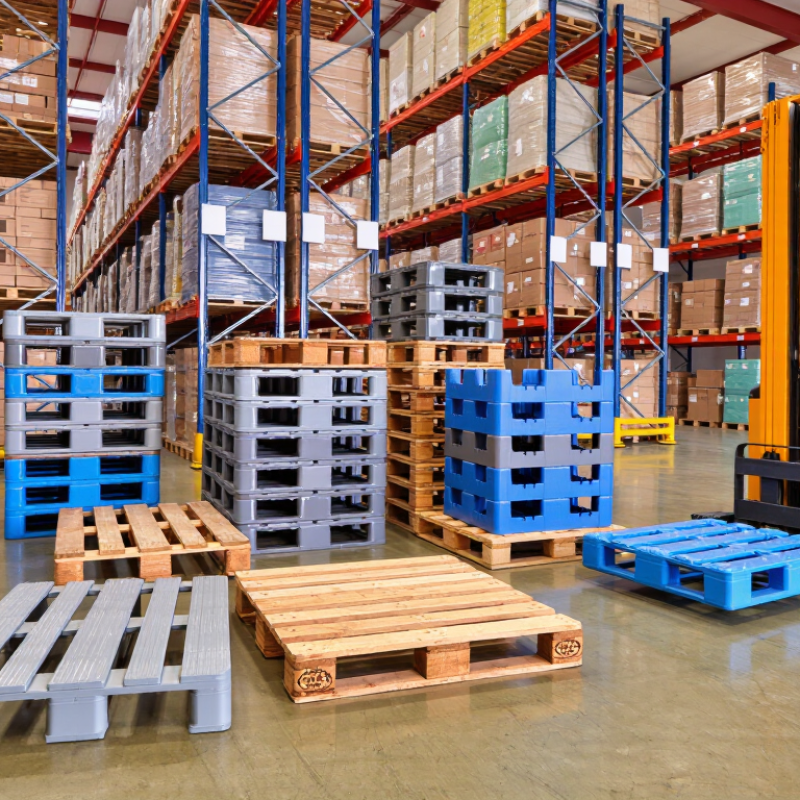
A forklift pallet is a rigid platform that lets forks lift and move grouped goods as one load. Its deck boards, stringers, or blocks distribute weight and create entry points for fork tines. The right design depends on load size, weight, handling frequency, and storage conditions. Fit matters more than appearance. An oversized pallet can obstruct aisles; an uneven load can shift during a turn. That assumption deserves a second look.

Pallets also connect manual handling with warehouse equipment, including forklifts, conveyors, and racking. MHI’s 2024 Annual Industry Report, based on nearly 1,000 supply-chain professionals, found that 55% planned to increase technology investment. This figure is not pallet-specific, but it reflects growing attention to connected, efficient operations. For reliable handling, workers should check for cracked boards, loose fasteners, moisture damage, and unstable loads before lifting. Small defects are easy to miss. A pallet that looks usable may still flex under a concentrated load, so inspection and correct load distribution matter.

How to Evaluate China’s Forklift Pallet Suppliers

What Are China's Top 10 Forklift Pallet Suppliers?

How to Evaluate China’s Forklift Pallet Suppliers

Choosing a supplier starts with the pallet’s actual job. Share your forklift tine spacing, load type, and handling conditions before comparing quotes. Ask whether the stated capacity applies to static storage, moving loads, or racking; these ratings are not interchangeable. A clear specification prevents a low price from hiding a poor fit. Details matter.

Tips: Request a sample and inspect its dimensions, welds, surface finish, and entry points. Test it with your forklift and a representative load. Ask for material specifications, inspection records, production lead times, and a written process for handling defects. Confirm packaging and shipping details, too.

A reliable supplier should answer technical questions consistently and explain how production quality is checked. Review sample measurements against the drawings, and ask how changes are approved. If possible, use an independent inspection before a large order. One honest caveat: a polished catalogue is not proof of consistent batches. I would compare trial results and communication, not just promises. Test it first.

Profiles of Ten Leading Forklift Pallet Suppliers in China

China’s forklift-pallet market includes suppliers with distinct strengths, not one universal leader. These ten profiles describe useful capability groups, rather than a verified ranking. Injection-molded plastic makers offer washable, consistent pallets. Steel fabricators serve heavy loads and rough handling. Wood producers suit lower-cost, repairable applications. Export-focused suppliers provide nestable designs that save return-shipping space. Hygienic-grade specialists target food and pharmaceutical warehouses. Heavy-duty makers reinforce deck ribs for dense loads. Lightweight designers reduce manual handling effort. Custom-size workshops fit unusual rack bays. Pooling providers manage reusable pallet circulation. Automation-ready suppliers control dimensions for conveyor and forklift compatibility. Details matter.

MHI’s 2024 Annual Industry Report found that 55% of surveyed supply-chain leaders planned to increase technology investment. That finding is not pallet-specific, but it signals growing attention to equipment compatibility and warehouse automation. Buyers should request load-test records, material specifications, and dimensional tolerances. A pallet that looks sturdy may still flex under a concentrated load.

Compare samples in the actual aisle, with the intended forklift and rack. Check entry openings, deck clearance, and performance after repeated handling. No design fits every site. A weak point in many purchasing checks is overlooking repair access and replacement consistency. Supplier claims need verification against operating conditions.

What Are China's Top 10 Forklift Pallet Suppliers?

A supplier-neutral comparison of common standardized pallet footprints, shown by deck area.

Footprint sizes shown are pallet dimensions included in ISO 6780. The chart compares standard sizes, not individual supplier performance or market rankings.

How the Top Suppliers Compare in Materials, Capacity, and Customization

Comparing forklift pallet suppliers starts with material choice, but load conditions matter just as much. Wood pallets are easy to repair and suit many standard warehouse lanes. Plastic resists moisture and repeated washing, though damaged units can be harder to fix. Metal supports demanding industrial use, but its weight may increase handling effort. Small details matter.

Capacity figures need careful reading. A pallet’s static, dynamic, and rack-supported ratings describe different conditions; one number cannot safely represent all three. ISO 8611 sets test methods for flat pallets, giving buyers a useful basis for comparing supplier claims. Ask for test conditions, dimensions, entry points, and the intended forklift type. Custom options may include reinforced blocks, closed decks, anti-slip surfaces, or nonstandard dimensions. Each can affect price and handling.

Scale is significant. A Virginia Tech–National Wooden Pallet and Container Association industry study estimated that about 849 million new and repaired pallets were produced in the United States in 2016. That figure shows why small specification gaps can become costly across large fleets. It does not identify a universal best material. Suppliers should explain how their samples perform under the buyer’s actual loads, floor conditions, and cleaning routine. I would still verify the rating in writing; a tidy catalog table is not a field test.

What Buyers Should Check Before Choosing a Supplier

A useful shortlist of China’s forklift pallet suppliers should begin with the job the pallet must do. Share the intended load, pallet dimensions, fork-entry direction, and whether units will sit on warehouse racks. Ask for rated dynamic and static capacities, not one unexplained load figure. Small details matter. Confirm material thickness, weld quality, surface finish, and resistance to moisture or repeated handling.

Request drawings and test records for the exact model under consideration. Then check a sample with your own forklift and a representative load; a pallet that fits on paper may catch a fork in daily use. Inspect the underside, entry points, and corners for sharp edges or uneven welds. Paper specifications can still miss real handling problems. I have seen buyers focus on unit price and overlook replacement parts, packaging, or lead times. That comparison can be misleading.

Before placing a larger order, clarify minimum quantities, production timing, inspection arrangements, and how defects are handled. Ask who verifies dimensions and load performance before shipment, and request dated inspection results. Compare the supplier’s replies for precision, not just speed. If answers about capacity or testing keep changing, pause and ask for written confirmation. One extra sample may cost time, but a poor fit can disrupt an entire storage lane.

What Are China's Top 10 Forklift Pallet Suppliers? — What Buyers Should Check Before Choosing a Supplier

Rather than present an unverified company ranking, this table outlines 10 practical checks buyers can use to compare forklift-pallet suppliers in China. Requirements depend on the pallet design, load, handling equipment, and destination market.

No. Supplier Check What to Verify Evidence to Request Buyer Warning Sign
1 Load capacity Confirm the stated capacity separately for static storage, dynamic handling, and racking. Capacity depends on pallet design, load distribution, support conditions, and handling method. Written load ratings, test conditions, and test reports for the same pallet model and configuration being quoted. One capacity figure is used for every handling condition, with no supporting test details.
2 Dimensions and tolerances Check length, width, height, entry openings, and dimensional tolerances against the buyer's racks, forklifts, conveyors, and unit loads. Common formats include 1200 × 1000 mm and 1200 × 800 mm; neither is suitable for every operation. A dimensioned drawing and a pre-production sample measured against agreed tolerances. The supplier confirms only the nominal footprint and cannot provide a drawing or tolerance range.
3 Material and construction Identify whether the pallet is made from wood, plastic, metal, or a composite material. For wood, specify timber condition and component details; for plastic, specify the resin and construction; for metal, specify material and finish. Bill of materials, construction drawings, and material documentation tied to the quoted product. Material is described only as “high quality” without a grade, specification, or traceable documentation.
4 Forklift and handling compatibility Confirm entry direction, fork-pocket dimensions, clearance, and compatibility with the actual forklift, pallet jack, conveyor, or automated system. Dimensioned entry details and a fit check using the buyer's equipment specifications or a physical sample. Compatibility is assumed from the pallet's outside dimensions alone.
5 Testing and quality control Ask how strength, deflection, impact resistance, and production consistency are evaluated. ISO 8611 is a relevant series of test methods for flat pallets; confirm the applicable parts and test conditions for the product. Test reports identifying the sample, test method, load conditions, date, and testing organization. A certificate or report is offered but cannot be matched to the quoted model or its tested configuration.
6 Export and destination-market requirements Check packaging, labeling, documentation, and any destination-specific rules. For solid-wood packaging used in international trade, verify whether ISPM 15 treatment and marking requirements apply. Applicable treatment records and clear photographs of required marks, where relevant to the shipment. The supplier promises that a shipment is “export compliant” without confirming the destination and applicable requirements.
7 Sample and pre-shipment inspection Agree on a sample approval process and inspection criteria before mass production. Check dimensions, workmanship, quantity, packaging, and any agreed performance requirements. Approved sample record, inspection checklist, and pre-shipment inspection report or buyer inspection access. Production starts before specifications and acceptance criteria are approved in writing.
8 Production capacity and lead time Confirm the available production schedule, order quantity, peak-season lead time, and ability to repeat the same specification for later orders. A written production plan, realistic dispatch window, and confirmation of the manufacturing location. Delivery dates are guaranteed without checking order size, material availability, or production schedule.
9 Total landed cost Compare the quoted unit price together with tooling, packaging, inspection, inland transport, freight, insurance, duties, and other applicable charges. An itemized quotation stating currency, trade terms, packaging, payment schedule, and quote validity. The price is unusually low but excludes important costs or leaves shipping and packaging terms unclear.
10 Traceability and after-sales support Check how the supplier handles defects, claims, replacement parts, specification changes, and repeat orders. Confirm that production records can identify the relevant batch. Written quality and claims process, batch identification method, warranty terms, and named points of contact. There is no written process for handling nonconforming goods or resolving post-delivery issues.

Use the same specification and inspection criteria when comparing quotations. Standards and import requirements can change; confirm the current requirements that apply to the product and destination before ordering.