China Best Lead Glasses for X Ray Protection
In an X-ray room, protection is often decided in small moments: a clinician turns toward the patient, adjusts a detector, or checks an image beside the table. Scatter radiation can reach the eyes during these tasks. Well-chosen Lead Glasses can reduce exposure, but they are one layer of protection—not a substitute for distance, shielding, and sound work practices.
The International Commission on Radiological Protection’s Publication 118 recommends an occupational equivalent-dose limit for the lens of the eye of 20 mSv per year, averaged over five years, with no single year above 50 mSv. This is international guidance; applicable local requirements should also be checked. IAEA Safety Standards Series No. SSG-46 further addresses radiation protection in medical uses of ionizing radiation. These sources make eye protection a practical concern, not a cosmetic accessory.
For buyers comparing China-made lead glasses for X-ray protection, look beyond the frame and advertised lead equivalence. Ask for traceable test documentation, lens coverage, side protection, fit, weight, and cleaning guidance. A lens that shifts when the wearer looks down may leave an uncomfortable gap. Small details matter. Product specifications alone do not prove performance in every clinical setup, and real-world exposure depends on equipment, procedure, and position. This guide will examine those trade-offs and the evidence behind them. Some product pages may leave questions unanswered; that deserves scrutiny, not guesswork.
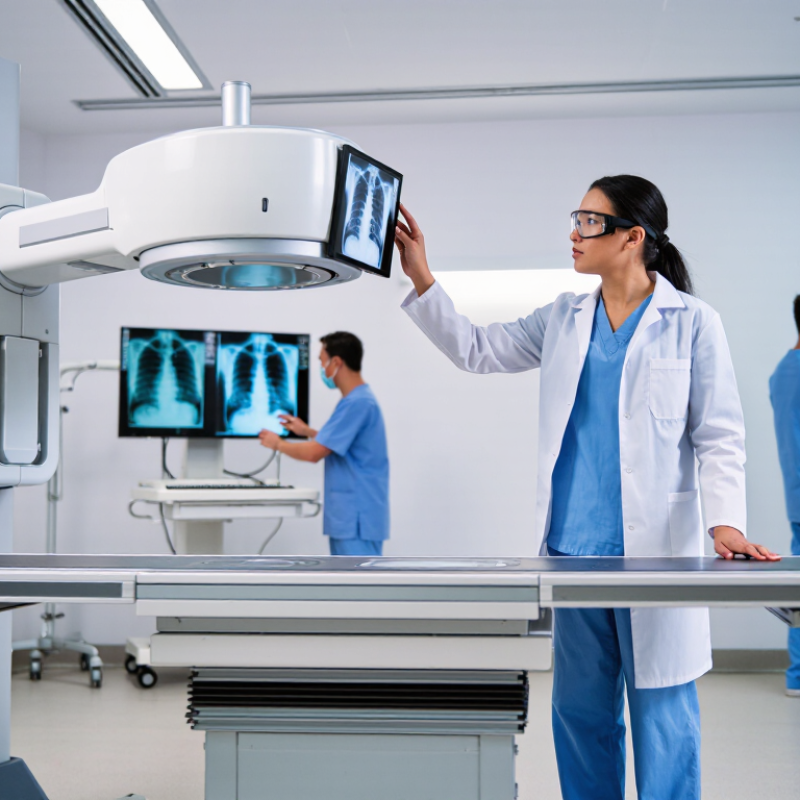
What Lead Glasses Are and How They Protect Against X-Rays
Lead glasses are eyewear made with lenses containing lead oxide. This material helps reduce the amount of X-ray radiation reaching the eyes. The glass does not make radiation disappear; it absorbs and attenuates some of it. Protection depends on the lens thickness and its stated lead equivalence. Check the product specifications rather than judging by lens darkness or weight.
During imaging work, scattered radiation can reach a worker from nearby surfaces and equipment. Lead glasses are designed to help shield the eye area, including the delicate lens of the eye. That matters. A close, stable fit and side coverage can reduce gaps around the face. Not magic. They do not replace room shielding, distance, or other required protective measures.
Choose eyewear suited to the specific imaging environment, and have its protection level checked by a qualified radiation safety professional. Keep lenses clean, and inspect frames for cracks or loose hinges. Scratches may blur the image, making careful work harder. There is no perfect pair for every setup, and fit can be surprisingly easy to overlook. Good protection depends on both suitable glasses and consistent use.
Key Features of Lead Glasses Made in China
Key Features of Lead Glasses Made in China
Lead glasses made in China are available with different lens shapes, frame styles, and stated lead-equivalence levels. The right choice depends on the X-ray environment and the wearer’s task. Check the product documentation for tested protection values rather than relying on appearance. Clear lenses matter, too. Look for even tint, minimal visual distortion, and smooth edges. A lens that looks clear under showroom lights may feel different during a full shift.
Fit deserves careful attention. Frames should sit securely without pressing the nose or slipping when the wearer looks down. Side coverage can help reduce exposure from oblique angles, but glasses do not replace room shielding or established safety procedures. Ask for test records and confirm that the stated specifications apply to the exact model and production batch. Small variations can occur. Heavier lenses may also cause fatigue, a detail that is easy to miss when comparing specifications alone.
Tips: Try the glasses with any usual eyewear, and check comfort after several minutes. Compare the documentation, not just the price. If details are unclear, ask the supplier for clarification before ordering.
How to Compare Lead Glasses for X-Ray Protection
When comparing lead glasses for X-ray protection, look beyond the frame and advertised lead equivalence. Ask for test data showing the stated protection level and the conditions used, including the X-ray energy range. Lead equivalence can vary with beam quality, so a number without context is hard to judge. Numbers matter. Check whether the documentation comes from a qualified testing process, and confirm that it applies to the complete lens design, not just a sample material. Weight matters, too. Heavy lenses can become uncomfortable during a long procedure, even when their protective rating looks suitable.
Next, assess vision and coverage together. Look through the lenses at a monitor and a nearby instrument; haze, distortion, or reflections can cause strain. Not just tint. Compare lens size, side protection, bridge fit, and how securely the glasses stay in place when you turn your head. If possible, try them on before choosing. A precise fit is easy to overlook in a product specification. Check cleaning guidance and coating durability, since frequent wiping may affect the surface over time. I would also review the manufacturer’s documentation carefully; sometimes the details are less clear than they should be. Protective glasses are one part of radiation safety, not a substitute for appropriate shielding and workplace procedures.
Choosing the Right Lead Glasses for Different Medical Settings
Choosing lead glasses for X-ray protection starts with the room and the work. In general radiography, staff usually remain behind a shield, so lightweight glasses may suit occasional time near the patient. In fluoroscopy suites, clinicians often stand close to the table while scattered radiation rises toward the eyes. Wraparound lenses or side shields can help reduce exposure from oblique angles. One detail is easy to miss: a comfortable frame is more likely to stay on during a long procedure.
For interventional cardiology and vascular work, check the glasses’ lead equivalence, fit, and compatibility with prescription lenses. A small gap above the cheek or beside the temple can leave skin exposed. Heavier glasses are not automatically better if they slip or cause pressure during a long case.
ICRP Publication 118 recommends an occupational eye-lens dose limit of 20 mSv per year averaged over five years, with no single year exceeding 50 mSv. This is a limit, not a target.
Match protection to measured workplace exposure, and use an eye dosimeter when local radiation-safety staff advise it. Glasses complement ceiling-suspended shields, table curtains, and good positioning; they do not replace them. Teams can review fit under procedure-room lighting before a case. Small adjustments matter. The choice may still involve compromise between coverage and comfort, so periodic review is sensible.
Care, Inspection, and Replacement of Lead Glasses
China Best Lead Glasses for X Ray Protection
Care, Inspection, and Replacement of Lead Glasses
Lead glass needs gentle, consistent care. Use a soft, lint-free cloth and a cleaner approved by the equipment supplier. Avoid abrasive pads, sharp tools, and unapproved solvents; they can scratch or cloud the surface. Small details matter. Check the frame and seals during routine room cleaning, and keep the glass dry.
Inspect the viewing area under good light. Look for cracks, chips, deep scratches, cloudy patches, loose fittings, or changes in image clarity. Record what you find, including the date and location. A visual check is useful, but it cannot confirm shielding performance by itself. Do not guess. Ask the facility’s radiation safety professional or a qualified service provider to assess concerns and follow the manufacturer’s inspection guidance.
Replace lead glass when damage, poor visibility, or an assessment indicates it no longer meets the room’s needs. Age alone is not always a reliable reason to replace it, yet waiting for an obvious crack can be unwise. Handle the panel carefully; it is heavy and can be damaged during removal. Keep inspection notes and service records together. Even a careful checklist can miss something, so report changes promptly and seek a qualified review when uncertain.
China Best Lead Glasses for X Ray Protection -Care, Inspection, and Replacement of Lead Glasses
X-ray photon wavelength decreases as photon energy increases. The values below are calculated using λ = hc/E; they illustrate the relationship and are not measurements of a specific X-ray unit.
For protection, check the glass’s documented lead equivalence and inspect it regularly for cracks, chips, clouding, or other damage. Follow the manufacturer’s care and inspection instructions, and replace damaged glass or glass that no longer meets the required protection criteria.