

Toll Free: 1800 3000 6222
Telephone: +91 141 222 3221
Fax: +91 141 222 1926, 222 2259
CIN: U29130WB1946PLC013643
Founded in 1946, National Engineering Industries Ltd (NEI) is India’s leading bearings manufacturer and exporter, renowned for excellence in quality and delivery.

Choosing a Shipping Tarp is not just a matter of picking the thickest fabric. Global buyers need to match tarp construction to cargo, route, weather, and handling conditions. A cover used on a short, dry journey may not suit weeks of sun, rain, and repeated loading. Small details matter. Reinforced hems, well-spaced grommets, secure tie-down points, and reliable seams can make daily handling easier.
This guide compares ten shipping tarps with practical buying needs in mind. It considers material, weight, dimensions, water resistance, UV protection, and ease of securing the cover. Product specifications can vary by supplier, so check measurements, fabric details, and care instructions before ordering. Ask for current product data when a load has unusual dimensions or exposure. That step may feel slow, but it can prevent a poor fit.
No single tarp wins every route. A heavier option may offer added durability, yet be harder to fold and handle. A lighter tarp can be convenient, but may need more careful use in demanding conditions. Those trade-offs are easy to overlook. The picks below are intended as a starting point, not a substitute for checking your cargo and route. Compare the details, consider how the tarp will be secured, and choose the option that fits the job.
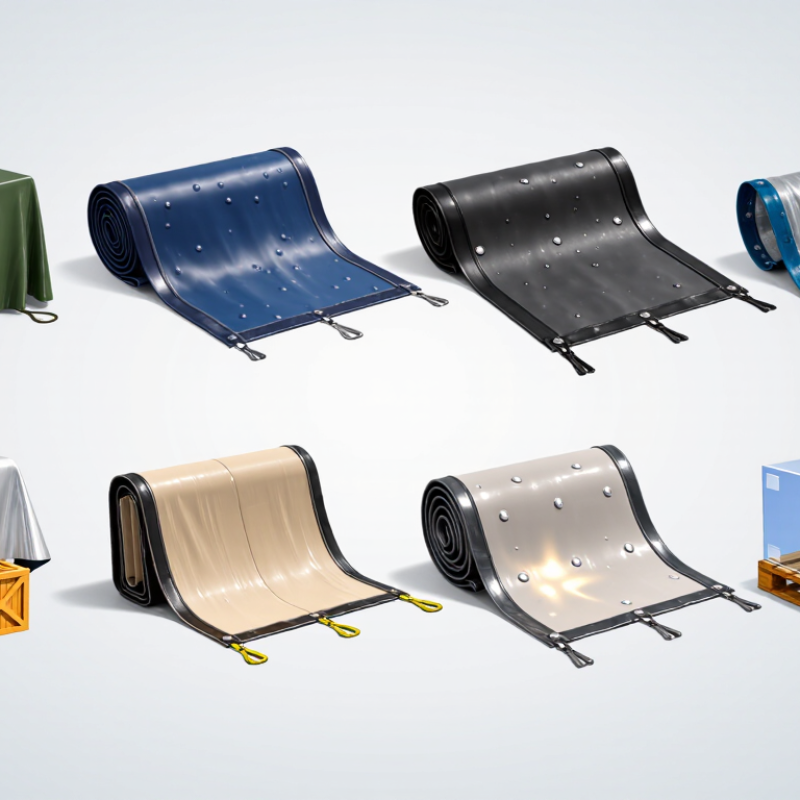
Shipping tarps are protective covers used for exposed cargo on trucks, railcars, and open-deck vessels. They help shield goods from rain, sea spray, dust, sunlight, and rubbing during handling. Their role is practical, not cosmetic: a well-fitted cover can reduce moisture exposure and surface damage. It cannot fix poor packing or replace suitable cargo packaging. A loose edge can flap hard in crosswinds. Small gaps matter.
The scale of ocean freight makes this protection relevant. UNCTAD’s Review of Maritime Transport 2024 reports that shipping carries over 80% of world trade by volume. For global buyers, tarp choice should match the route, cargo shape, and expected exposure. Check fabric weight, tear resistance, UV protection, seams, and tie-down points. A tarp that works for a short inland trip may not suit repeated port transfers or prolonged outdoor storage. Conditions vary, and specifications alone do not guarantee performance.
Tips:
Measure the load, including protruding corners, before choosing a cover. Secure it evenly, then inspect the edges after the first leg. Ask suppliers for test data on waterproofing and tensile strength, not just “heavy-duty” claims. Record any wear or water ingress; those details can improve the next order. Some cargo still needs ventilation, so an airtight cover is not always better.

Top 10 Best Shipping Tarps for Global Buyers
Comparing Tarp Materials, Coatings, Sizes, and Construction
A reliable shipping tarp starts with the cargo and route, not a ranking. Woven polyethylene is light and water-resistant, while coated canvas can feel tougher but may weigh more. PVC-coated fabric often handles abrasion well. Still, coating thickness alone does not prove long-term durability. Check fabric weight, seam strength, and stated UV resistance together.
Size matters at the corners. Measure the load, then allow enough fabric to cover its sides and secure it without excessive tension. A tarp stretched tight over a sharp edge may tear, even if its fabric seems heavy. Reinforced hems, rust-resistant grommets, and closely spaced tie points help distribute strain. Inspect how seams are joined; neat stitching is not the whole story. Ask for test details when specifications are unclear, and remember that real handling can expose weaknesses a product sheet misses.
Tips: Match material to weather and handling conditions. Check folded dimensions and weight before ordering. Request a sample when possible, then test fit and fastening on a representative load. One detail is easy to overlook: tie-down placement.
Typical Basis-Weight Ranges by Material and Construction
The bars show indicative common product ranges in grams per square meter (GSM), not fixed industry standards. Specifications vary by supplier and product; compare coating, weave, seams, UV resistance, and intended cargo protection as well as weight.
Top 10 Best Shipping Tarps for Global Buyers
Top 10 Shipping Tarps for Different Cargo and Transport Needs
Choosing a shipping tarp starts with the cargo, not the color. For palletized goods on open trucks, coated woven-poly tarps offer practical rain and dust protection. Heavy machinery and steel edges need tougher, abrasion-resistant fabric, plus reinforced corners. Lumber loads benefit from wide coverage and secure tie-down points. For crops or ventilated goods, mesh tarps allow airflow while reducing wind exposure. No single tarp suits every route. That is easy to forget when buying in bulk.
UNCTAD’s Review of Maritime Transport 2024 reports that seaborne trade grew 2.4% in 2023, reaching about 12.3 billion tons. That scale makes dependable cargo covering important across ports, road links, and storage yards. Containerized shipments may need compact covers for temporary handling; flatbed loads often need larger tarps with room for secure fastening. Thermal covers can help limit temperature swings, but they do not replace controlled-temperature equipment for sensitive cargo. Check fabric weight, coating, seam quality, and UV resistance against expected handling and weather.
Tips: Measure the load, including overhang. Check tie-down points before departure. A tarp is not cargo restraint; use suitable securement separately. Small detail, big difference. Also ask suppliers for test data—not just a “heavy-duty” label. That label alone can be vague.
A shipping tarp should match the weather it will meet, not just the forecast at departure. For humid coastal routes, choose a water-resistant tarp with sealed seams and sturdy edge reinforcement. Salt spray and repeated wetting can wear fabric faster than expected. Check that water cannot pool in low spots; even strong material may sag under standing water.
For sunny, dry routes, UV-resistant fabric helps limit fading and brittleness. Cross-desert journeys also bring dust and abrasion, so inspect the tarp’s underside and corners for rough contact with cargo. Heavy freight may need thicker fabric, but weight alone is not a useful measure of quality. Look at the weave, hem, grommet spacing, and attachment points. Small details matter.
Route changes can complicate the choice. A tarp that works on a short, sheltered trip may flap or chafe during long highway travel. Leave enough coverage to protect exposed edges, but avoid loose folds that catch wind. Secure the load evenly, following the carrier’s equipment guidance. A tarp is not a substitute for proper cargo securement. I would also check dimensions twice; this is easy to overlook, and an undersized tarp can leave one corner exposed. Inspect it before departure and after rough weather, especially around seams and tie-down points.
| Rank | Tarp Type | Typical Construction and Weight | Weather Protection | Best Freight and Route Conditions | Main Trade-Off |
|---|---|---|---|---|---|
| 1 | PVC-Coated Polyester Tarp | Polyester fabric with PVC coating; commonly about 650–900 g/m². | Waterproof when seams are properly welded or sealed; generally strong abrasion and tear resistance. | Long-haul road, port, and intermodal moves carrying machinery, palletized goods, or other exposed freight. | Heavier and bulkier to handle than lightweight polyethylene tarps; performance varies by fabric and seam quality. |
| 2 | Reinforced Polyethylene (PE) Tarp | Woven PE scrim laminated with PE film; commonly about 150–250 g/m². | Water-resistant to waterproof depending on lamination, edge construction, and seam condition; UV resistance depends on stabilizers. | General-purpose freight, temporary outdoor cover, and shorter or moderate-duration transport. | Can wear or tear sooner than heavier coated-fabric options under repeated abrasion or high wind. |
| 3 | Heavy-Duty Lumber Tarp | Coated polyester or laminated woven fabric, often about 600–900 g/m², with drop flaps on some designs. | Designed to shed rain and road spray when correctly positioned and secured; UV and abrasion resistance depend on specification. | Loads of lumber or other long, irregular freight on open-deck routes where side and end coverage is needed. | Large flaps and high fabric weight make it harder to handle; correct sizing and securement are essential. |
| 4 | Steel Tarp | Heavy coated polyester or laminated fabric, typically around 600–900 g/m²; may include reinforced corners or flap sections. | Provides a weather cover for exposed metal loads; puncture resistance depends on reinforcement and contact points. | Flatbed freight such as steel products, pipes, or other dense loads with edges that require careful padding. | Sharp corners can cut or abrade the cover; use edge protection and follow proper load-securement practices. |
| 5 | Machinery Tarp | Coated polyester or heavy laminated fabric, commonly about 500–900 g/m²; custom shapes may include reinforced tie-down areas. | Good rain and dust protection when fitted closely; openings and seams can still allow water entry. | Irregular equipment, agricultural machinery, and industrial freight traveling on open trailers or exposed routes. | Custom sizing and securement take time; a poorly fitted cover can flap, abrade, or collect water. |
| 6 | Laminated Woven Polypropylene (PP) Tarp | Woven PP fabric with a laminated surface; commonly about 120–250 g/m². | Repels rain when the laminate and seams remain intact; UV durability depends on treatment and exposure duration. | Light-to-medium freight, temporary storage, and routes where a relatively low-cost cover is needed. | Laminate damage, seam leakage, or prolonged sun exposure can reduce service life. |
| 7 | Breathable Canvas Tarp | Cotton or cotton-blend canvas, often about 300–500 g/m²; some versions have a water-repellent treatment. | Breathes more than coated plastics; treated versions can resist light rain but should not be assumed waterproof. | Freight that benefits from reduced condensation, or dry-weather transport where airflow matters. | Can absorb water and become heavy; less suitable for prolonged heavy rain unless an appropriate waterproof system is used. |
| 8 | Cargo Mesh Tarp | Knitted or woven synthetic mesh, commonly about 180–350 g/m²; openness varies by design. | Allows airflow and may help contain loose material, but does not provide a waterproof barrier. | Loads such as aggregate, debris, or other freight requiring airflow or containment rather than rain protection. | Unsuitable as the sole cover for goods vulnerable to rain, dust, or moisture. |
| 9 | Vented Freight Tarp | Coated or laminated synthetic fabric with designed vents or breathable panels; weight varies by construction. | Offers partial weather protection while allowing some air exchange; vent placement and design affect water exposure. | Freight that needs airflow during transport, provided the cargo can tolerate limited exposure to humidity or spray. | Ventilation reduces moisture buildup but can also admit wind-driven rain or dust; check suitability for the cargo. |
| 10 | Insulated Cargo Tarp | Multi-layer construction with an insulating core and protective outer faces; weight and insulation performance vary widely. | Can slow heat transfer and help moderate temperature swings; it is not a substitute for validated temperature-controlled transport. | Short-duration protection for temperature-sensitive freight during loading, unloading, or transit between controlled spaces. | Effectiveness depends on fit, exposure time, ambient conditions, and the full transport system; verify performance for the cargo. |
Selection note: Fabric weights and performance descriptions are typical ranges, not universal specifications. Before purchase, confirm dimensions, seam construction, UV rating, temperature limits, expected exposure time, and compatibility with the cargo and local load-securement rules.
For global buyers, tarp quality should be checked before comparing prices. Ask suppliers for the fabric weight, base-cloth construction, coating type, and test results for tensile strength, tear resistance, and UV exposure. Confirm that the tested material matches the production order; a report for a different fabric tells you little. Inspect a sample’s hems, reinforced corners, eyelet spacing, and stitching. Small defects travel far. A certificate can still miss a weak seam, so consider a pre-shipment inspection for larger orders. UNCTAD’s Review of Maritime Transport 2024 reports that over 80% of world trade by volume moves by sea, making packaging durability and shipment planning practical concerns, not minor details.
Compare shipping quotes on the same basis. Check whether they include inland transport, export handling, insurance, and destination charges, and state the agreed Incoterms clearly. A low ocean-freight quote may leave substantial local fees unpaid. Ask for the cargo’s packed dimensions and gross weight; bulky, lightweight tarps may be charged by volume. Before ordering, verify the correct tariff classification and current duties with a customs broker or the destination country’s customs authority. Requirements differ by market and material. Prepare consistent commercial invoices, packing lists, and origin documents, and confirm any applicable labeling or product declarations. I would not assume a supplier’s paperwork is automatically accepted at the border. Details matter here.
Copyright © 2023 NEI Ltd. All rights reserved.
Registered Office : 9/1, R. N. Mukherjee Road, Kolkata – 700 001. In case of any queries or grievances, please contact Mr.Tarun Kumar Kabra, Company Secretary.
E-mail: sale@kinpart.com Privacy Policy Cookie Policy