

Toll Free: 1800 3000 6222
Telephone: +91 141 222 3221
Fax: +91 141 222 1926, 222 2259
CIN: U29130WB1946PLC013643
Founded in 1946, National Engineering Industries Ltd (NEI) is India’s leading bearings manufacturer and exporter, renowned for excellence in quality and delivery.

Choosing the best Dado Blade Set for global buyers requires more than comparing prices or counting teeth. Woodworking demand is expanding with furniture manufacturing, renovation, and small-scale production. Reports from Grand View Research and Freedonia identify these sectors as important drivers for cutting-tool consumption. However, market growth does not guarantee consistent blade quality.
A reliable Dado Blade Set should match the buyer’s saw, arbor diameter, maximum speed, cutting width, and material. Carbide grade matters. Tooth geometry matters more than many product pages explain. A clean groove should have a flat bottom, limited tear-out, and stable width across repeated cuts. Small details matter. Think of a 19-millimeter groove cut into maple: vibration, poor spacers, or uneven teeth can quickly become visible defects.
Safety and documentation also deserve close attention. EN 847-1 and relevant ANSI requirements provide useful reference points for woodworking-tool design and use. ISO 9001 certification may support manufacturing consistency, but it does not automatically prove cutting performance. Buyers should request inspection records, carbide specifications, balancing information, packaging details, and sample-test results. Supplier audits and independent verification add confidence.
No single set wins everywhere. That assumption can fail. European workshops may prioritize compliance documentation, while North American users may focus on arbor compatibility and dado width. Asian production buyers may value repeatability and volume pricing. This guide compares Chinese manufacturers through performance, quality control, communication, after-sales support, and total landed cost. Some evidence may remain incomplete, and that limitation should be stated clearly. A careful purchase begins with measurable requirements, not attractive photographs.
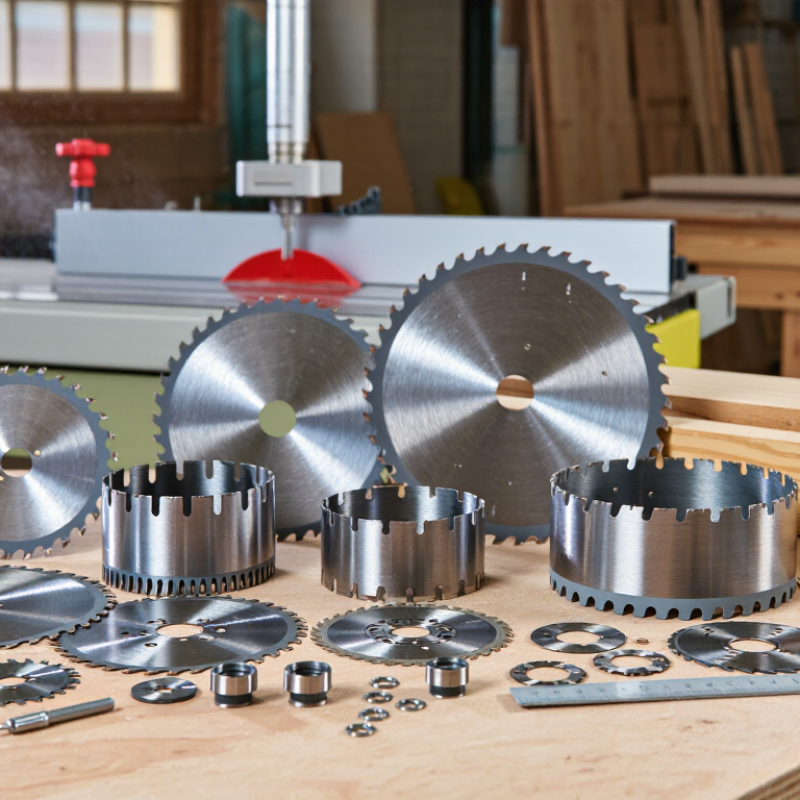
A dado blade set cuts wide, flat-bottomed grooves in wood. Unlike a standard blade, it removes more material in one pass. The set usually includes two outer blades and several inner chippers. Outer blades create the groove edges. Chippers clear the center section.
Short answer: it builds width.
When installed on a table saw, the blades and chippers stack around the arbor. Spacers may adjust the cutting width, depending on the set design. A narrow stack can cut a small groove for a shelf. A wider stack can form a joint for cabinet parts.
The final width must match the mating board, not just the label. Wood movement and material thickness can change the result. A dry fit helps.
Global buyers should check arbor diameter, maximum stack width, and saw compatibility before purchasing. Some saws do not accept Dado Sets. Local regulations may also limit their use.
In workshop testing, clean alignment produced flatter grooves and less burning. I have seen beginners overtighten the stack, causing difficult removal later. That mistake is easy to repeat.
Use the manufacturer’s instructions, proper eye protection, and a stable push method. Test on scrap wood first. It saves material.

For global buyers, compatibility should come before tooth count. A reliable dado set must match the saw’s arbor diameter, maximum dado width, and regional power-tool specifications. Metric and imperial measurements can create expensive mistakes. Fit matters. The set should include clear width markings, sturdy spacers, and a practical storage case.
According to CPSC NEISS-based estimates, table saws were associated with roughly 30,000 emergency-department injuries in the United States during 2021. That figure makes blade stability more than a purchasing detail.
Flat-bottom cutting also depends on controlled runout, balanced chippers, and accurately ground teeth. Buyers should check whether the set follows relevant requirements such as EN 847-1 for cutting tools used with woodworking machinery. Carbide quality matters too, especially when users cut plywood, hardwood, or laminated panels repeatedly.
A professional inspection should examine tooth brazing, spacer flatness, arbor fit, and packaging damage. Small details matter. Product instructions should show maximum speed, compatible machines, cutting width, and safe installation steps in understandable language. Translation quality is often overlooked.
The best China-made set is not automatically the cheapest one. Global buyers also need replacement spacers, consistent batch quality, traceable inspection records, and dependable export packaging. I would not treat a glossy case as proof of quality.
A missing tolerance sheet can be more concerning than ordinary scratches. Buyers should request sample measurements before placing large orders, although even that test cannot guarantee every production batch. That limitation deserves attention.
What Is the Best China Dado Blade Set for Global Buyers?
Material strongly influences how a dado blade set behaves in real woodworking. Carbide-tipped teeth usually hold an edge longer than plain steel teeth. They also handle plywood glue and hardwood more reliably. However, carbide quality varies between manufacturers. A thick, accurately brazed tip is more valuable than a low price alone. The steel body should remain rigid under pressure. Thin bodies may flex and leave uneven grooves.
Performance depends on more than tooth material. A useful set should produce a flat-bottom cut with limited vibration. Chippers need balanced spacing and clean cutting edges. Adjustable washers can help reach the required groove width, but poor tolerances create visible steps. I check arbor fit, tooth alignment, kerf markings, and packaging protection before judging a set. Small details matter. A loose arbor fit is unacceptable.
Global buyers should compare cutting tests, not only catalog claims. Test the set on plywood, softwood, and dense hardwood. Observe burning, tear-out, noise, and groove accuracy. A dependable set should maintain consistent width across repeated cuts. Still, no dado blade set performs perfectly in every saw. Saw power, fence alignment, feed rate, and dust removal can change results. I have found that buyers sometimes overvalue maximum cutting depth. In practice, stability and repeatability often matter more. Product documentation should clearly state materials, dimensions, recommended speed, and inspection standards. That information makes supplier comparisons more reliable.
| Blade Construction | Typical Material | Common Diameter Range | Typical Kerf Range | Typical Maximum Speed | Cutting Performance | Expected Service Life | Best Application | Main Trade-Off |
|---|---|---|---|---|---|---|---|---|
| High-speed steel (HSS) stacked set | HSS blades, usually with hardened steel bodies | 150–210 mm | 6–20 mm, depending on blade combination | Approximately 4,000–7,000 rpm | Good for softwood and occasional hardwood work | Moderate; edges can dull faster than carbide | Budget-conscious woodworking, repairs, and light-duty joinery | Lower wear resistance and generally rougher cuts than carbide-tipped designs |
| Carbide-tipped stacked set | Hardened steel bodies with tungsten-carbide teeth | 150–210 mm | 6–32 mm with chippers and shims | Approximately 4,000–6,000 rpm | Clean, consistent dadoes in plywood, MDF, softwood, and hardwood | High when used within the rated speed and feed limits | General-purpose cabinetmaking and professional woodworking | Higher purchase cost; carbide teeth can chip if they contact metal or are mishandled |
| Premium micro-grain carbide set | Fine-grain tungsten carbide with precision-ground steel bodies | 160–210 mm | 6–32 mm with fine adjustment shims | Approximately 4,000–6,000 rpm | Very clean bottoms and sidewalls with reduced vibration | Very high under controlled production use | High-volume joinery, furniture production, and export-quality woodworking | Highest cost and greater sensitivity to impact, incorrect assembly, or excessive feed pressure |
| Solid carbide dado set | Solid tungsten carbide construction | Typically 100–160 mm | Usually limited; often supplied for specific groove sizes | Model-specific; commonly about 4,000–8,000 rpm | Excellent dimensional stability and wear resistance | Very high, but vulnerable to shock and incorrect clamping | Specialized, repeat-size grooves and industrial routing applications | Limited width flexibility and a higher risk of fracture under impact |
| Anti-vibration carbide set | Carbide teeth with laser-cut or engineered expansion slots in the steel body | 160–210 mm | 6–32 mm with spacers and chippers | Approximately 3,500–5,500 rpm | Smooth operation and improved cut consistency on large workpieces | High, especially during extended cutting cycles | Production workshops where noise, vibration, and repeatability matter | Usually more expensive and may require careful cleaning of slots and spacers |
For global buyers, the best China dado blade set is not simply the widest or cheapest option. Safety begins with documented compliance. Check whether the manufacturer identifies applicable standards, such as EN 847-1 where relevant, and provides test records or conformity documents. Requirements may differ between the European Union, United States, and other markets. Confirm local rules before importing.
Compatibility deserves equal attention. Measure the saw arbor diameter, maximum blade diameter, available dado width, and permitted RPM. Compare these figures with the set’s technical sheet, not only its product photos. The washer, chippers, and outer blades should fit securely without forcing the arbor nut. Check the saw manual for dado-set approval. Some saws cannot safely use stacked dado blades, even when the arbor appears suitable. That detail is easy to miss.
Tips: Ask for material traceability, balance-test results, tooth geometry, and inspection procedures. Verify that the set includes clear spacing instructions and storage protection. Use the correct guard or compatible safety accessory required by your machine. A test cut in scrap wood can reveal vibration, uneven shoulders, or excessive heat. Stop immediately if the stack wobbles. Packaging may look professional, but packaging alone proves little. I would also request current documents, because old certificates and revised blade designs do not always match.
Before purchasing a dado blade set, confirm the saw arbor diameter, arbor length, maximum permitted stack width, flange dimensions, and the manufacturer’s approved blade configuration. The chart shows common arbor bore sizes used in woodworking equipment: 5/8 inch equals 15.875 mm, 1 inch equals 25.4 mm, and 30 mm is widely used on metric-market machinery. Buyers should also verify compliance with applicable requirements such as EN 847-1, ANSI B7.1, and local machine-safety regulations. Never use a dado set on a saw that is not specifically designed or approved for dado cutting.
Global buyers should judge a China-made dado blade set by measurable performance, not factory claims. Grand View Research valued the global woodworking machinery market at approximately USD 4.9 billion in 2023. This growth increases supplier choices, but quality still varies. Request test data for flatness, tooth height, kerf accuracy, and arbor fit. A useful set should produce clean, consistent grooves in plywood and solid timber.
Check compatibility before discussing price. Confirm the arbor diameter, maximum rated speed, cutting width, and included chippers. The set should meet relevant requirements, such as EN 847-1 in Europe or ANSI O1.1 guidance in North America. Carbide tips need secure brazing and even spacing. Ask for inspection records, packaging photos, and a sample cut from the intended material. Small details matter.
Safety deserves more attention than it usually receives. A U.S. Consumer Product Safety Commission staff report estimated about 33,400 table-saw injuries annually during 2015–2017. Dado cutting can increase exposure to kickback and flying chips. Buyers should verify guard requirements, operating instructions, and local import documentation. Do not assume a higher tooth count guarantees better results. It may improve plywood edges, yet it can perform poorly in wet hardwood. My own selection rule is simple: test one batch first, measure the groove with calipers, and keep records. I would still question any supplier offering perfect results without material limits.
Copyright © 2023 NEI Ltd. All rights reserved.
Registered Office : 9/1, R. N. Mukherjee Road, Kolkata – 700 001. In case of any queries or grievances, please contact Mr.Tarun Kumar Kabra, Company Secretary.
E-mail: sale@kinpart.com Privacy Policy Cookie Policy