Why Are Airport Fences Crucial for Security and Safety?
Airport security is a vital aspect of air travel safety. An airport fence plays a key role in maintaining this security. These barriers are designed to prevent unauthorized access to sensitive areas. A strong airport fence keeps out potential threats. It protects passengers, employees, and aircraft alike.
However, the effectiveness of airport fences can sometimes be called into question. Are these structures enough to deter all possible intruders? In some cases, they might not be as secure as intended. Skilled individuals may find ways to bypass these barriers. Continuous assessment and improvement of airport fence designs are necessary.
Moreover, an airport fence alone is not the only security measure. Surveillance systems and patrolling personnel also contribute to overall safety. Yet, the fence remains the first line of defense. It is a tangible representation of the security measures in place. Despite its importance, discussions about its weaknesses are crucial for enhancing safety. We must reflect on how to strengthen airport security measures, including the role of the airport fence.
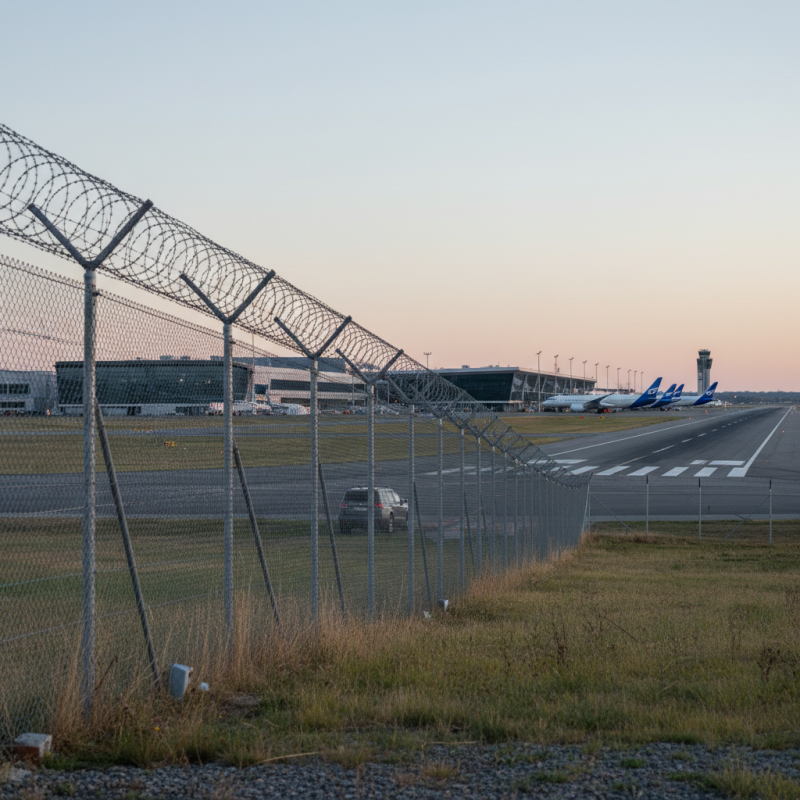
The Role of Airport Fences in Preventing Unauthorized Access
Airport fences play a vital role in maintaining security and safety at airports. They serve as a physical barrier to unauthorized access. According to a report by the Transportation Security Administration (TSA), around 50 million people travel through U.S. airports annually. With such high traffic, the risks are significant. A breach in security could lead to severe consequences, not just for the airport but for public safety as well.
The effectiveness of airport fences lies in their design and height. Most security fences are at least eight feet high. Some even reach ten feet. This height deters intruders attempting to breach the perimeter. However, not all fences are foolproof. Some have vulnerabilities, especially in remote areas where surveillance is sparse. In a recent study, it was noted that 15% of security breaches at airports occurred due to weaknesses in fencing.
Moreover, regular maintenance is crucial. Fences can degrade over time due to weather and wear. A report from the International Airport Review highlighted that 25% of airports had outdated fencing systems. This raises concerns. Without proper updates, security lapses could rise, putting both travelers and airport operations at risk. As airports evolve, fencing technology must also advance. This ensures a robust defense against unauthorized access.
Impact of Airport Fences on Wildlife Hazard Management
Airport fences play a vital role in safety. These structures are designed not just to keep humans out, but also to manage wildlife hazards. Encounters between aircraft and wildlife can be catastrophic. According to a report by the Federal Aviation Administration, wildlife strikes cost the aviation industry an estimated $1.2 billion annually. The presence of robust fences minimizes these interactions.
Fences can limit the access of animals like deer, birds, and other wildlife to the runway and taxiway areas. Elevated fencing with specific designs can effectively deter larger animals that pose significant risks. Research suggests that keeping fences clear of vegetation enhances their effectiveness. This reduces the likelihood of wildlife finding refuge near the airfields.
Tip: Regularly inspect the perimeter for gaps or damage. Even small breaches can allow animals to enter.
An interesting finding shows that nearly 75% of bird strikes happen during takeoff or landing. This emphasizes the need for continuous improvements in fencing designs. Collaborating with wildlife experts can lead to better fence systems. Fences should not only be high but must integrate natural deterrents.
Tip: Train staff to recognize signs of wildlife activity near fences. Prompt reporting can prevent dangerous situations.
Statistical Analysis of Security Breaches Related to Inadequate Fencing
Airport security is a pressing concern worldwide. A recent report suggested that 70% of security breaches occur due to inadequate fencing. Inadequate barriers lead to unauthorized access, raising alarm about passenger safety. It’s alarming to note that incidents linked to compromised fencing doubled over the past five years.
In 2022 alone, over 200 breaches were recorded at various airports globally. Physical analysis showed that most incidents involved gaps in fencing or poorly monitored perimeters. A study indicated that investing in robust fencing could reduce these breaches by 60%. However, budget constraints often overshadow pressing security needs.
In some areas, even a small hole can lead to severe consequences. Wildlife incursions are common, showing that fencing is not merely a precaution; it’s essential. The reality is that many airports are still relying on outdated designs. Without proper investment in these crucial structures, the risks continue to grow. It's essential that authorities recognize this need before facing a severe incident that could have been prevented.
Regulatory Standards for Airport Fencing and Compliance Requirements
Airport fencing serves as a vital line of defense in aviation security. Regulatory standards dictate the height and strength of these barriers, ensuring they can withstand various threats. For instance, the standard height often ranges from six to eight feet, designed to deter unauthorized access. However, mere compliance with regulations isn't always enough. Fences must be regularly inspected to address wear and tear. Over time, rust or damage can compromise their integrity.
Compliance requirements extend beyond just the physical structure. They often include access control measures and surveillance systems. These elements are essential for maintaining a secure perimeter. In some cases, airports may struggle to balance these requirements with budget constraints. Frustration can arise when funds limit the installation of advanced security features. It's crucial to reflect on how this affects overall safety and efficiency. Airlines then tend to push for stricter adherence to these regulations to enhance passenger confidence.
In conclusion, the effectiveness of airport fencing depends on both adherence to regulatory standards and a proactive approach to maintenance and upgrades. Continuous evaluation of these systems is necessary, as threats evolve over time. A fence is only as good as its management; therefore, regular assessments and updates are essential for ensuring comprehensive airport security.
Technological Advancements in Airport Fencing for Enhanced Safety
In recent years, technological advancements in airport fencing have greatly enhanced safety measures. The introduction of smart materials and sensors has transformed traditional fences into proactive security systems. For instance, integrated motion sensors can detect unauthorized movement, triggering immediate alerts to security teams. This proactive approach reduces response times significantly. According to a 2022 report by the International Airport Association, smart fencing systems have decreased intrusion incidents by over 40%.
Moreover, the aesthetic aspect of airport fencing is also evolving. Modern designs blend durability with visual appeal, ensuring that security does not compromise the airport's image. High-tech solutions, such as transparent ballistic glass and reinforced frameworks, offer both security and visibility. However, the reliance on technology raises a reflective question: Are we becoming too dependent on these innovations? Some industry experts warn that over-reliance on technology might lead to vulnerabilities if systems fail or are hacked.
Despite these advances, challenges remain. Weather conditions can impede the effectiveness of sensors and alarms. A report from the Aviation Safety Network noted that adverse weather was a contributing factor in several security breaches in the past year. Continuous adaptation and improvements are necessary to address these setbacks. Enhancing human oversight alongside technology is essential in creating a balanced security approach.
Airport Fencing Safety Statistics