Top 3/8 Tube Hairpin Benders for HVAC Manufacturers
HVAC manufacturers rely on consistent tube bends to keep coil assembly moving and reduce rework. A hairpin bender must form clean, repeatable U-shaped bends without flattening the tube or slowing operators during changeovers. For 3/8-inch copper tubing, small differences in tooling, setup, and feed control can affect fit at the next assembly station. Details matter.
This guide compares three 3/8" Tube Hairpin Bender options for manufacturers evaluating production needs. It considers practical factors such as bend consistency, compatible tube sizes, tooling adjustments, operating speed, machine footprint, and service support. A machine that performs well in a high-volume line may not suit a smaller shop with frequent product changes. There is no perfect choice.
When comparing models, buyers should check the machine’s stated capacity against their actual tube material, wall thickness, and bend requirements. Ask for a demonstration using representative tubing, and inspect the finished bends for wrinkles, flattening, and dimensional variation. A fast cycle time looks useful on paper, but setup delays or difficult adjustments can reduce real output. Those details are easy to miss.
The selections below are intended as a practical starting point, not a universal ranking. Manufacturers should confirm specifications with suppliers and consider operator training, maintenance access, and available floor space before purchasing. Even a capable bender may need careful setup. That part deserves attention.
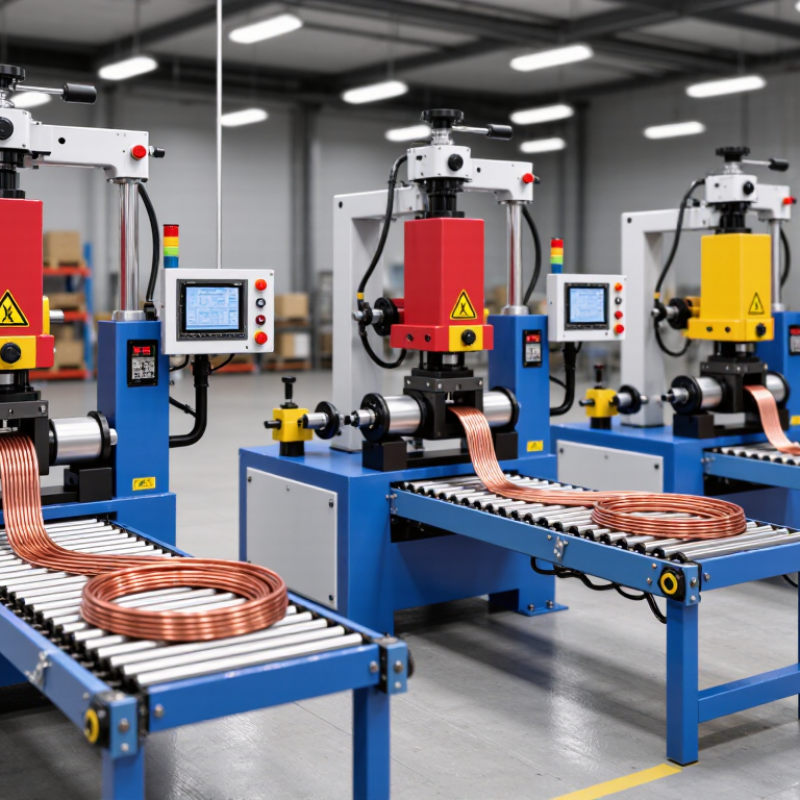
What 3/8-Inch Tube Hairpin Benders Do in HVAC Manufacturing
Top 3/8 Tube Hairpin Benders for HVAC Manufacturers
In HVAC manufacturing, a 3/8-inch tube hairpin bender forms straight tubing into a compact U-shaped return. Its parallel legs connect neighboring passes in an evaporator or condenser coil. This routing helps move refrigerant through the coil without requiring a separate elbow at every turn. Small details matter. A return that sits out of position can complicate coil assembly and brazing.
During production, an operator positions the tube, sets the bend location, and guides it around the forming radius. The bender and tooling must suit the tube material, wall thickness, and required radius. The 3/8-inch measurement refers to the tube’s outside diameter, not its bend radius. Proper tooling helps limit flattening and wrinkles, but setup and tube condition still affect results. Check early samples with a gauge, and inspect both legs for parallel spacing. A neat-looking bend is not enough.
Consistent hairpins can reduce fit-up adjustments when tubes enter coil plates or headers. Even slight springback may shift leg spacing on a busy line. That is easy to overlook. Document settings, then verify them after tooling or material changes. No bender removes every variation; timely checks can catch problems before many parts are made.
How Hairpin Bending Works for 3/8-Inch Tubing
A 3/8-inch hairpin bend starts with a straight tube, measured for the required leg length and centerline radius. The operator feeds the tube through the machine’s guide and positions it against a stop. A clamp holds the tube while a forming die sweeps it around a fixed radius, creating the U-shaped return used in many HVAC coils. Tooling varies by machine; some setups add support to limit flattening.
Small details matter. Copper temper, wall thickness, and bend radius affect how the tube behaves under load. Too little support can leave a visibly oval bend, while excessive pressure may mark or thin the outside wall. The tube can also spring back slightly after forming, so production settings should be checked against the actual material rather than copied blindly from a chart.
For a repeatable setup, make a sample hairpin and check its leg lengths, inside clearance, and bend shape with simple gauges. Look closely for wrinkles or cracks, especially on the outside of the curve. Then inspect the curve. If the dimensions drift, verify the stop, clamp position, and tube feed before changing the die. This step can feel tedious, but it helps separate setup problems from material variation.
Top Types of Hairpin Benders for HVAC Production
HVAC production lines commonly use three hairpin-bender types: manual, rotary or servo-controlled CNC, and automatic multi-head systems. Manual benders suit low-volume work and frequent design changes, but operators must control each bend and spacing.
A rotary CNC machine stores bend programs, helping repeat 3/8-inch tube patterns across shifts. Multi-head equipment forms several legs in one cycle. It can raise output, though changeovers and floor space need careful planning.
Capacity matters. UNEP’s Global Cooling Watch 2023 estimates installed cooling capacity could rise from 22 terawatts in 2022 to 67 terawatts by 2050. That projection points to sustained demand for cooling equipment, not a guaranteed order book for any one factory.
For a production engineer, the practical test is whether a bender holds centerline spacing and bend angles without flattening the copper tube. Check sample parts under actual tooling conditions. Small ovality can complicate coil assembly.
No machine type is perfect; setup time is easy to underestimate. Record scrap, cycle time, and changeover time before comparing equipment, then reassess after a real production run.
Key Factors for Comparing 3/8-Inch Hairpin Benders
A useful comparison begins with the finished hairpin, not the machine brochure. Check bend radius, leg spacing, and repeatability across the actual copper tube grade and wall thickness. A 3/8-inch outside diameter does not specify those details. Ask whether the bender holds dimensions after repeated cycles, and inspect for flattening, wrinkles, or tool marks. Small differences matter.
Changeover time matters on mixed production lines. Record setup minutes, cycle time, and rejected parts for each tube specification. Then repeat the test after a shift change; operator technique can affect results.
The International Energy Agency’s 2018 report, The Future of Cooling, projected global air-conditioner stock would grow from 1.6 billion units in 2016 to 5.6 billion by 2050. That forecast signals expanding cooling demand, not a benchmark for bender performance.
Review controls, guarding, maintenance access, and spare-part availability alongside output claims. Ask for a sustained run using your own tube, then compare measured hairpin dimensions with your drawing tolerances. One point is easy to miss: springback records are often inconsistent between operators. That makes a short trial useful, but not conclusive. Log the settings and inspect parts at regular intervals; otherwise, a good first sample may hide drift later.
How to Choose a Bender for Your HVAC Manufacturing Line
A 3/8-inch tube hairpin bender should match the actual demands of your HVAC line, not just its advertised cycle speed. Start with the tube material, wall thickness, bend radius, and required hairpin pitch. Then check whether the machine holds those dimensions across repeated cycles. A small pitch error can complicate coil assembly.
Production needs can shift. The International Energy Agency’s The Future of Heat Pumps report states that global heat-pump sales rose 11% in 2022, while European sales increased by about 40%. That growth is a useful signal to consider capacity and product flexibility, though it does not specify which bender a factory needs. Ask suppliers for cycle-time data using your tube and tooling, and check changeover time between coil designs.
Fit matters. Review tooling wear, operator access, guarding, and how quickly a setup can be verified. Request sample bends from the same tube lot used in production. Measure springback and inspect for flattening or wrinkles at the bend. A spreadsheet will not catch every setup issue; a short production trial can reveal surprises. Avoid choosing on speed alone. A fast machine that needs frequent adjustment may slow the line more than a modestly slower, repeatable unit.
Top 3/8 Tube Hairpin Benders for HVAC Manufacturers - How to Choose a Bender for Your HVAC Manufacturing Line
Compare three common machine configurations for producing 3/8-inch HVAC tube hairpins. These are configuration types, not specific models; verify capacity and cycle time against your tube material, wall thickness, tooling, and required part geometry.
| Configuration | Typical operating approach | Best production fit | Changeover and flexibility | Key checks before purchase |
| 1. Semi-automatic, single-head hairpin bender | The operator loads and positions the tube; the machine performs the bend cycle with operator involvement between parts. | Lower-volume production, pilot runs, or lines making several hairpin sizes. | Generally straightforward to adjust for different hairpin dimensions, subject to compatible tooling and setup limits. | Confirm operator loading requirements, adjustment range, guarding, and repeatability for the specified part. |
| 2. CNC single-head hairpin bender | Programmed controls manage the bending sequence; tube feeding and unloading may be manual, assisted, or automated depending on the machine. | Repeat production where consistent bend geometry and recipe-based job changes are important. | Programs can support repeatable setups; physical tooling may still need to be changed or adjusted for a new part. | Review control functions, program storage, feed method, setup time, and how part dimensions are verified. |
| 3. Automated or multi-station hairpin system | Integrated feeding, bending, and part handling can reduce manual steps; the number of stations and degree of automation vary by system. | Higher-volume lines with stable part specifications and a need to connect bending with upstream or downstream operations. | Can be efficient for repeat jobs; product-mix changes may require additional tooling, setup, or automation adjustments. | Assess line integration, floor space, operator access, maintenance needs, and demonstrated output using your actual parts. |
Sizing and acceptance checklist: - A 3/8-inch outside diameter is 9.525 mm. Confirm the actual tube OD, material, and wall thickness with the tube specification.
- Provide the hairpin drawing, including overall width, leg length, bend radius, and dimensional tolerances.
- Ask for a production trial with your tube and tooling; compare accepted parts per hour, setup time, and scrap under defined conditions.
- Check that guarding, controls, and the proposed work area meet applicable workplace safety requirements.
Selection guide: Choose a semi-automatic machine for flexibility and lower output needs, a CNC single-head machine for repeatable programmed jobs, or an automated multi-station system when sustained volume and line integration justify the additional setup and investment.