

nbc logo (2)
Office address
National Engineering Industries Ltd.
Khatipura Road Jaipur – 302006 Rajasthan, India
Phone Number

Toll Free: 1800 3000 6222
Telephone: +91 141 222 3221
Fax: +91 141 222 1926, 222 2259
CIN: U29130WB1946PLC013643

2026 Top Used Communication Tester Buying Guide

A Used Communication Tester can help repair shops, laboratories, and field teams verify wireless devices without paying new-equipment prices. But a low listing price is only one part of the decision. The instrument must support the signals, frequency ranges, and test workflows your work actually requires. A cellular service shop, for example, may need different options from a team testing radio modules or wireless network equipment. Check the exact model configuration, not just the product family name.

Condition deserves equal attention. Ask for the unit’s serial number, included options, firmware details, and a clear list of accessories. Review recent calibration records, where available, and clarify what the seller’s calibration statement covers. Inspect photos for worn connectors, damaged screens, missing knobs, and signs of rough handling. Small details matter. A missing adapter can delay a job; an unsupported software option can limit the instrument’s usefulness. Confirm the return period, warranty terms, and whether technical support is available. Do not assume that a familiar brand guarantees a ready-to-use tester.

This guide compares practical checks for selecting, inspecting, and budgeting for pre-owned communication test equipment. It also explains where buyers should verify compatibility before committing. No checklist removes every doubt. And sometimes, the best choice is to wait. A careful purchase balances price with documented condition, suitable capabilities, and realistic support—not optimism about what a used instrument might do.
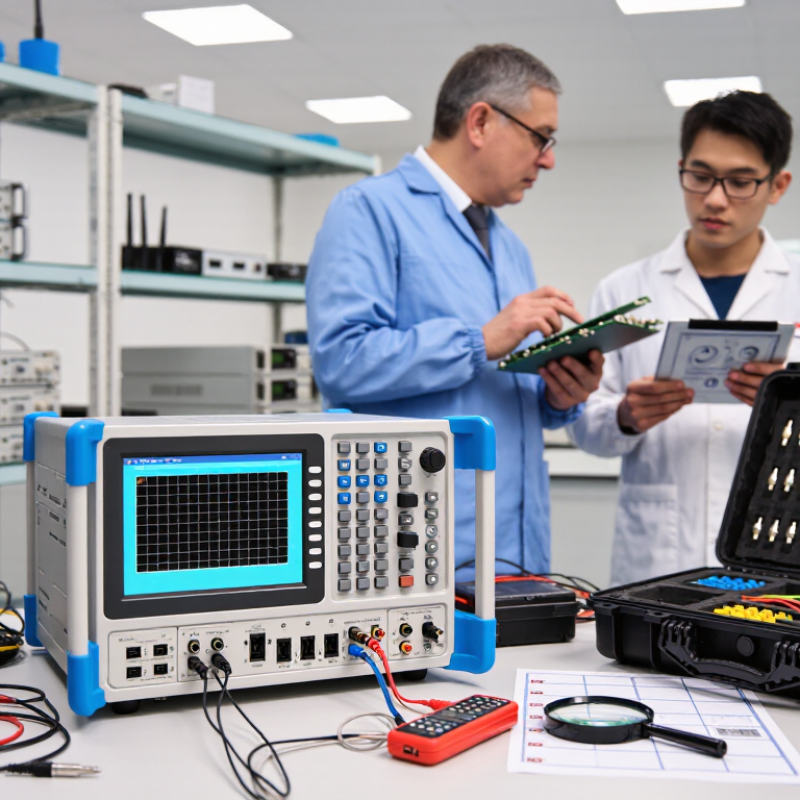
2026 Top Used Communication Tester Buying Guide

What Communication Testers Measure and Where They Are Used

A communication tester checks whether a radio or network link performs as designed. It can measure transmit power, frequency error, occupied bandwidth, modulation quality, receiver sensitivity, and unwanted emissions. For digital signals, error vector magnitude shows how far measured symbols drift from their ideal positions. Think of a constellation display: clean dots suggest stable modulation; scattered dots point to distortion or interference. Small errors matter.

Testers are used on production lines, in repair centers, and during field commissioning. A technician may connect a handheld unit to an antenna port, then check signal level and channel performance before a site goes live. In labs, vector signal analysis and protocol testing help engineers assess handovers, latency, and data throughput under repeatable conditions. Real networks are messier. A bench test cannot fully reproduce moving users, reflections from concrete walls, or neighboring signals.

The scale makes careful testing practical, not optional. ITU’s Facts and Figures 2024 estimated that 5.5 billion people used the internet, while 2.6 billion remained offline. Ericsson’s November 2024 Mobility Report forecast 6.3 billion 5G subscriptions by 2030. Those figures describe connectivity, not tester demand, but they show why dependable radio performance matters across devices and infrastructure. Field readings also need context: a strong signal alone does not guarantee a reliable connection.

How to Define Your Testing Requirements Before You Buy

2026 Top Used Communication Tester Buying Guide
How to Define Your Testing Requirements Before You Buy

Before comparing used communication testers, define the signals and tasks you actually need to measure. Note your frequency range, bandwidth, modulation types, and required standards. Include the devices under test, such as a handheld radio or a module on a workbench. A tester that covers the right frequency range may still lack a needed protocol or measurement function. Check whether your workflow requires spectrum analysis, transmitter measurements, receiver tests, or call-box functions.

Write down the connections and daily setup details, too. Record needed RF ports, cables, adapters, software options, and data-export formats. For used equipment, ask for the model configuration, included accessories, service history, and calibration records. A calibration certificate can help establish measurement history, but it does not replace a functional check. If possible, test a known signal and inspect the connectors, display, and controls. Requirements can look tidy on paper and still miss a small adapter that keeps testing on schedule.

Tips: Bring a one-page test checklist when inspecting equipment. Ask the seller to demonstrate your key measurement, not just power the unit on. Leave room in your budget for compatible cables or calibration. Revisit your assumptions; the tester with the most features may not be the best fit.

2026 Top Used Communication Tester Buying Guide: Define Your Frequency Requirements

Start by listing the signals you need to test, then check that the tester covers their frequency ranges. These reference band ceilings are based on published wireless standards; they are not recommended instrument limits.

Buying tip: Confirm frequency coverage, instantaneous analysis bandwidth, signal-generation needs, and required measurement options for your specific tests. Allow suitable frequency margin above the highest signal of interest.

Which Used Tester Types Suit Different Communication Networks

2026 Top Used Communication Tester Buying Guide

Which Used Tester Types Suit Different Communication Networks

Choosing a used communication tester starts with the network you need to maintain. For two-way radio systems, a service monitor can check transmit power, frequency error, modulation, and receiver sensitivity. These readings help diagnose a weak handheld or a noisy base station. For cellular networks, a signaling test set is more suitable. It can assess registration, call performance, and data behavior across supported technologies and frequency bands. Confirm that its software and options match your network; a capable unit may still lack a needed feature.

Fiber and Ethernet networks call for a different tool. Optical power meters and fiber testers help locate loss or breaks, while Ethernet testers check link speed, errors, and cable performance. For transport equipment, verify support for the interfaces and rates used at your site. Used units can have worn connectors or outdated firmware. I would not assume a clean screen means reliable results.

Tips: Inspect connector faces, battery condition, included accessories, and calibration records. Ask for a recent functional test using your intended setup. A small mismatch in frequency range or interface can make an otherwise sound tester less useful.

How to Inspect and Verify a Tester’s Condition and Performance

A used communication tester can look dependable while hiding worn connectors or unstable readings. Check the RF ports for bent center pins, loose fittings, and scratches around the threads. Inspect the display, keypad, fan openings, power cable, and battery compartment. Small details matter. A clean case is not proof. Ask for the latest calibration record, then confirm its date and scope match the functions you need. A sticker alone cannot verify performance.

Power the unit on and allow it to warm up as its manual recommends. Run its built-in self-test, but do not stop there. Connect a suitable known-good signal source and compare readings at several frequencies and power levels. Try the communication modes you expect to use, and watch for drifting values, error messages, or slow responses. Check supplied cables and adapters separately; a damaged lead can make a good tester appear faulty. Record the results and compare them with the stated specifications. If a reading is borderline, repeat it after reconnecting the cable. Bench checks have limits, and I would leave some uncertainty until a qualified service check confirms the instrument’s condition.

How to Compare Pricing, Support, and Ownership Costs

A low asking price can hide expensive gaps. Compare a used communication tester by its complete operating cost, not its sticker price. Request a written list of included cables, adapters, licenses, and accessories. Check the calibration date, battery condition, connector wear, and whether the unit passes a documented functional test. Small details matter. A missing cable can delay a lab setup, while overdue calibration may add cost before the first measurement.

Support and future coverage deserve equal weight. Ericsson’s June 2024 Mobility Report projects 5.6 billion 5G subscriptions by 2029, making relevant frequency and protocol support worth checking against your actual test plans. Ask whether software updates, repair services, and replacement parts remain available, and get expected turnaround times in writing. Deloitte’s 2023 Global CPO Survey identifies cost management as a leading procurement priority; apply that discipline by comparing purchase, calibration, repair, and downtime costs over your intended ownership period. A spreadsheet helps, but it can still miss the hassle of chasing a repair. Review the assumptions before deciding.

2026 Top Used Communication Tester Buying Guide - How to Compare Pricing, Support, and Ownership Costs

Compare equipment by application, included options, calibration status, and support—not purchase price alone. All figures below are indicative USD planning ranges for used equipment; actual prices vary by model, age, condition, options, and market availability.

Tester category Typical applications Indicative used price Support and verification to check Potential ownership costs Best suited to
RF spectrum analyzer RF signal, interference, and transmitter checks About $2,000–$20,000 Confirm frequency range, analysis bandwidth, installed options, self-test results, and availability of service documentation. Calibration; RF cables and adapters; possible option or repair costs. RF labs and field teams needing general signal analysis.
Vector network analyzer (VNA) Measuring component and antenna reflection and transmission characteristics About $3,000–$30,000 Check frequency coverage, port count, calibration methods, included calibration kit, and connector condition. Calibration kit or standards; precision cables; periodic calibration and repair. Users characterizing antennas, filters, cables, and RF components.
Handheld cable and antenna analyzer Field checks of antenna systems, feed lines, and return loss About $1,000–$8,000 Inspect battery health, display, test-port connector, measurement functions, and included field accessories. Battery replacement; calibration; adapters, protective case, and cables. Installation and maintenance crews working on site.
Optical communications tester Fiber link loss, optical power, and transport-network testing About $2,000–$25,000 Verify supported bit rates and interfaces, installed test modules, connector cleanliness, and software or license status. Optical module servicing; calibration; fiber inspection and cleaning supplies. Fiber technicians and teams maintaining optical links.
Wireless protocol or cellular test system Device, signaling, and cellular network testing About $10,000–$100,000+ Confirm supported technologies and bands, protocol options, software versions, license transferability, and vendor service availability. Software licenses and updates; specialized support; calibration and configuration work. R&D or conformance teams with specific protocol-testing requirements.

Buying checklist: Request a recent calibration certificate when measurement traceability matters, a written list of included options and accessories, documented functional-test results, return terms, and a repair or support contact. Compare the complete delivered cost—including shipping, taxes, calibration, missing accessories, software licenses, and any required repairs. Price bands are broad estimates, not live quotes or guaranteed market values.