

nbc logo (2)
Office address
National Engineering Industries Ltd.
Khatipura Road Jaipur – 302006 Rajasthan, India
Phone Number

Toll Free: 1800 3000 6222
Telephone: +91 141 222 3221
Fax: +91 141 222 1926, 222 2259
CIN: U29130WB1946PLC013643

2026 Best Air Monitoring Systems for Global Buyers?

Choosing among the 2026 best Air Monitoring systems requires more than comparing sensor counts or attractive dashboards. Global buyers need evidence from real installations, clear calibration records, and support that remains available after purchase. A roadside station, a factory boundary, and a school laboratory face different measurement demands. One device cannot serve every location well.

This guide examines systems for particulate matter, gases, weather conditions, and indoor pollutants. It considers measurement accuracy, response time, data access, power options, enclosure strength, and maintenance needs. Details matter. A dusty construction site may require frequent filter checks, while a remote mountain station may depend on solar power and cellular connectivity. Buyers should also confirm whether the supplier explains uncertainty, cross-sensitivity, and sensor drift in practical language.

Look beyond the brochure.

The strongest products usually combine tested hardware with dependable software and trained technical support. However, published performance figures may reflect controlled laboratory conditions rather than humid ports, cold warehouses, or crowded city streets. That gap deserves attention. Independent testing, traceable calibration, regional certifications, and transparent service terms can reveal more than a high specification number. Costs should include installation, replacement sensors, data storage, calibration, and staff training—not only the initial quotation.

This overview is designed for procurement teams, environmental consultants, facility managers, and public-sector buyers. It does not assume that the most expensive system is the most suitable. Instead, it compares practical strengths and limitations, helping readers match monitoring goals with local conditions. Some conclusions may change as sensor technologies improve. That is worth admitting. Reliable decisions begin with accurate measurements, realistic expectations, and a willingness to question incomplete data.
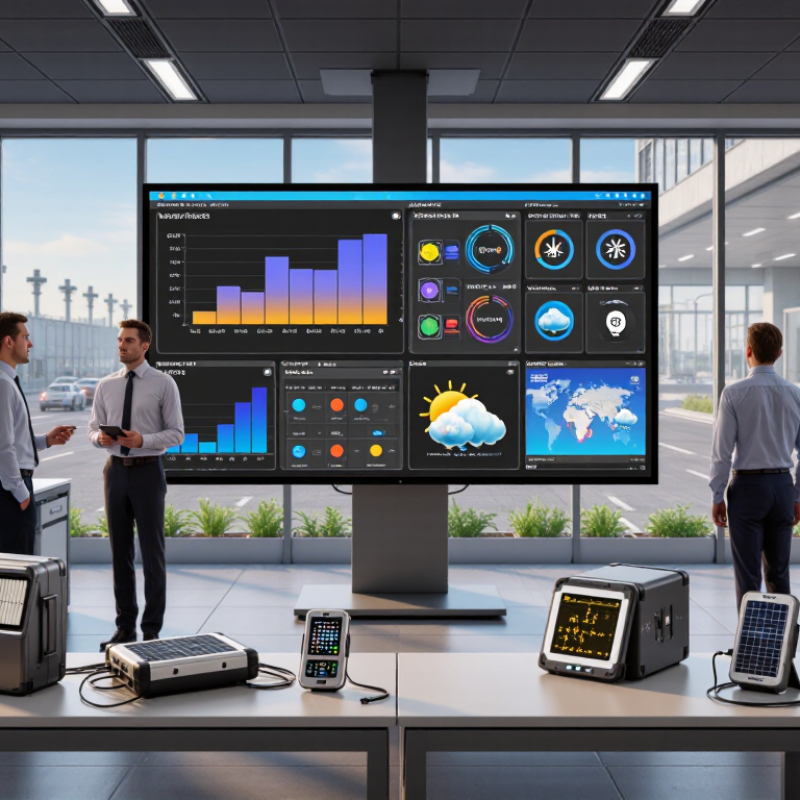
2026 Best Air Monitoring Systems for Global Buyers?

What Are Air Monitoring Systems and Why Do Global Buyers Need Them?

Air monitoring systems measure pollutants and environmental conditions in indoor or outdoor spaces. Typical instruments track particulate matter, carbon dioxide, nitrogen oxides, ozone, temperature, and humidity. They combine sensors, data storage, and reporting software. In practical inspections, a small sensor near a busy loading area can reveal pollution peaks that monthly sampling misses. Timing matters.

Global buyers need these systems because air quality changes sharply between regions, seasons, and building types. A factory beside a highway faces different risks from a school in a humid coastal city. Reliable measurements help safety teams identify exposure patterns and improve ventilation.

They also support environmental reporting, workplace decisions, and communication with local authorities. Requirements differ across countries, so buyers should check applicable standards before ordering equipment.

Accuracy depends on more than the sensor label. Proper placement, calibration, maintenance, and stable connectivity all influence the result. Dust, condensation, vibration, and extreme temperatures can distort readings. Data gaps are common. That assumption is risky. Buyers should request calibration records, detection ranges, response times, and evidence from comparable environments. Local technical support can reduce downtime when a sensor fails or software stops syncing. I have found that simple dashboards often work better than crowded interfaces, especially for teams monitoring several sites. Still, no system is perfect. Even strong equipment needs periodic verification against trusted reference methods.

Which Air Pollutants and Environmental Factors Can These Systems Measure?

Air monitoring systems can measure far more than visible dust. Their core sensors commonly track particulate matter, including PM1, PM2.5, and PM10. These particles can enter buildings through ventilation, traffic, construction, and cooking. Gas sensors may detect carbon monoxide, carbon dioxide, nitrogen dioxide, sulfur dioxide, ozone, and selected volatile organic compounds. Some advanced instruments also measure methane, hydrogen sulfide, or formaldehyde.

Environmental conditions affect every reading. Reliable systems usually record temperature, relative humidity, barometric pressure, airflow, and sometimes wind speed and direction. These factors help explain sudden changes in pollutant levels. For example, high humidity can make particles appear larger to optical sensors. Poor ventilation can raise carbon dioxide before occupants notice discomfort. Outdoor stations may also monitor noise, solar radiation, rainfall, and ultraviolet intensity.

Measurement quality deserves close attention. A low-cost sensor can provide useful trends, but it may not replace a reference-grade instrument. Cross-sensitivity, sensor aging, blocked inlets, and incorrect placement can distort results. Regular calibration and basic maintenance matter. In practical testing, a monitor near a kitchen may report short pollution peaks that disappear within minutes. That detail is valuable, but easy to misunderstand. Data should be checked against location, weather, operating schedules, and laboratory methods where decisions carry serious consequences. No system is perfect. Even experienced users need to question unusual readings.

How Do Different Air Monitoring Technologies Compare in 2026?

In 2026, air monitoring systems differ mainly by what they measure and how they handle changing conditions. Electrochemical sensors are compact and practical for carbon monoxide, nitrogen dioxide, and sulfur dioxide. They suit mobile inspections and smaller facilities. However, humidity and cross-sensitivity can distort readings. Regular calibration remains essential.

Optical particle counters use lasers to estimate dust and fine particles such as PM2.5. They provide quick responses near roads, workshops, and construction areas. Their results may shift when particle shape or moisture changes. Infrared absorption systems measure gases such as carbon dioxide with stronger selectivity. They usually perform better in stable indoor environments, but they need careful installation and maintenance. Photoionization detectors can identify many volatile organic compounds quickly. They are useful for screening, not always for compound-specific decisions.

During field evaluations, technicians should compare sensor data with a reference instrument. Record temperature, humidity, airflow, and maintenance time. Data logging is often overlooked. That is a mistake. A system with excellent laboratory accuracy may struggle in a dusty loading area. Global buyers should also check language support, replacement sensor availability, cybersecurity controls, and local service capacity. No technology is perfect. A lower-cost monitor may be reliable for trends but unsuitable for regulatory reporting. Even experienced teams can misread short spikes when sampling intervals are too long. Calibration records and transparent uncertainty statements make the results more trustworthy.

2026 Best Air Monitoring Systems for Global Buyers

How Do Different Air Monitoring Technologies Compare in 2026?

The chart compares representative response times for widely used air-monitoring technologies. Lower values indicate a faster response to changing concentrations. Optical particle and photoionization technologies generally respond fastest, while electrochemical and NDIR systems typically require more time for stabilization. Actual performance varies by sensor design, target pollutant, sampling flow, temperature, humidity, and calibration.

Values shown are representative industry ranges synthesized from common instrument operating characteristics and should be used for technology selection rather than as product specifications.

What Features Should Global Buyers Evaluate Before Choosing a System?

2026 Best Air Monitoring Systems for Global Buyers?

Global buyers should evaluate measurement quality before attractive dashboards. Check whether the system monitors the pollutants your site actually produces, such as PM2.5, PM10, ozone, nitrogen dioxide, or volatile organic compounds. Sensor range, detection limits, response time, and data resolution affect every decision. A five-minute reading may suit a warehouse, but roadside monitoring may require faster sampling.

Ask for independent test results, calibration records, and clear uncertainty data. Reliable systems explain how humidity, temperature, dust, and vibration can influence readings. Weatherproof housing matters in coastal or tropical locations. Battery life, solar options, local storage, and stable connectivity also deserve attention. Buyers should confirm compatibility with regional reporting rules and measurement units. A system that works well in one climate may perform poorly elsewhere. That assumption is easy to miss.

Tips: Request a live demonstration using realistic conditions. Compare readings with a reference instrument for several days. Check sensor replacement costs, service response times, software export formats, and cybersecurity controls. Train local operators to inspect inlets, filters, and mounting positions. Do not judge accuracy from a single test. No system is perfect. Even well-maintained sensors drift over time, and some low-cost units may appear precise without being truly accurate. A careful buyer should accept this limitation and plan regular verification instead of trusting a polished screen.

2026 Best Air Monitoring Systems for Global Buyers? - What Features Should Global Buyers Evaluate Before Choosing a System?

System Category Typical Pollutants Measured Indicative Performance Range Key Features to Evaluate Best-Fit Applications Verification and Compliance Checks
Reference-Grade Ambient Station PM2.5, PM10, ozone, nitrogen dioxide, sulfur dioxide, carbon monoxide, meteorological parameters High analytical accuracy; continuous or near-continuous operation; particulate measurements commonly reported in µg/m3 Traceable calibration, heated or conditioned sampling, automatic zero/span checks, stable data logging, weather-resistant enclosure Regulatory networks, national air-quality programs, long-term trend analysis Check conformity with applicable national methods, ISO 17025 calibration support, data completeness, audit trail, and documented quality assurance procedures
Automated Gas Analyzer Single or multiple gases such as O3, NO/NO2/NOx, SO2, CO, CO2, methane, or volatile organic compounds Usually capable of ppb-level reporting for selected gases; measurement range depends on analytical technology and target pollutant Selectivity, detection limit, response time, cross-sensitivity control, gas conditioning, automatic calibration, low drift Industrial emissions, urban monitoring, roadside studies, source-impact assessment Request interference tests, calibration-gas certificates, measurement uncertainty data, maintenance intervals, and applicable regional approval documents
Continuous Particulate Monitor PM1, PM2.5, PM10, total suspended particles, particle number or size fractions Real-time readings from seconds to minutes; optical systems require humidity control and site-specific comparison with a reference method Flow control, inlet cut-point stability, humidity correction, automatic cleaning, filter or tape management, high data availability Construction sites, industrial facilities, transport corridors, community monitoring Compare against a gravimetric or approved reference method, evaluate bias across humidity and concentration ranges, and review maintenance records
Low-Cost Sensor Network Commonly PM2.5, PM10, temperature, relative humidity, and selected gases High spatial coverage and frequent readings; accuracy is strongly affected by humidity, temperature, aerosol composition, aging, and calibration method Remote firmware updates, secure connectivity, edge data buffering, sensor diagnostics, co-location calibration, replaceable sensing modules Smart-city mapping, hotspot screening, indoor-air studies, supplemental monitoring Require field co-location, documented calibration algorithms, uncertainty reporting, network uptime statistics, cybersecurity controls, and data ownership terms
Portable Air-Quality Monitor PM2.5, PM10, carbon dioxide, volatile organic compounds, carbon monoxide, temperature, and humidity Battery-powered operation commonly measured in hours to several days, depending on sampling rate, display, communications, and sensor configuration Weight, battery endurance, warm-up time, data export, GPS or location tagging, impact resistance, personal-exposure suitability Inspections, occupational surveys, indoor investigations, mobile mapping Check calibration date, inlet design, logging interval, battery replacement policy, laboratory comparison results, and suitability for personal exposure assessment
Indoor Air-Quality System Carbon dioxide, PM2.5, PM10, TVOC indicators, formaldehyde in some configurations, temperature, and relative humidity Typically designed for occupied spaces and lower concentration ranges; carbon dioxide is commonly used as a ventilation indicator rather than a complete IAQ measurement Non-dispersive infrared CO2 sensing, occupancy-aware ventilation alerts, quiet operation, wall or ceiling mounting, building-management integration Schools, offices, hospitals, public buildings, hotels, and commercial facilities Review ventilation standards applicable to the project, sensor placement, automatic baseline correction, privacy controls, and integration protocols such as BACnet or Modbus
Industrial Fence-Line Monitoring System Particulate matter, sulfur compounds, nitrogen oxides, volatile organic compounds, methane, hydrogen sulfide, and site-specific gases May combine fixed analyzers, open-path instruments, meteorological sensors, and event-triggered sampling; performance depends on compound and deployment design Fast alarms, wind-direction tracking, high-temperature and hazardous-area options, redundant communications, remote diagnostics, tamper detection Refineries, chemical plants, waste facilities, ports, mines, and other industrial boundaries Verify hazardous-area certification where required, alarm-setpoint logic, meteorological representativeness, chain of custody, and local emissions-monitoring regulations
Remote or Solar-Powered Monitoring Station Usually particulate matter, selected gases, meteorology, noise, or other environmental parameters Designed for unattended operation; practical autonomy depends on solar availability, battery capacity, sampling load, communications, and climate Low power consumption, battery-management system, weatherproof enclosure, cellular or satellite communication, local storage, anti-condensation design Rural areas, borders, ports, agricultural regions, disaster response, and infrastructure projects Assess IP or enclosure rating, operating-temperature range, solar-battery sizing, network coverage, winter performance, and service access requirements
Remote-Sensing or Open-Path System Gas concentrations along a path, plume indicators, selected hydrocarbons, sulfur compounds, and other optically measurable pollutants Provides path-integrated or spatially averaged information rather than a single-point concentration; detection capability depends on path length and atmospheric conditions Long-range coverage, rapid scanning, alignment monitoring, weather compensation, automatic fault alerts, and mapping capability Perimeter screening, transport corridors, leak detection, industrial-source studies Confirm path geometry, compound-specific detection limits, atmospheric-condition limits, alignment tolerance, and correlation requirements with point measurements
Buyer evaluation note: Performance values are indicative system-selection ranges rather than guaranteed specifications. Before procurement, compare independently verified accuracy, measurement uncertainty, calibration traceability, data completeness, cybersecurity, local regulatory acceptance, total cost of ownership, spare-parts availability, and after-sales service in the target country.

How Can Buyers Select, Install, and Maintain the Right Air Monitoring System?

Selecting the right air monitoring system starts with the pollutant, not the instrument. WHO reported in 2022 that 99% of people breathed air above its recommended limits. Buyers should define whether they need PM2.5, gases, volatile compounds, or multiple pollutants. Check detection limits, response time, humidity tolerance, data storage, and communication options. A low-cost sensor may look attractive, but accuracy can weaken in dust, heat, or high humidity.

Installation needs practical judgment. Place the inlet near breathing height, away from walls, vents, and direct exhaust. Outdoor stations need weather protection without blocking airflow. Indoor systems should represent real occupancy, not an unusually clean corner. Co-locating a new monitor with a reference instrument can reveal bias before full deployment. ISO 16000 guidance supports careful indoor sampling, while national environmental agencies recommend documented siting and calibration procedures. Perfect placement is difficult. Record the compromise.

Tips:Create a maintenance calendar before purchase. Inspect inlets monthly, check filters, review abnormal readings, and schedule calibration against a traceable reference. EPA technical guidance emphasizes quality assurance, data validation, and documented procedures. Keep spare parts available, especially in remote regions. Review data completeness each month; missing records can quietly damage a long-term study. Even experienced teams overlook condensation or loose tubing. That mistake is preventable.