

Toll Free: 1800 3000 6222
Telephone: +91 141 222 3221
Fax: +91 141 222 1926, 222 2259
CIN: U29130WB1946PLC013643
Founded in 1946, National Engineering Industries Ltd (NEI) is India’s leading bearings manufacturer and exporter, renowned for excellence in quality and delivery.

Choosing the right Aluminum For Machining grade can determine whether a part runs smoothly or becomes an expensive rework project. In 2026, manufacturers still compare 6061-T6, 7075-T6, 2024-T3, 6063, and 5083 for different production demands. Each alloy changes cutting behavior, strength, surface quality, corrosion resistance, and final cost. The best choice depends on the part, not the label.
6061-T6 remains a practical starting point for brackets, housings, fixtures, and general CNC components. It machines reliably and offers balanced strength with good corrosion resistance. 7075-T6 provides higher strength for aerospace-style structures, tooling, and stressed components. However, it can cost more and may need careful tool selection. 2024 can cut well, but its lower corrosion resistance requires additional protection in exposed environments. 6063 delivers attractive finishes, yet it is usually less suitable for heavily loaded parts.
Real workshop experience matters here. A sharp carbide tool, stable workholding, and controlled coolant can improve results across several grades. Still, no cutting strategy can fully correct a poor material decision. Tiny burrs around a drilled hole can reveal problems before final inspection. A shiny finish may look impressive, but it does not prove dimensional stability.
This guide compares each grade through machinability, strength, corrosion behavior, finish potential, availability, and cost. It also considers temper condition and supplier documentation, because alloy names alone are incomplete. A quick online chart may help, but it should not replace verified datasheets or a trial cut. There is no perfect aluminum grade. Only the most suitable compromise for the actual part.
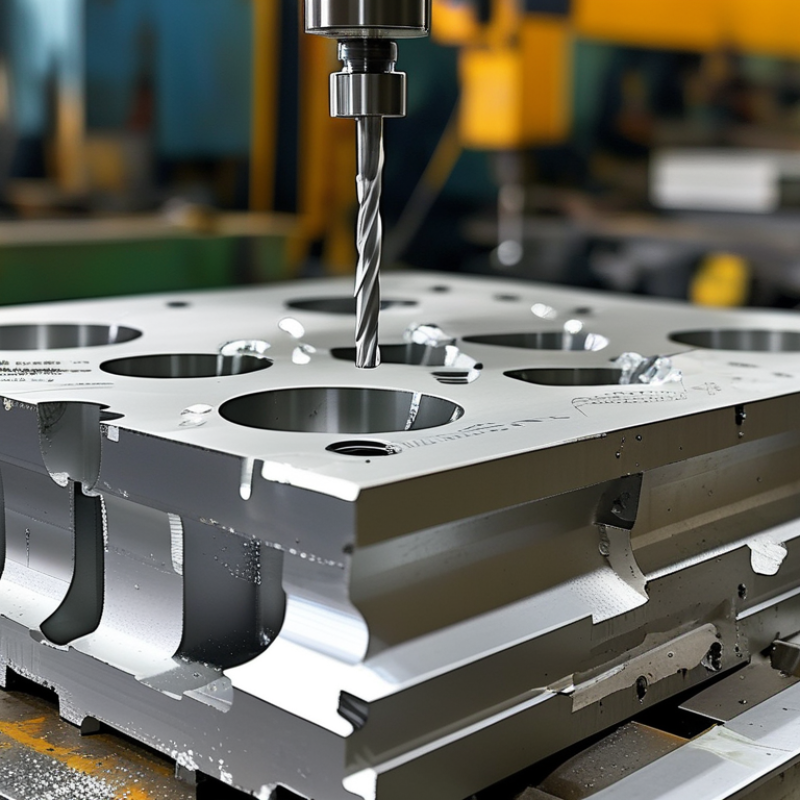
Aluminum is suitable for machining because it combines low density with useful strength. ASM Handbook reports aluminum’s density at approximately 2.70 g/cm³, nearly one-third that of steel. That difference reduces machine load and makes large components easier to handle. It also supports faster movement between workstations.
Many aluminum alloys conduct heat efficiently, with values commonly ranging from about 120 to 235 W/m·K, according to ASM technical data. Cutting heat can move away from the tool edge quickly. This helps maintain dimensional control during milling and turning. However, aluminum’s softness can create built-up edges. Sharp tools and controlled cutting speeds remain essential.
A 6061-type alloy offers a practical balance of machinability, strength, corrosion resistance, and availability. A 7075-type alloy provides higher strength, but it may cost more and demand stricter tool control. Free-machining alloys can produce cleaner chips and smoother surfaces, though they may sacrifice some structural performance.
In my experience, chip evacuation often matters more than a brochure suggests. A well-chosen grade still fails when chips pack inside a narrow pocket.
Material data from the Aluminum Association and ASM Handbook supports these trade-offs, but shop trials should confirm them. General rules are useful. They are not final answers.

2026 Top Aluminum for Machining: Which Grade Is Best?
How Aluminum Grades Differ in Machinability and Performance
Choosing aluminum for machining is not simply a strength contest. In real shop work, 6061 often provides the safest balance of machinability, corrosion resistance, availability, and cost. It produces clean chips and holds stable dimensions during milling. For brackets, housings, and prototypes, it is usually a practical starting point.
When strength matters more, 7075 can outperform 6061, especially in aerospace-style structural parts. However, it may demand sharper tools, controlled cutting speeds, and better chip evacuation. Its corrosion resistance is also lower. Grade 2024 machines well and offers strong fatigue performance, but it needs suitable surface protection in corrosive environments. Grade 5052 resists corrosion and forms easily, yet its softer, gummy behavior can create burrs and poor finishes. That difference is easy to underestimate.
Tips: Check the temper, not only the alloy number. A harder temper may improve stability but increase tool wear. Test one small section first. Look for built-up edge, long chips, and heat marks. Coolant can help, though excessive fluid may hide an unsuitable cutting setup. In my experience, “best” changes with the part. A shop may choose 7075 for strength, then regret it after seeing unnecessary tool wear. That is a useful reminder: material data supports judgment, but machining trials confirm it.
The best aluminum grade depends on the part’s load, finish, tolerance, and working environment. For general CNC machining, 6061-T6 remains a practical choice. It cuts cleanly, holds stable dimensions, and offers useful corrosion resistance. It also performs well for brackets, housings, fixtures, manifolds, and prototype parts. Its chips are usually manageable, though poor feeds can create built-up edges.
7075-T6 suits aerospace-style components, high-load brackets, and lightweight shafts. It provides higher strength than 6061, but it costs more and needs better control during cutting. Corrosion protection may also require attention. For parts exposed to moisture, 6082 can offer a useful balance between strength, machinability, and corrosion resistance. Local material availability still matters.
For formed covers and panels, 5052 is common, but it is not always the easiest machining choice. It can smear across the cutting edge and leave a rough surface. 2024 machines well and offers strong fatigue performance, yet it needs careful corrosion management. I once assumed the strongest alloy would produce the best finished part. That was a costly assumption. Tool geometry, workholding, coolant, and temper can change the result significantly. A test cut on the actual stock often reveals more than a generic machining chart. Thin walls may warp, even when the selected grade appears ideal. Feel the vibration. Measure twice.
Choosing aluminum for machining starts with the part’s job, not its lowest price. The 2025 USGS Mineral Commodity Summaries estimated global primary aluminum production at about 72 million metric tons in 2024. That scale supports broad availability, but alloy selection still affects tool life, distortion, and finishing quality.
For general CNC work, 6061-T6 is often the safest starting point. It offers balanced strength, corrosion resistance, weldability, and predictable chip formation. ASTM B221 data commonly lists a minimum tensile strength near 310 MPa for 6061-T6 extrusions. Need more strength? 7075-T6 can exceed 570 MPa tensile strength, according to typical aerospace material data, but it costs more and usually needs better cutting control. It also provides less corrosion resistance than 6061. 2024-T3 suits fatigue-sensitive structures, although its copper content can complicate corrosion protection.
Consider the machining details. A thin 6061 cover may warp after removing material from one side. A thick 7075 bracket may hold strength but punish a dull tool. I have seen drawings specify “aluminum” without a temper, which is a costly ambiguity. State the grade, temper, surface treatment, and required tolerance. The Aluminum Association’s Aluminum Statistical Review also shows why aluminum remains important across transportation and engineering markets, but market volume does not guarantee the right performance. For most prototypes, choose 6061-T6. Recheck that choice when heat, cyclic loading, or extreme weight reduction controls the design.
| Aluminum Grade and Temper | Typical Density (g/cm³) | Typical Ultimate Tensile Strength (MPa) | Typical Yield Strength (MPa) | Relative Machinability (2011-T3 = 100) | Corrosion Resistance | Weldability | Dimensional Stability During Machining | Best-Fit Applications | Overall Selection Guidance |
|---|---|---|---|---|---|---|---|---|---|
| 6061-T6 | 2.70 | Approximately 290–310 | Approximately 240–276 | About 50–60 | Good | Good | Good for general-purpose parts | Fixtures, brackets, housings, shafts, machine components and general CNC parts | A balanced choice when strength, corrosion resistance, availability and weldability are all important. |
| 7075-T6 | 2.81 | Approximately 510–570 | Approximately 430–505 | About 70 | Fair to good; lower than 6061 | Limited | Good, but residual stress may affect large parts | High-strength brackets, aerospace-style components, tooling and performance parts | Best when strength-to-weight ratio is the priority and welding or maximum corrosion resistance is not required. |
| 2024-T3 | 2.78 | Approximately 430–470 | Approximately 270–325 | About 80–90 | Fair; protective finishing is often used | Poor | Good in thin and medium sections; stress relief may be needed for precision work | Precision plates, aircraft-style structures, gears and parts requiring good fatigue performance | A strong machining option with high machinability, but it needs careful corrosion protection and is not ideal for welding. |
| 6082-T6 | 2.70 | Approximately 300–340 | Approximately 250–310 | About 50–60 | Good | Good | Good for structural and general CNC work | Structural parts, machine frames, plates, supports and medium-to-high-strength components | A practical alternative to 6061-T6 where a widely used structural aluminum alloy is needed, especially in metric supply markets. |
| 5052-H32 | 2.68 | Approximately 210–230 | Approximately 160–195 | About 30–40 | Very good, including many marine and humid environments | Very good | Fair; thin sheet can deform from clamping or heat | Enclosures, panels, tanks, marine components and formed sheet-metal parts | Choose it for corrosion resistance and forming rather than high-speed machining or maximum strength. |
| 3003-H14 | 2.73 | Approximately 145–180 | Approximately 115–165 | About 30–40 | Very good | Excellent | Fair; relatively soft material may produce burrs and deformation | Low-strength covers, heat-exchanger components, panels and formed parts | Suitable for corrosion-resistant, low-load parts; generally not the first choice for precision, high-strength CNC components. |
| 6063-T5 | 2.70 | Approximately 185–215 | Approximately 145–175 | About 40–50 | Good | Good | Good for extruded profiles; less suitable for heavily loaded machined parts | Extruded housings, decorative components, rails, frames and architectural profiles | Choose it when surface finish, extrusion availability and appearance matter more than high mechanical strength. |
| Selection note: The figures shown are typical room-temperature values and can vary with product form, section thickness, manufacturing route, heat treatment and applicable standards. For most general CNC machining projects, 6061-T6 is the safest all-round choice; 7075-T6 is preferable for maximum strength, 2024-T3 for high machinability and fatigue-oriented parts, and 5052-H32 for corrosion-resistant formed sheet components. | |||||||||
Choosing the best aluminum grade depends on the part’s function. For general machining, 6061-T6 offers a practical balance of strength, availability, and chip control. Use 7075-T6 when higher strength matters, but expect more tool wear and higher material cost. Softer 6063 can produce attractive surfaces, yet it may smear during aggressive cutting. There is no universal winner.
Tool geometry strongly affects aluminum part quality. Use sharp, polished carbide tools with generous flute space. A helix near 35–45 degrees often improves chip removal. Keep the cutting edge clean. Built-up edge can quickly turn a bright wall into a torn surface.
Apply steady coolant or suitable mist, and avoid stopping inside a deep pocket. That pause may leave a visible witness mark.
Machine rigidity matters more than many operators expect. Secure thin parts with broad, gentle support. Excessive clamping can bend the workpiece, then release it after machining. Check runout before production; even 0.01 mm can influence finish and tool life.
ISO 21920 provides current guidance for surface-texture evaluation, so inspect roughness with defined parameters, not visual judgment alone.
The International Aluminium Institute reports that recycled aluminum requires roughly 5% of the energy used for primary metal. Reducing scrap therefore improves both cost and environmental performance.
Still, I sometimes over-focus on feed rate. Part support and chip evacuation often deserve attention first.
Copyright © 2023 NEI Ltd. All rights reserved.
Registered Office : 9/1, R. N. Mukherjee Road, Kolkata – 700 001. In case of any queries or grievances, please contact Mr.Tarun Kumar Kabra, Company Secretary.
E-mail: sale@kinpart.com Privacy Policy Cookie Policy